Service of Immunology and Allergy, Lausanne University Hospital, University of Lausanne, Lausanne, Switzerland.
Department of Clinical Infection, Microbiology and Immunology (CIMI), Institute of Infection and Global Health (IGH), University of Liverpool, Liverpool, United Kingdom.
Front Immunol. 2018 Feb 5;9:144. doi: 10.3389/fimmu.2018.00144. eCollection 2018.
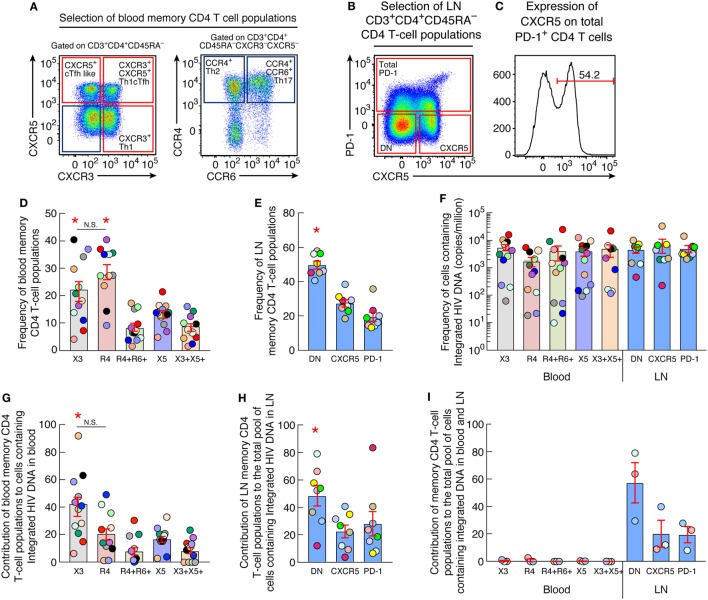
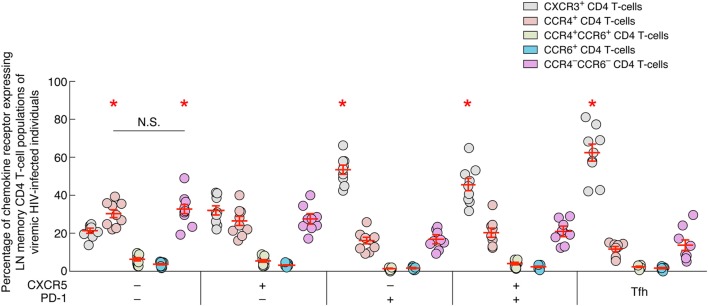
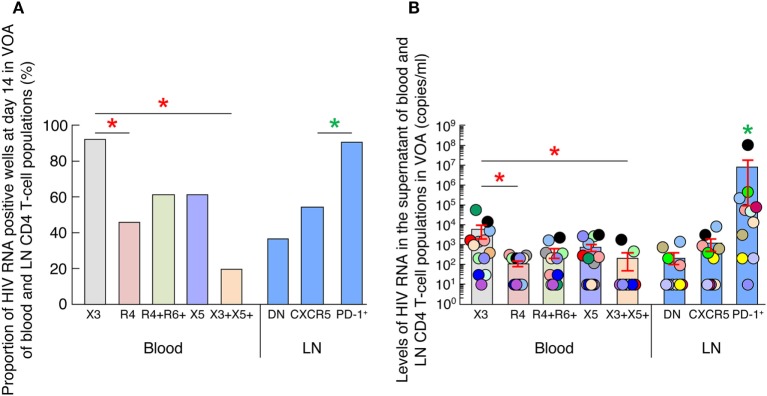
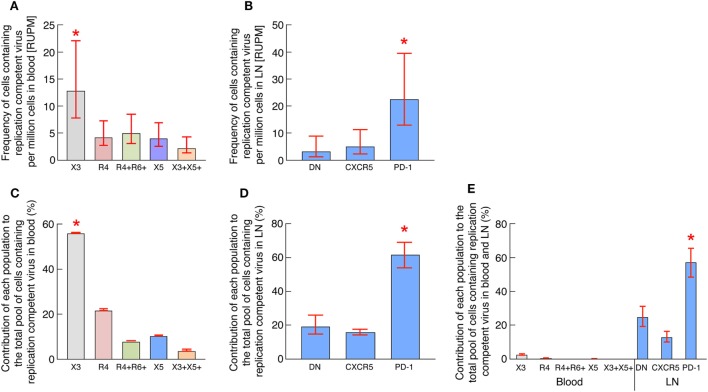
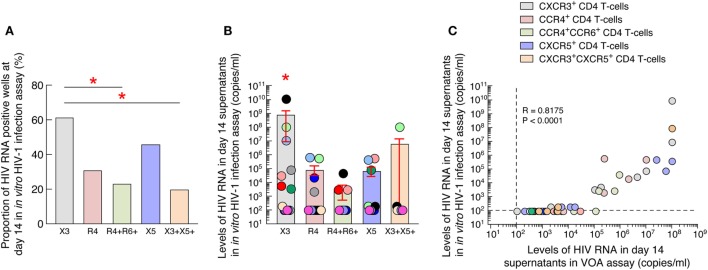
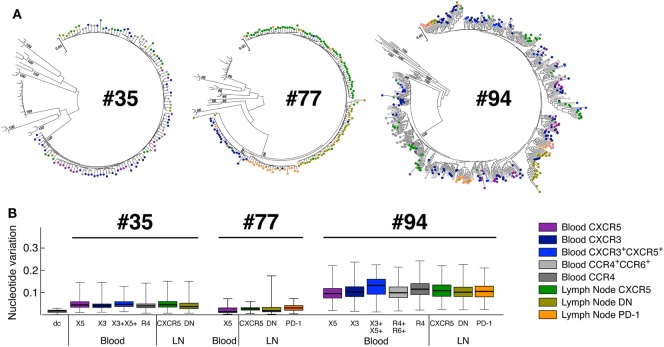
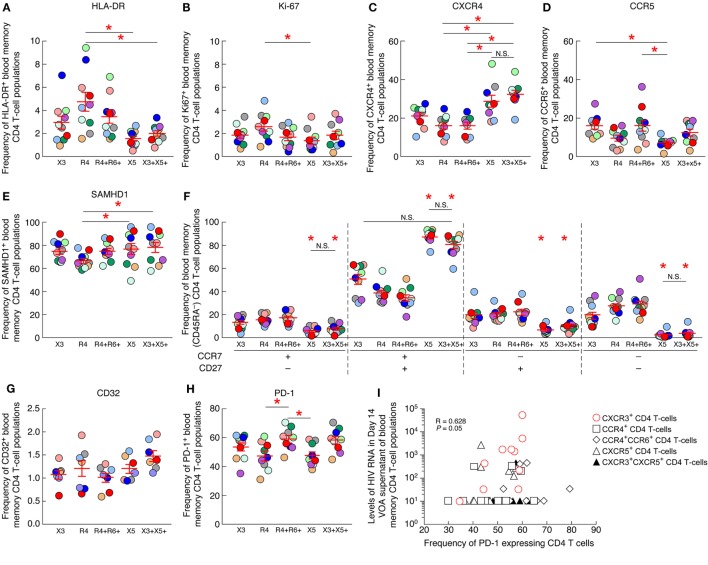
We recently demonstrated that lymph nodes (LNs) PD-1/T follicular helper (Tfh) cells from antiretroviral therapy (ART)-treated HIV-infected individuals were enriched in cells containing replication competent virus. However, the distribution of cells containing inducible replication competent virus has been only partially elucidated in blood memory CD4 T-cell populations including the Tfh cell counterpart circulating in blood (cTfh). In this context, we have investigated the distribution of (1) total HIV-infected cells and (2) cells containing replication competent and infectious virus within various blood and LN memory CD4 T-cell populations of conventional antiretroviral therapy (cART)-treated HIV-infected individuals. In the present study, we show that blood CXCR3-expressing memory CD4 T cells are enriched in cells containing inducible replication competent virus and contributed the most to the total pool of cells containing replication competent and infectious virus in blood. Interestingly, subsequent proviral sequence analysis did not indicate virus compartmentalization between blood and LN CD4 T-cell populations, suggesting dynamic interchanges between the two compartments. We then investigated whether the composition of blood HIV reservoir may reflect the polarization of LN CD4 T cells at the time of reservoir seeding and showed that LN PD-1 CD4 T cells of viremic untreated HIV-infected individuals expressed significantly higher levels of CXCR3 as compared to CCR4 and/or CCR6, suggesting that blood CXCR3-expressing CD4 T cells may originate from LN PD-1 CD4 T cells. Taken together, these results indicate that blood CXCR3-expressing CD4 T cells represent the major blood compartment containing inducible replication competent virus in treated aviremic HIV-infected individuals.
我们最近证明,来自接受抗逆转录病毒治疗(ART)的 HIV 感染者的淋巴结(LN)PD-1/T 滤泡辅助(Tfh)细胞富含含有复制能力病毒的细胞。然而,在血液记忆 CD4 T 细胞群体中,包括循环血液中的 Tfh 细胞对应物(cTfh),仅有部分阐明了含有可诱导复制能力病毒的细胞的分布。在这种情况下,我们研究了(1)总 HIV 感染细胞和(2)在常规抗逆转录病毒治疗(cART)治疗的 HIV 感染者的各种血液和 LN 记忆 CD4 T 细胞群体中含有复制能力和感染性病毒的细胞在血液中的分布。在本研究中,我们表明血液 CXCR3 表达的记忆 CD4 T 细胞富含含有可诱导复制能力的病毒的细胞,并对血液中含有复制能力和感染性病毒的总细胞池贡献最大。有趣的是,随后的前病毒序列分析并未表明血液和 LN CD4 T 细胞群体之间的病毒分隔,这表明两个隔室之间存在动态交换。然后,我们研究了血液 HIV 储库的组成是否可能反映储库接种时 LN CD4 T 细胞的极化,并表明未经治疗的 HIV 感染者的 LN PD-1 CD4 T 细胞中表达的 CXCR3 水平明显高于 CCR4 和/或 CCR6,表明血液 CXCR3 表达的 CD4 T 细胞可能来源于 LN PD-1 CD4 T 细胞。综上所述,这些结果表明,血液 CXCR3 表达的 CD4 T 细胞代表了治疗后病毒血症 HIV 感染者血液中含有可诱导复制能力病毒的主要血液隔室。