School of Biological and Chemical Sciences, Queen Mary University of London, Mile End Road, London, E1 4NS, UK.
Photosynthesis Research Center, Key Laboratory of Photobiology, Institute of Botany, Chinese Academy of Sciences, Beijing, 100093, China.
Planta. 2018 Jun;247(6):1293-1306. doi: 10.1007/s00425-018-2854-5. Epub 2018 Feb 19.
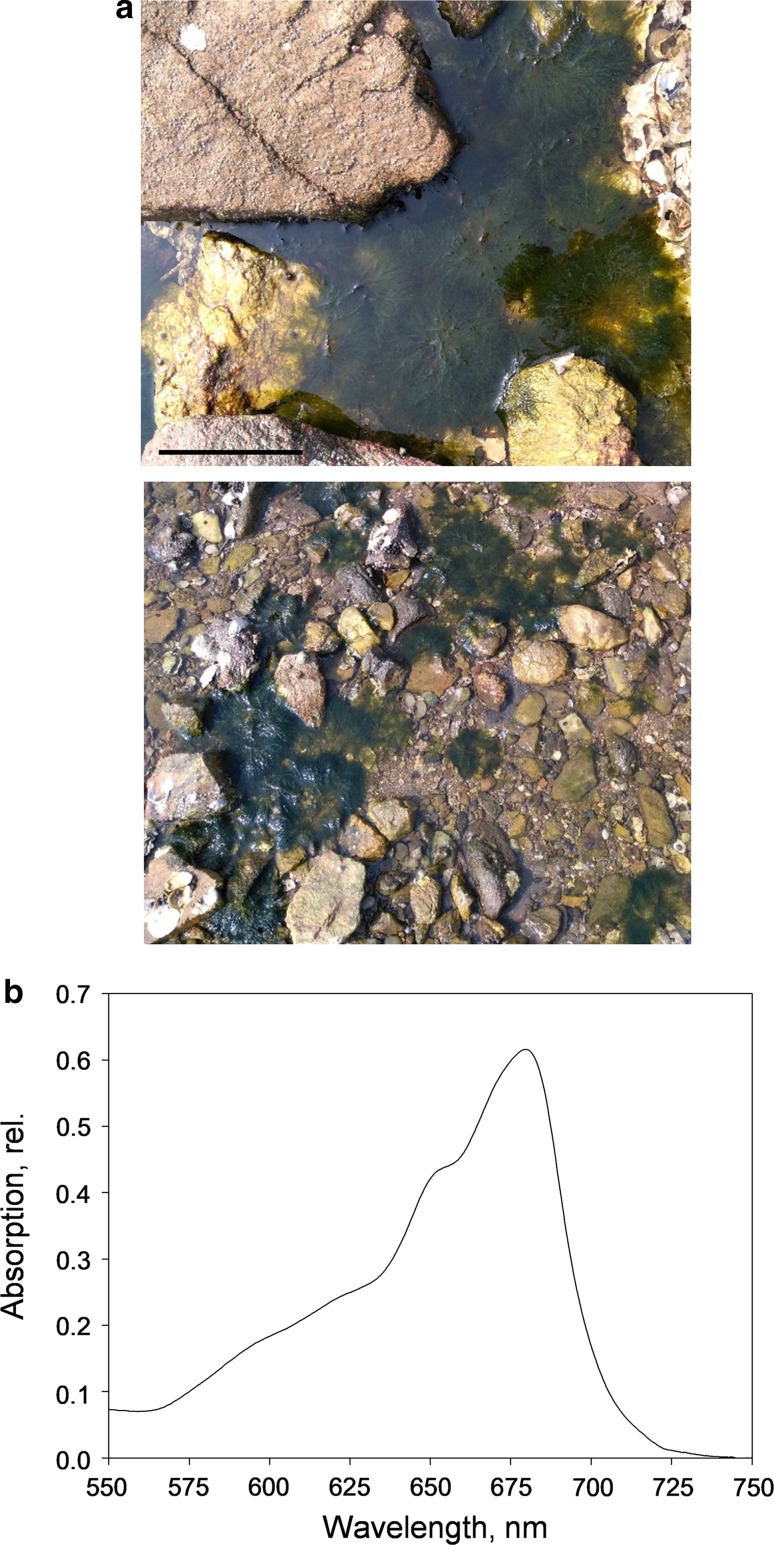
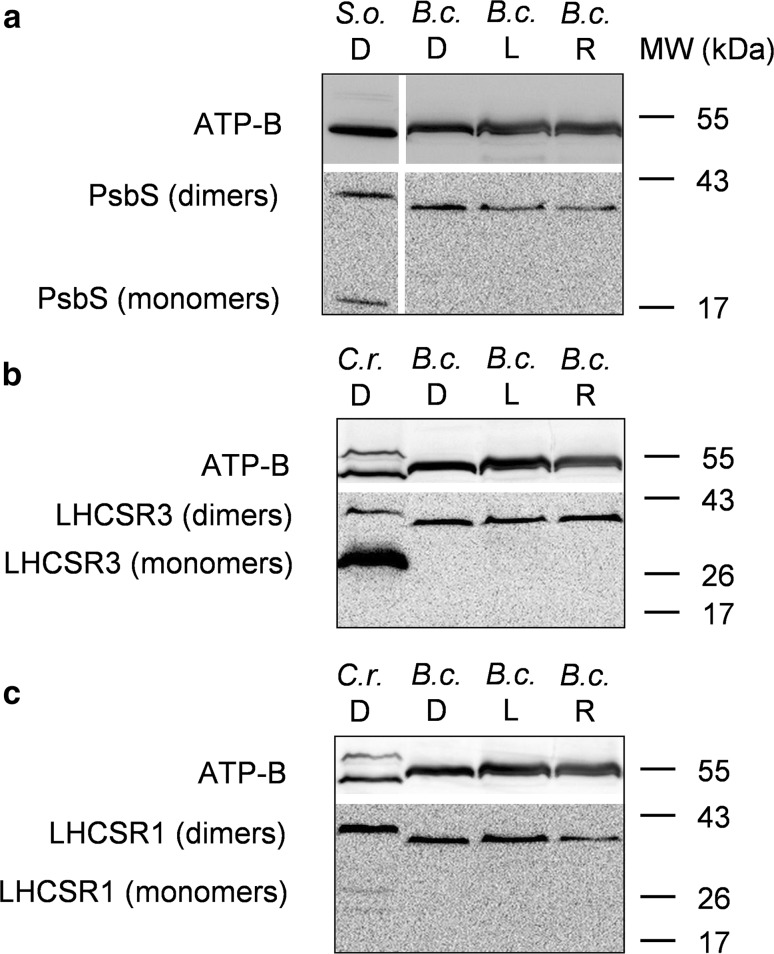
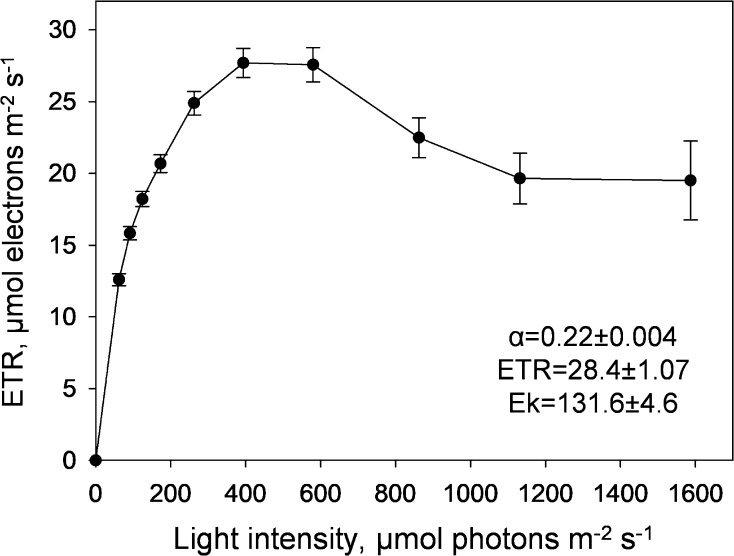
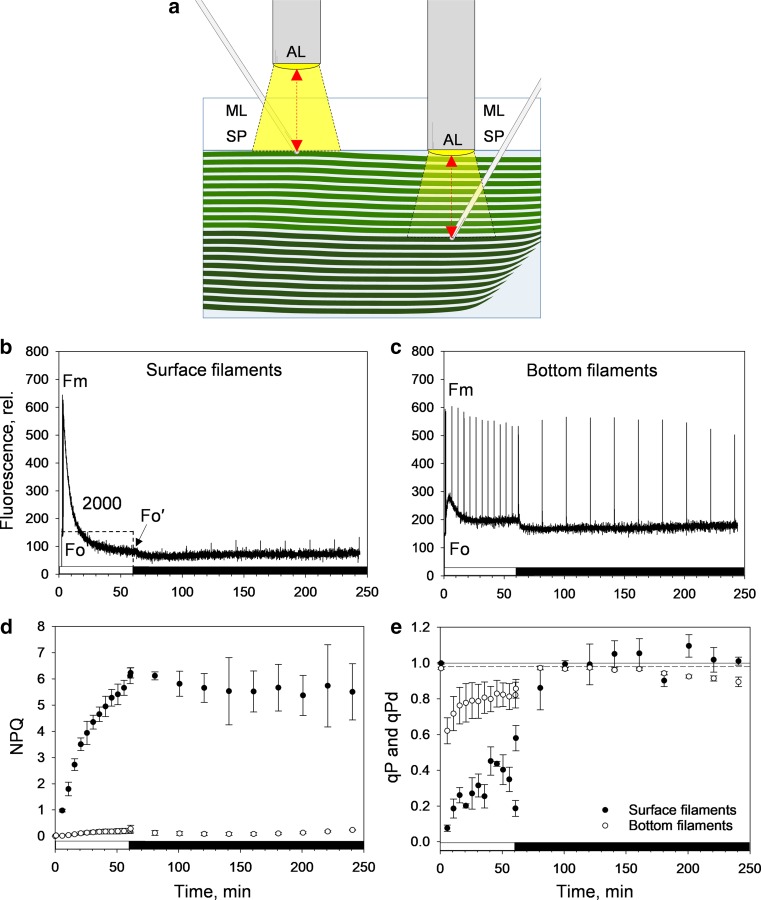
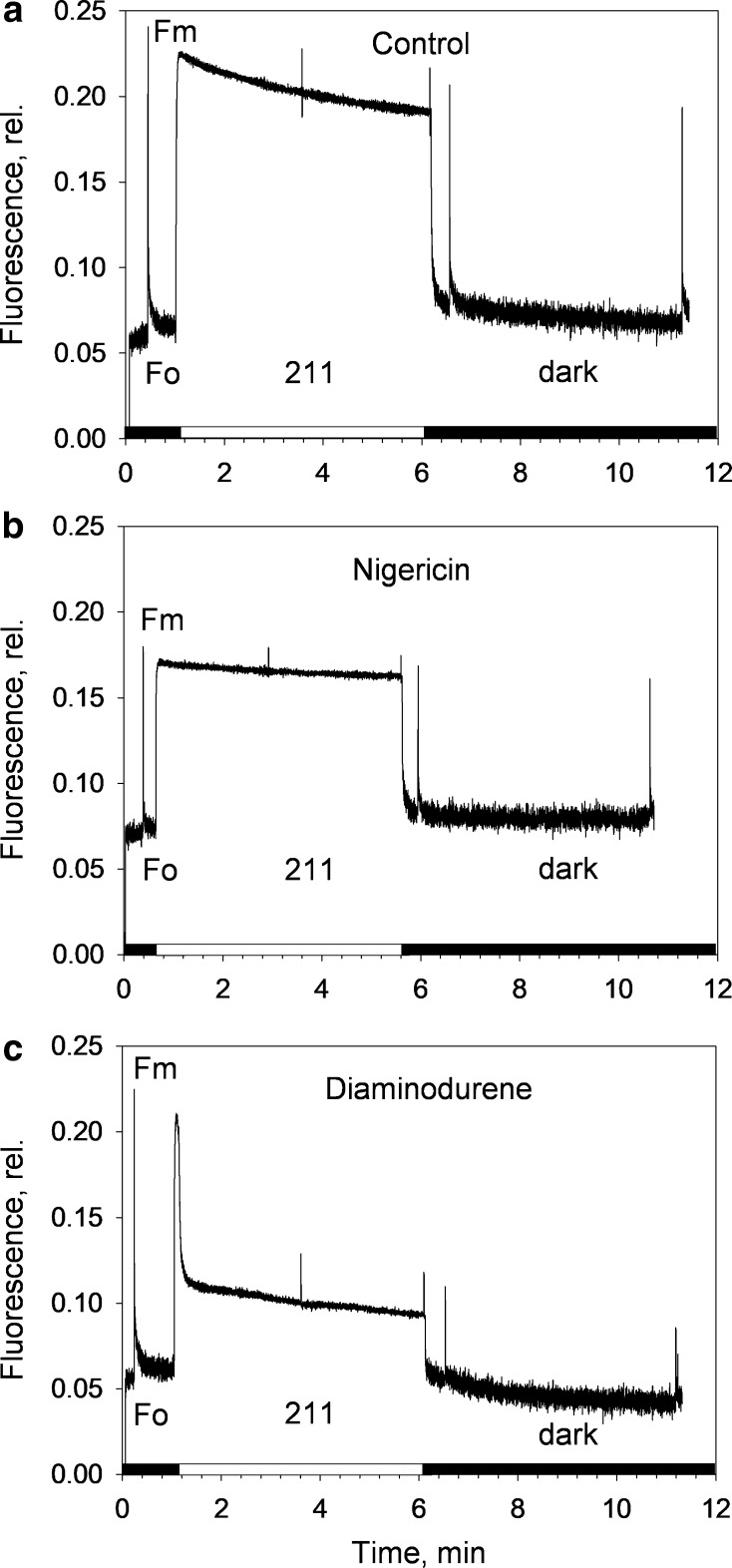
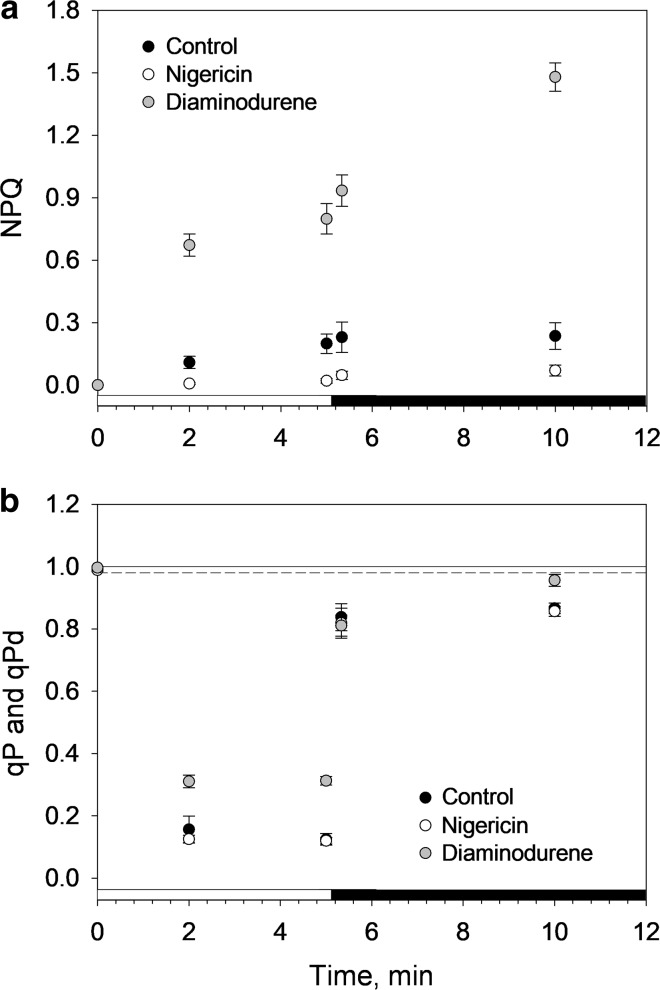
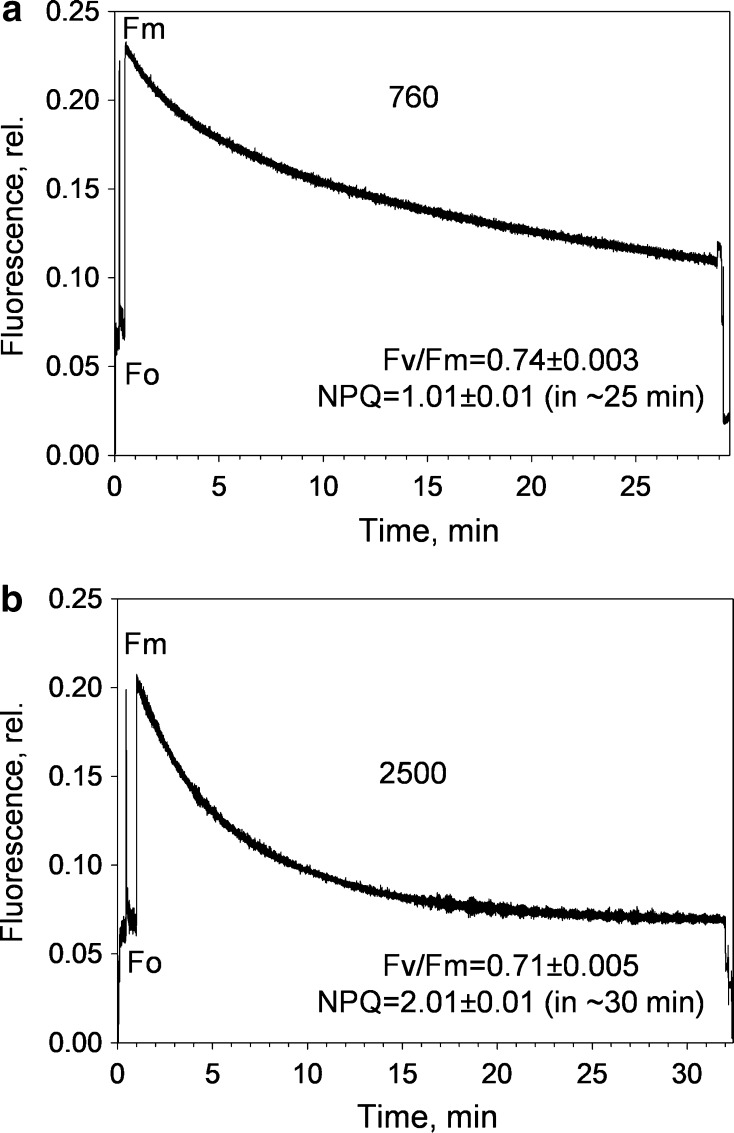
The macroalga Bryopsis corticulans relies on a sustained protective NPQ and a peculiar body architecture to efficiently adapt to the extreme light changes of intertidal shores. During low tides, intertidal algae experience prolonged high light stress. Efficient dissipation of excess light energy, measured as non-photochemical quenching (NPQ) of chlorophyll fluorescence, is therefore required to avoid photodamage. Light-harvesting regulation was studied in the intertidal macroalga Bryopsis corticulans, during high light and air exposure. Photosynthetic capacity and NPQ kinetics were assessed in different filament layers of the algal tufts and in intact chloroplasts to unravel the nature of NPQ in this siphonous green alga. We found that the morphology and pigment composition of the B. corticulans body provides functional segregation between surface sunlit filaments (protective state) and those that are underneath and undergo severe light attenuation (light-harvesting state). In the surface filaments, very high and sustained NPQ gradually formed. NPQ induction was triggered by the formation of transthylakoid proton gradient and independent of the xanthophyll cycle. PsbS and LHCSR proteins seem not to be active in the NPQ mechanism activated by this alga. Our results show that B. corticulans endures excess light energy pressure through a sustained protective NPQ, not related to photodamage, as revealed by the unusually quick restoration of photosystem II (PSII) function in the dark. This might suggest either the occurrence of transient PSII photoinactivation or a fast rate of PSII repair cycle.
石莼科藻 Bryopsis corticulans 依赖持续的保护型非光化学猝灭(NPQ)和独特的身体结构,以有效地适应潮间带海岸的极端光变化。在低潮时,潮间带藻类会经历长时间的高光胁迫。因此,需要有效地耗散过量的光能,这表现为叶绿素荧光的非光化学猝灭(NPQ),以避免光损伤。在高光和空气暴露下,研究了潮间带大型藻类 Bryopsis corticulans 的光捕获调节。在藻束的不同丝状层和完整的叶绿体中评估了光合作用能力和 NPQ 动力学,以揭示这种管状绿藻中 NPQ 的性质。我们发现,B. corticulans 体的形态和色素组成提供了功能上的分离,即表面受阳光照射的丝状层(保护状态)和那些处于下面并经历严重光衰减的丝状层(光捕获状态)。在表面丝状层中,逐渐形成非常高且持续的 NPQ。NPQ 的诱导是由跨类囊体质子梯度的形成触发的,并且独立于叶黄素循环。PsbS 和 LHCSR 蛋白在该藻类激活的 NPQ 机制中似乎没有活性。我们的结果表明,B. corticulans 通过持续的保护型 NPQ 来承受过量的光能压力,这与光损伤无关,这可以从 PSII 功能在黑暗中异常快速的恢复中得到证明。这可能表明 PSII 存在瞬时光失活或 PSII 修复循环的快速速率。