Department of Community Medicine, Faculty of Medicine & Allied Sciences, Rajarata University of Sri Lanka, Anuradhapura, Sri Lanka.
South Asian Clinical Toxicology Research Collaboration, Faculty of Medicine, University of Peradeniya, Peradeniya, Sri Lanka.
BMC Public Health. 2018 Feb 20;18(1):272. doi: 10.1186/s12889-018-5178-2.
In South Asia, up to 20% of people ingesting pesticides for self-poisoning purchase the pesticide from a shop with the sole intention of self-harm. Individuals who are intoxicated with alcohol and/or non-farmers represent 72% of such high-risk individuals. We aimed to test the feasibility and acceptability of vendor-based restrictions on pesticide sales for such high-risk individuals.
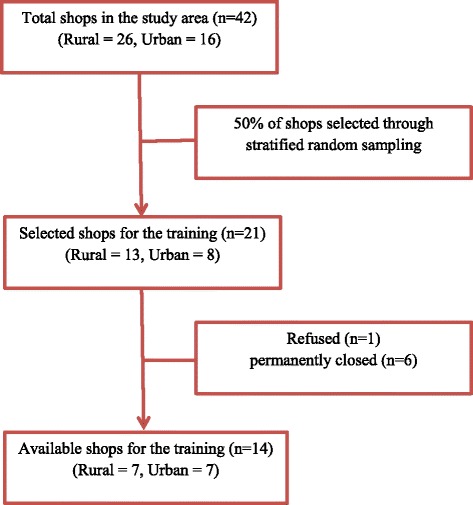
We conducted a pilot study in 14 (rural = 7, urban = 7) pesticide shops in Anuradhapura District of Sri Lanka. A two-hour training program was delivered to 28 pesticide vendors; the aim of the training was to help vendors recognize and respond to customers at high risk of pesticide self-poisoning. Knowledge and attitudes of vendors towards preventing access to pesticides for self-poisoning at baseline and in a three month follow-up was evaluated by questionnaire. Vendors were interviewed to explore the practice skills taught in the training and their assessment of the program.
The scores of knowledge and attitudes of the vendors significantly increased by 23% (95% CI 15%-32%, p < 0.001) and by 16% (95% CI 9%-23%, p < 0.001) respectively in the follow-up. Fifteen (60%) vendors reported refusing sell pesticides to a high-risk person (non-farmer or intoxicated person) in the follow-up compared to three (12%) at baseline. Vendors reported that they were aware from community feedback that they had prevented at least seven suicide attempts. On four identified occasions, vendors in urban shops had been unable to recognize the self-harming intention of customers who then ingested the pesticide. Only 2 (8%) vendors were dissatisfied with the training and 23 (92%) said they would recommend it to other vendors.
Our study suggests that vendor-based sales restriction in regions with high rates of self-poisoning has the potential to reduce access to pesticides for self-poisoning. A large-scale study of the effectiveness and sustainability of this approach is needed.
在南亚,高达 20%的因自我毒害而摄入农药的人是从仅意图自我伤害的商店购买的农药。此类高风险个体中,72%为醉酒者和/或非农民。我们旨在检验基于销售商的农药销售限制对这类高风险个体的可行性和可接受性。
我们在斯里兰卡阿努拉德普勒区的 14 家(农村=7,城市=7)农药商店进行了一项试点研究。对 28 名农药销售商进行了两小时的培训;培训的目的是帮助销售商识别和应对有农药自我中毒高风险的客户。在基线和三个月的随访中,通过问卷调查评估销售商在防止农药被自我中毒使用方面的知识和态度。对销售商进行访谈以探讨培训中教授的实践技能及其对该方案的评估。
随访中,销售商的知识和态度评分分别显著提高了 23%(95%CI 15%-32%,p<0.001)和 16%(95%CI 9%-23%,p<0.001)。15 名(60%)销售商报告在随访中拒绝向高危人士(非农民或醉酒者)出售农药,而基线时仅有 3 名(12%)。销售商报告称,他们从社区反馈中了解到,他们至少阻止了 7 起自杀企图。在四个已识别的情况下,城市商店的销售商无法识别有自我伤害意图的顾客,随后这些顾客摄入了农药。只有 2 名(8%)销售商对培训不满意,23 名(92%)表示会向其他销售商推荐。
我们的研究表明,在自我中毒率较高的地区,基于销售商的销售限制有可能减少农药的自我中毒使用。需要进行这项措施的有效性和可持续性的大规模研究。