Fuhrmann Marine, Delisle Lizenn, Petton Bruno, Corporeau Charlotte, Pernet Fabrice
Ifremer/LEMAR UMR 6539 (UBO/CNRS/IRD/Ifremer), Technopole de Brest-Iroise, 29280 Plouzané, France
Ifremer/LEMAR UMR 6539 (UBO/CNRS/IRD/Ifremer), Technopole de Brest-Iroise, 29280 Plouzané, France.
Biol Open. 2018 Feb 20;7(2):bio028134. doi: 10.1242/bio.028134.
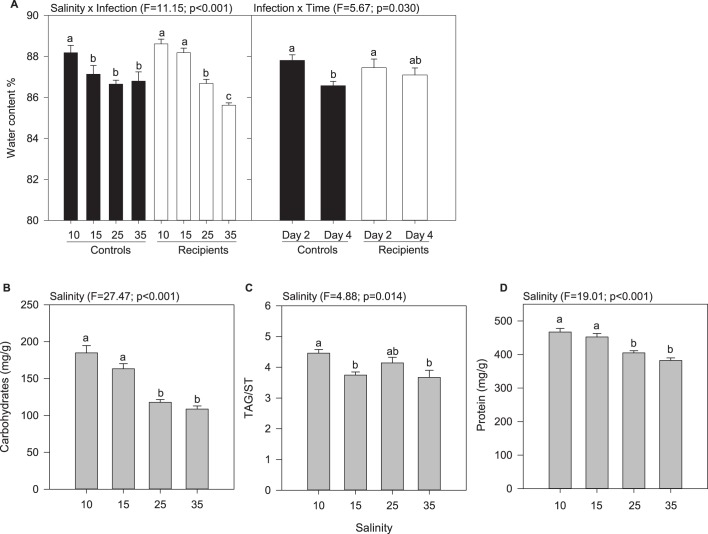
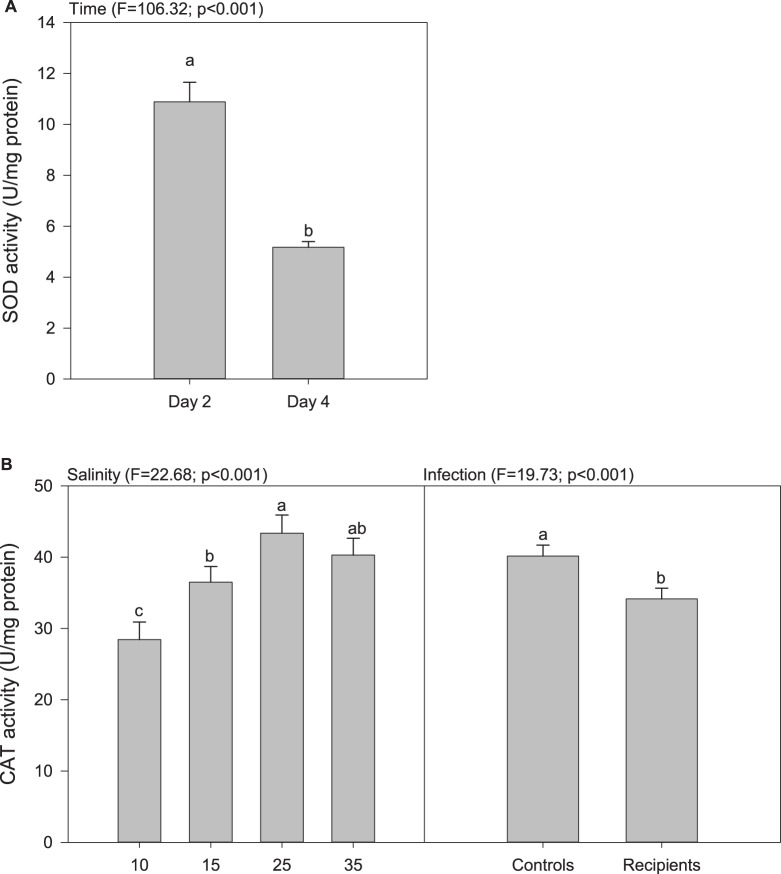
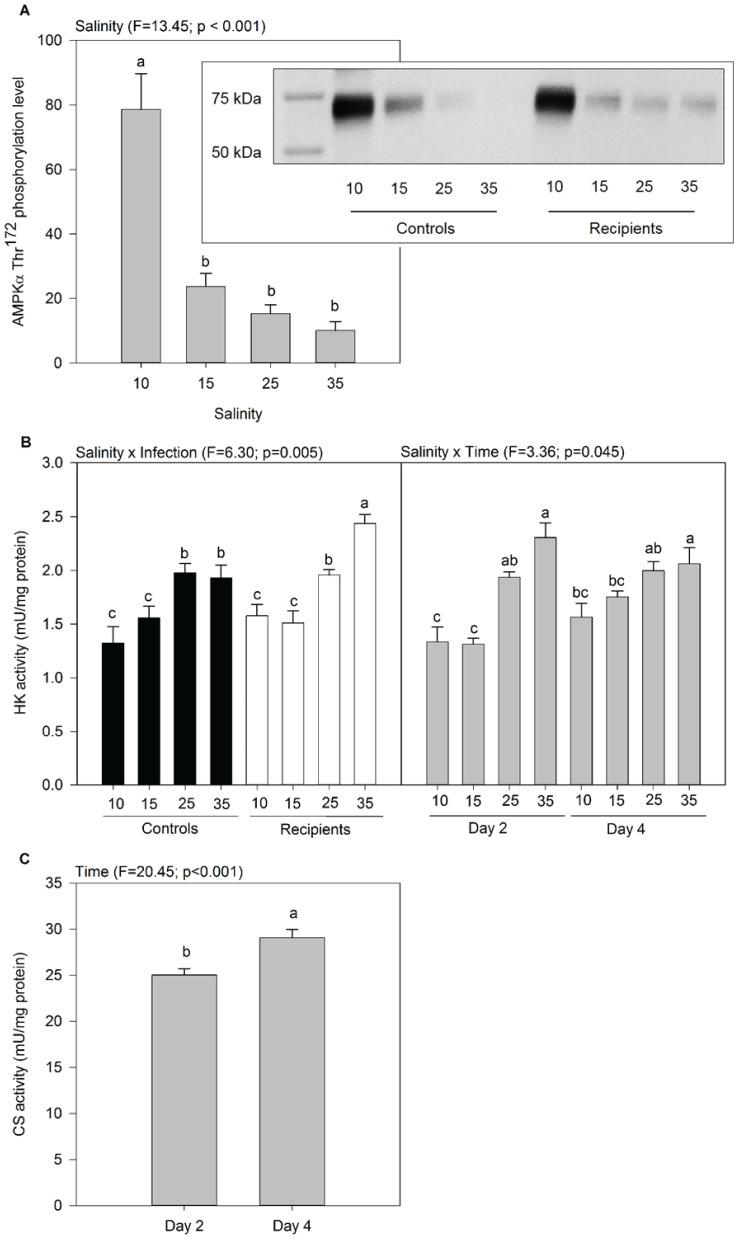
The Pacific oyster, , is an osmoconforming bivalve exposed to wide salinity fluctuations. The physiological mechanisms used by oysters to cope with salinity stress are energy demanding and may impair other processes, such as defense against pathogens. This oyster species has been experiencing recurrent mortality events caused by the Ostreid herpesvirus 1 (OsHV-1). The objectives of this study were to investigate the effect of salinity (10, 15, 25 and 35‰) on energetic reserves, key enzyme activities and membrane fatty acids, and to identify the metabolic risk factors related to OsHV-1-induced mortality of oysters. Acclimation to low salinity led to increased water content, protein level, and energetic reserves (carbohydrates and triglycerides) of oysters. The latter was consistent with lower activity of hexokinase, the first enzyme involved in glycolysis, up-regulation of AMP-activated protein kinase, a major regulator of cellular energy metabolism, and lower activity of catalase, an antioxidant enzyme involved in management of reactive oxygen species. Acclimation to salinity also involved a major remodeling of membrane fatty acids. Particularly, 20:4-6 decreased linearly with decreasing salinity, likely reflecting its mobilization for prostaglandin synthesis in oysters. The survival of oysters exposed to OsHV-1 varied from 43% to 96% according to salinity ( Fuhrmann et al., 2016). Risk analyses showed that activity of superoxide dismutase and levels of proteins, carbohydrates, and triglycerides were associated with a reduced risk of death. Therefore, animals with a higher antioxidant activity and a better physiological condition seemed less susceptible to OsHV-1.
太平洋牡蛎(Crassostrea gigas)是一种渗透压顺应性双壳贝类,面临着较大的盐度波动。牡蛎应对盐度胁迫所采用的生理机制需要消耗能量,可能会损害其他生理过程,如抵御病原体。这种牡蛎物种一直经历由牡蛎疱疹病毒1型(OsHV-1)引起的反复死亡事件。本研究的目的是调查盐度(10、15、25和35‰)对能量储备、关键酶活性和膜脂肪酸的影响,并确定与OsHV-1诱导的牡蛎死亡相关的代谢风险因素。适应低盐度导致牡蛎的含水量、蛋白质水平和能量储备(碳水化合物和甘油三酯)增加。后者与糖酵解的第一个酶己糖激酶的活性降低、细胞能量代谢的主要调节因子AMP激活的蛋白激酶的上调以及参与活性氧管理的抗氧化酶过氧化氢酶的活性降低相一致。适应盐度还涉及膜脂肪酸的重大重塑。特别是,20:4-6随着盐度降低呈线性下降,这可能反映了其在牡蛎中用于前列腺素合成的动员。根据盐度不同,暴露于OsHV-1的牡蛎存活率在43%至96%之间(Fuhrmann等人,2016年)。风险分析表明,超氧化物歧化酶的活性以及蛋白质、碳水化合物和甘油三酯的水平与死亡风险降低相关。因此,具有较高抗氧化活性和较好生理状态的动物似乎对OsHV-1不太敏感。