
脂质组学研究揭示了移植珍珠贝的免疫反应和珍珠形成机制。
Lipidomic insights into the immune response and pearl formation in transplanted pearl oyster .
机构信息
Fisheries College, Guangdong Ocean University, Zhanjiang, China.
Development and Research Center for Biological Marine Resources, Southern Marine Science and Engineering Guangdong Laboratory (Zhanjiang), Zhanjiang, China.
出版信息
Front Immunol. 2022 Oct 7;13:1018423. doi: 10.3389/fimmu.2022.1018423. eCollection 2022.
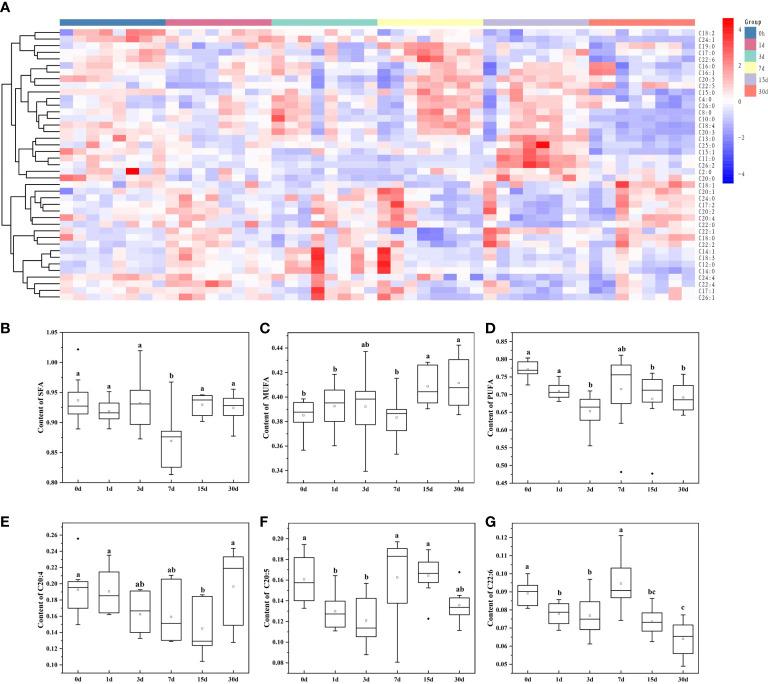
During pearl culture, the excess immune responses may induce nucleus rejection and death of pearl oysters after transplantation. To better understand the immune response and pearl formation, lipidomic analysis was applied to investigate changes in the serum lipid profile of pearl oyster following transplantation. In total, 296 lipid species were identified by absolute quantitation. During wound healing, the content of TG and DG initially increased and then decreased after 3 days of transplantation with no significant differences, while the level of C22:6 decreased significantly on days 1 and 3. In the early stages of transplantation, sphingosine was upregulated, whereas PC and PUFAs were downregulated in transplanted pearl oyster. PI was upregulated during pearl sac development stages. GP and LC-PUFA levels were upregulated during pearl formation stage. In order to identify enriched metabolic pathways, pathway enrichment analysis was conducted. Five metabolic pathways were found significantly enriched, namely glycosylphosphatidylinositol-anchor biosynthesis, glycerophospholipid metabolism, alpha-linolenic acid metabolism, linoleic acid metabolism and arachidonic acid metabolism. Herein, results suggested that the lipids involved in immune response, pearl sac maturation, and pearl formation in the host pearl oyster after transplantation, which might lead to an improvement in the survival rate and pearl quality of transplanted pearl oyster.
在珍珠养殖过程中,过量的免疫反应可能会导致珍珠贝在移植后排斥和死亡。为了更好地了解免疫反应和珍珠形成,我们应用脂质组学分析方法研究了珍珠贝移植后血清脂质谱的变化。通过绝对定量共鉴定出 296 种脂质。在伤口愈合过程中,TG 和 DG 的含量在移植后 3 天内先增加后减少,没有显著差异,而 C22:6 的水平在第 1 天和第 3 天显著下降。在移植的早期阶段,鞘氨醇上调,而 PC 和多不饱和脂肪酸下调。在珍珠囊发育阶段,PI 上调。在珍珠形成阶段,GP 和 LC-PUFA 水平上调。为了鉴定富集的代谢途径,进行了通路富集分析。发现 5 条代谢途径显著富集,即糖基磷脂酰肌醇锚生物合成、甘油磷脂代谢、α-亚麻酸代谢、亚油酸代谢和花生四烯酸代谢。结果表明,这些脂质参与了宿主珍珠贝移植后的免疫反应、珍珠囊成熟和珍珠形成,这可能提高移植珍珠贝的成活率和珍珠质量。



 Zotero 插件