Gowda Saralamma Venu Venkatarame, Lee Ho Jeong, Raha Suchismita, Lee Won Sup, Kim Eun Hee, Lee Sang Joon, Heo Jeong Doo, Won Chungkil, Kang Chang Keun, Kim Gon Sup
Research Institute of Life Science and College of Veterinary Medicine, Gyeongsang National University, Gazwa, Jinju, Republic Korea.
Department of Internal Medicine, Institute of Health Sciences, Gyeongsang National University School of Medicine, Jinju, South Korea.
Oncotarget. 2017 Dec 11;9(5):5993-6006. doi: 10.18632/oncotarget.23202. eCollection 2018 Jan 19.
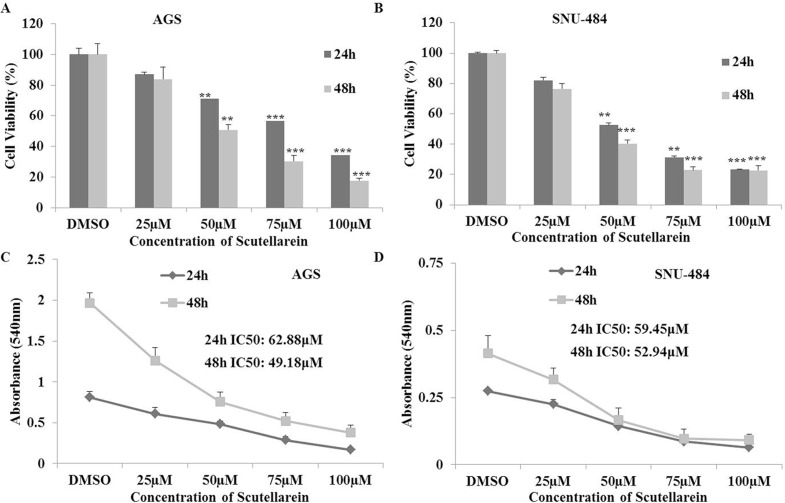
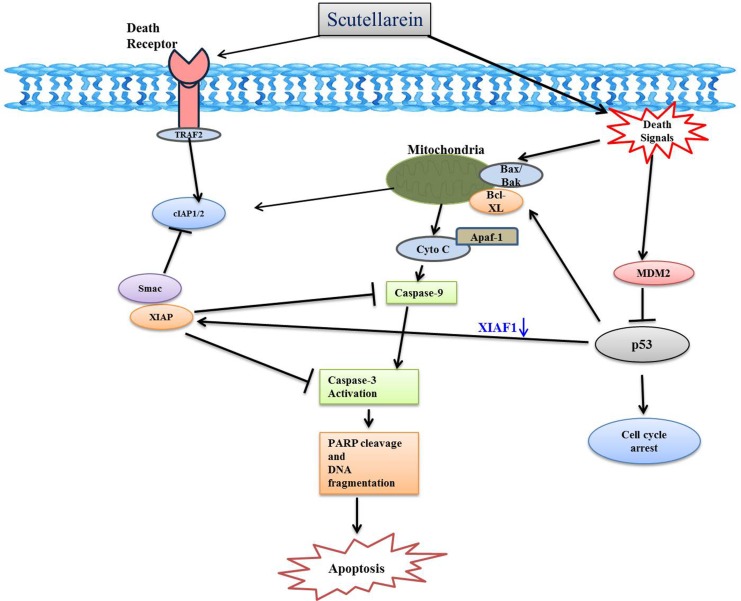
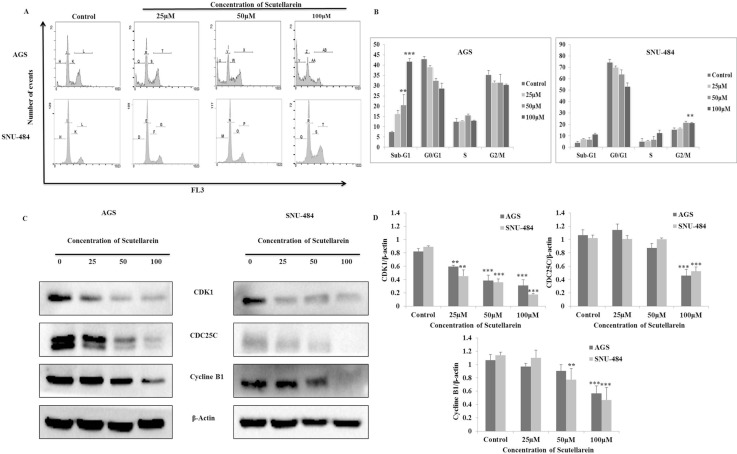
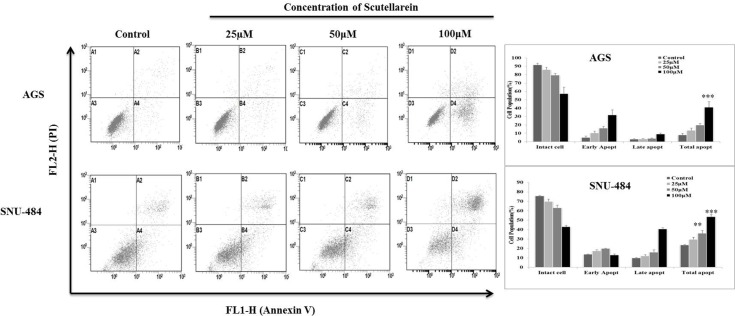
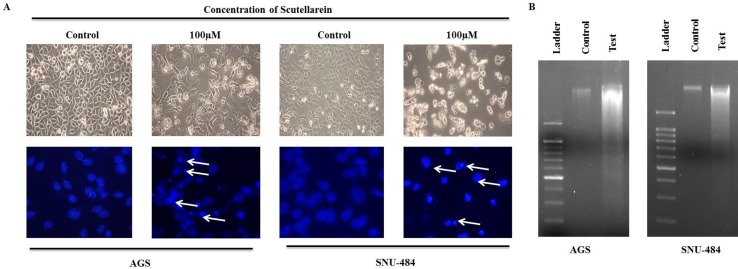
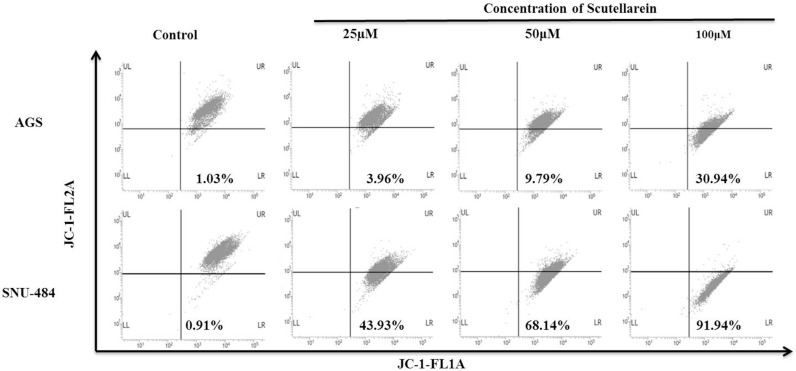
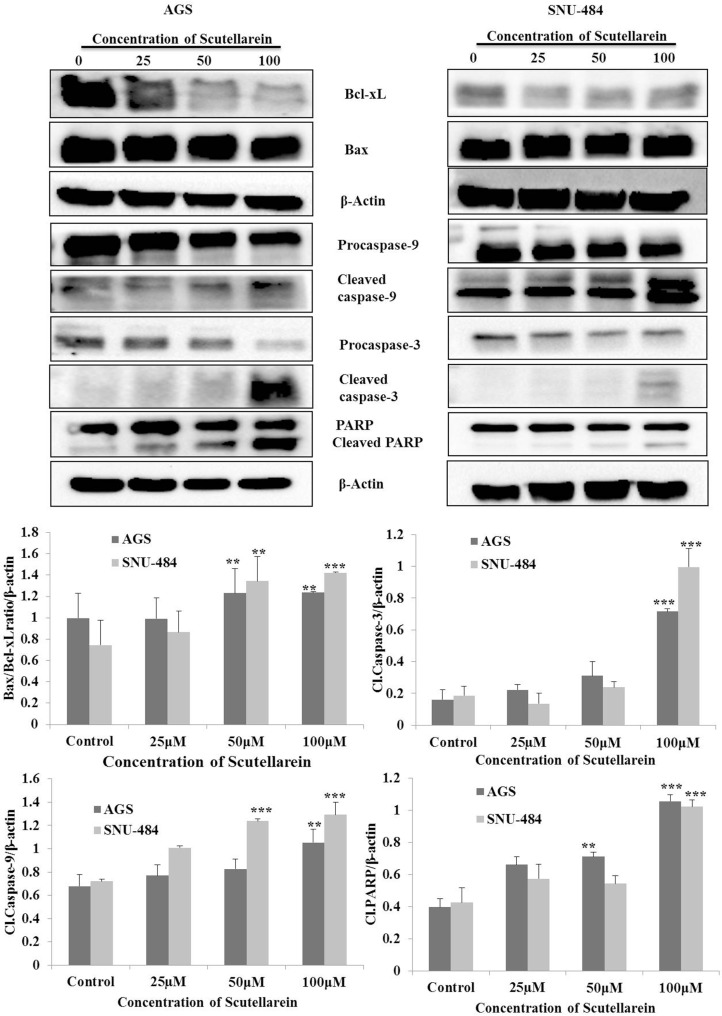
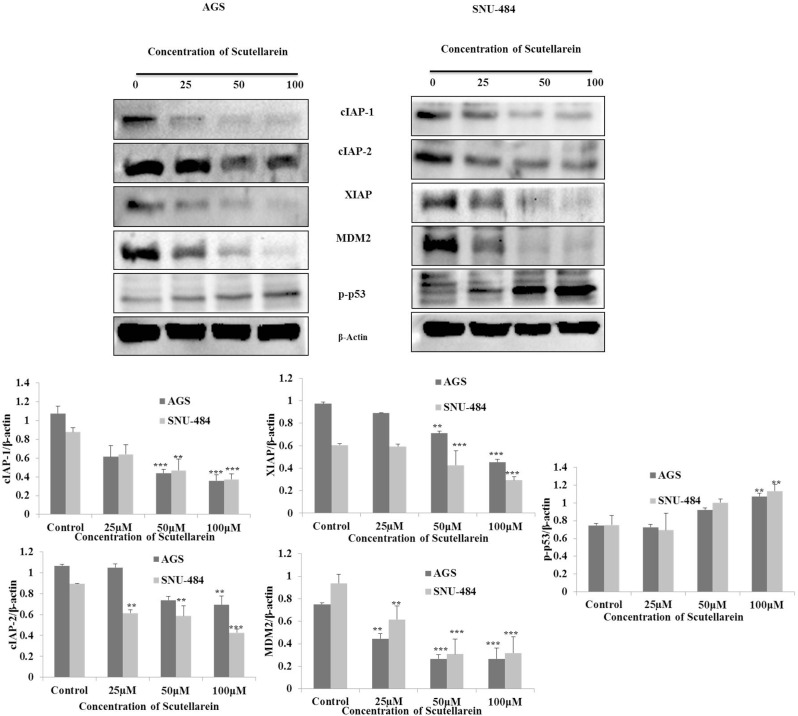
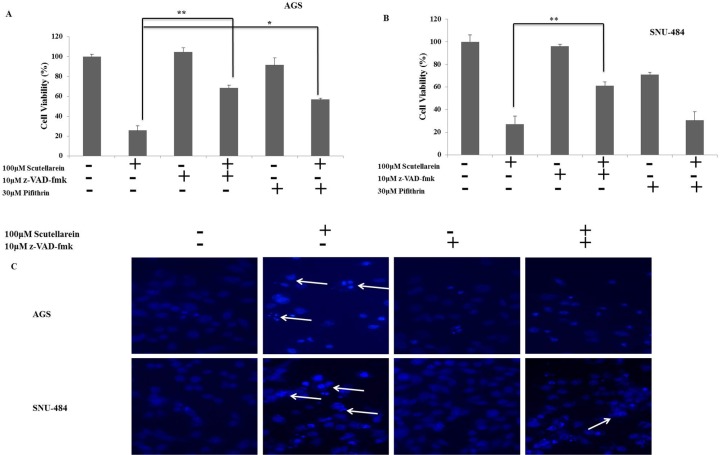
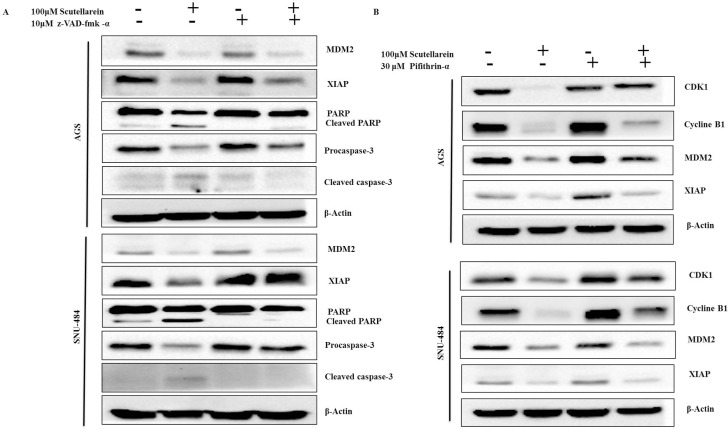
Gastric cancer is the fifth most common cancer and the third leading cause of cancer deaths worldwide. South Korea is in first place with 9,180 death alone attributed to gastric cancer in 2013. Plenty of literature suggests the evasion of apoptosis is implicated in neurodegeneration, autoimmune diseases, and tumors development due to dysregulation in the apoptotic mechanism. Reduced apoptosis or its resistance in cancer cells plays a significant role in carcinogenesis. It's imperative to understand apoptosis, which provides the basis for novel targeted therapies that can induce cancer cell death or sensitize them to cytotoxic agents by regulating key factors like IAPs, MDM2, p53, caspases and much more. Studies have demonstrated that Scutellarein have the ability to inhibit several cancer cells by inducing apoptosis with both: Scutellarein monomers as well as scutellarein containing flavonoids. MTT results revealed that scutellarein inhibited cell viability in both dose and time dependent manner. Flow cytometry and western blot analysis showed that scutellarein induces apoptosis in both AGS and SNU-484 human gastric cancer cells and G2/M phase cell cycle arrest in SNU-484 cells. This study demonstrated that the Scutellarein on AGS and SNU-484 cells significantly inhibits cell proliferation and induces apoptotic cell death via down regulating MDM2 and activated the tumor suppresser protein p53, subsequently down regulating the IAP family proteins (cIAP1, cIAP2, and XIAP) leading to caspase-dependent apoptosis in AGS and SNU-484 cells.
胃癌是全球第五大常见癌症,也是癌症死亡的第三大主要原因。韩国位居首位,仅2013年就有9180例死亡归因于胃癌。大量文献表明,由于凋亡机制失调,凋亡逃避与神经退行性疾病、自身免疫性疾病和肿瘤发展有关。癌细胞中凋亡减少或其抗性在致癌过程中起重要作用。了解凋亡至关重要,它为新型靶向治疗提供了基础,这种治疗可以通过调节IAPs、MDM2、p53、半胱天冬酶等关键因子来诱导癌细胞死亡或使它们对细胞毒性药物敏感。研究表明,黄芩素能够通过诱导凋亡来抑制多种癌细胞,包括黄芩素单体以及含黄芩素的黄酮类化合物。MTT结果显示,黄芩素以剂量和时间依赖性方式抑制细胞活力。流式细胞术和蛋白质印迹分析表明,黄芩素在AGS和SNU-484人胃癌细胞中诱导凋亡,并使SNU-484细胞发生G2/M期细胞周期阻滞。本研究表明,黄芩素作用于AGS和SNU-484细胞时,通过下调MDM2并激活肿瘤抑制蛋白p53,显著抑制细胞增殖并诱导凋亡性细胞死亡,随后下调IAP家族蛋白(cIAP1、cIAP2和XIAP),导致AGS和SNU-484细胞中半胱天冬酶依赖性凋亡。