Wang Ling, Howell Mary E A, McPeak Brooke, Riggs Katrina, Kohne Carissa, Yohanon Jether Uel, Foxler Daniel E, Sharp Tyson V, Moorman Jonathan P, Yao Zhi Q, Ning Shunbin
Center of Excellence for Inflammation, Infectious Diseases and Immunity, Quillen College of Medicine, East Tennessee State University, Johnson City 37614, TN, USA.
Department of Internal Medicine, Quillen College of Medicine, East Tennessee State University, Johnson City 37614, TN, USA.
Oncotarget. 2017 Dec 26;9(5):6282-6297. doi: 10.18632/oncotarget.23676. eCollection 2018 Jan 19.
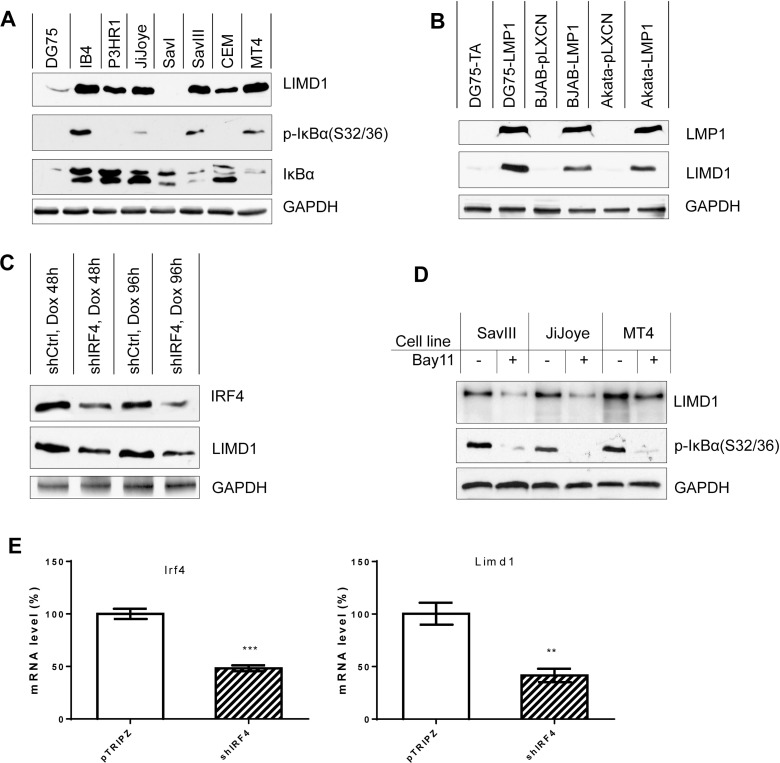
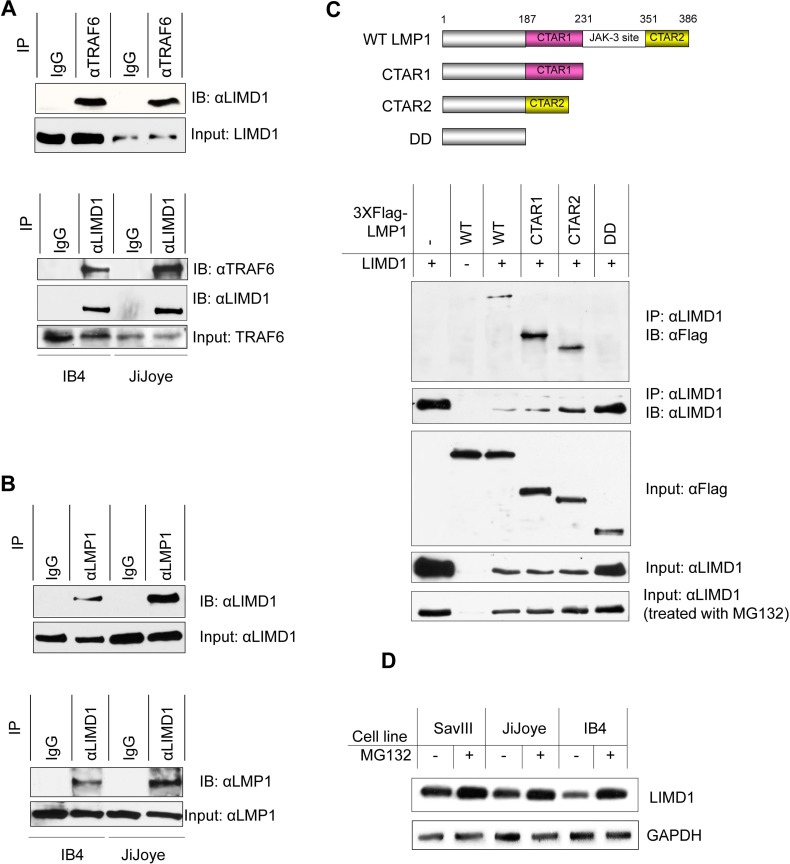
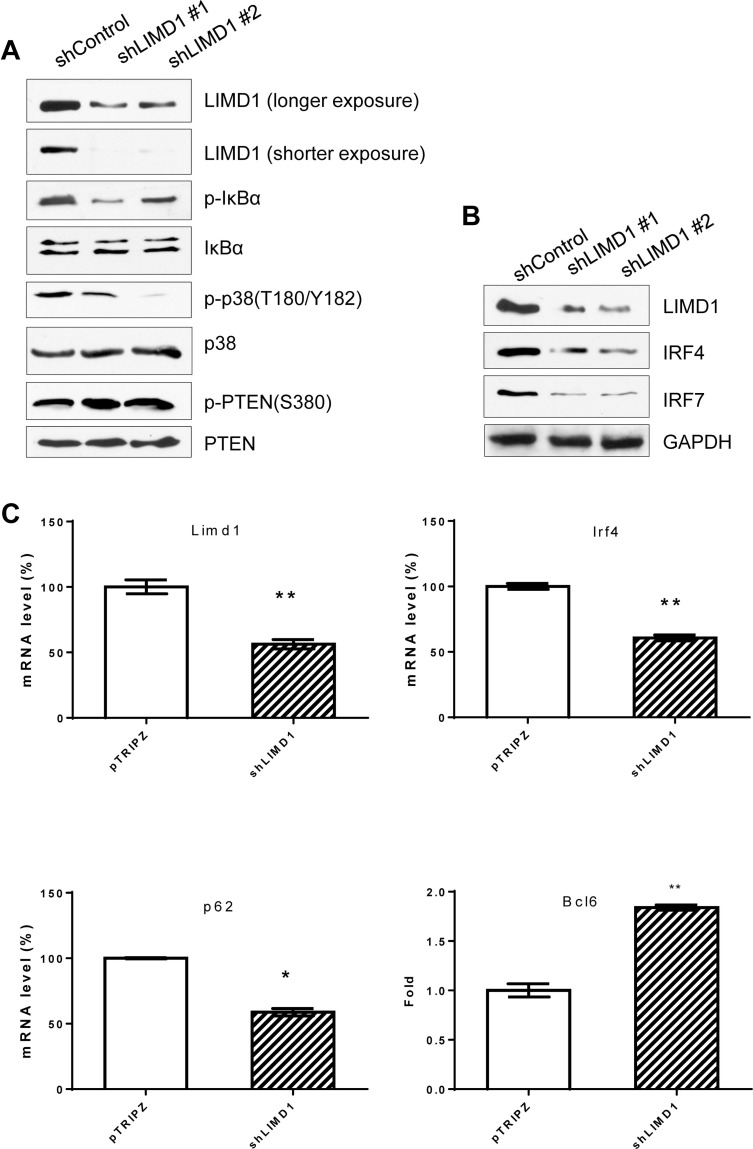
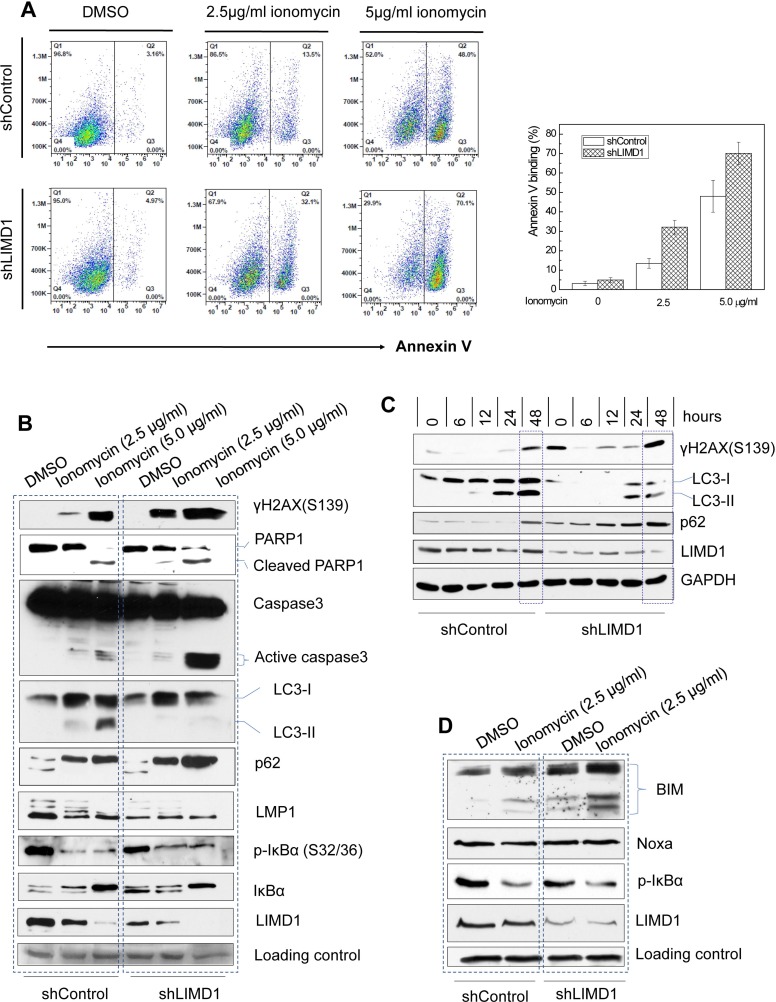
LIMD1 (LIM domain-containing protein 1) is considered as a tumor suppressor, being deregulated in many cancers to include hematological malignancies; however, very little is known about the underlying mechanisms of its deregulation and its roles in carcinogenesis. Epstein-Barr Virus (EBV) is associated with a panel of malignancies of lymphocytic and epithelial origin. Using high throughput expression profiling, we have previously identified LIMD1 as a common marker associated with the oncogenic transcription factor IRF4 in EBV-related lymphomas and other hematological malignancies. In this study, we have identified potential conserved IRF4- and NFκB-binding motifs in the LIMD1 gene promoter, and both are demonstrated functional by promoter-reporter assays. We further show that LIMD1 is partially upregulated by EBV latent membrane protein 1 (LMP1) via IRF4 and NFκB in EBV latency. As to its role in the setting of EBV latent infection, we show that LIMD1 interacts with TRAF6, a crucial mediator of LMP1 signal transduction. Importantly, LIMD1 depletion impairs LMP1 signaling and functions, potentiates ionomycin-induced DNA damage and apoptosis, and inhibits p62-mediated selective autophagy. Taken together, these results show that LIMD1 is upregulated in EBV latency and plays an oncogenic role rather than that of a tumor suppressor. Our findings have identified LIMD1 as a novel player in EBV latency and oncogenesis, and open a novel research avenue, in which LIMD1 and p62 play crucial roles in linking DNA damage response (DDR), apoptosis, and autophagy and their potential interplay during viral oncogenesis.
LIMD1(含LIM结构域蛋白1)被认为是一种肿瘤抑制因子,在包括血液系统恶性肿瘤在内的多种癌症中表达失调;然而,对于其失调的潜在机制及其在致癌过程中的作用却知之甚少。爱泼斯坦-巴尔病毒(EBV)与一系列淋巴细胞和上皮来源的恶性肿瘤相关。我们先前利用高通量表达谱分析,在EBV相关淋巴瘤和其他血液系统恶性肿瘤中鉴定出LIMD1是与致癌转录因子IRF4相关的常见标志物。在本研究中,我们在LIMD1基因启动子中鉴定出潜在的保守IRF4和NFκB结合基序,并且通过启动子报告基因检测证实两者均具有功能。我们进一步表明,在EBV潜伏状态下,LIMD1通过IRF4和NFκB被EBV潜伏膜蛋白1(LMP1)部分上调。关于其在EBV潜伏感染中的作用,我们表明LIMD1与TRAF6相互作用,TRAF6是LMP1信号转导的关键介质。重要的是,LIMD1的缺失会损害LMP1信号传导和功能,增强离子霉素诱导的DNA损伤和凋亡,并抑制p62介导的选择性自噬。综上所述,这些结果表明LIMD1在EBV潜伏状态下上调并发挥致癌作用而非肿瘤抑制作用。我们的研究结果将LIMD1鉴定为EBV潜伏和致癌过程中的一个新角色,并开辟了一条新的研究途径,其中LIMD1和p62在连接DNA损伤反应(DDR)、凋亡和自噬以及它们在病毒致癌过程中的潜在相互作用中发挥关键作用。