ISGlobal, Barcelona Institute for Global Health, University of Barcelona, Hospital Clínic - Universitat de Barcelona, Rosselló, 132, 08036, Barcelona, Spain.
Athena Institute, Faculty of Science, Vrije Universiteit Amsterdam, Amsterdam, The Netherlands.
AIDS Behav. 2018 Aug;22(8):2435-2457. doi: 10.1007/s10461-018-2043-3.
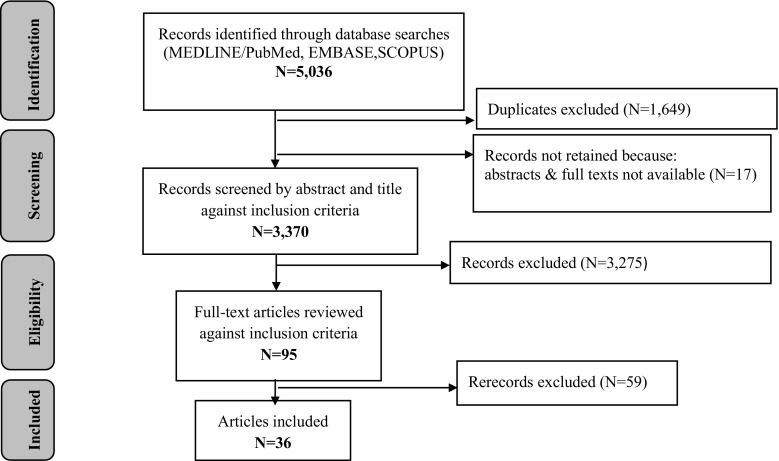
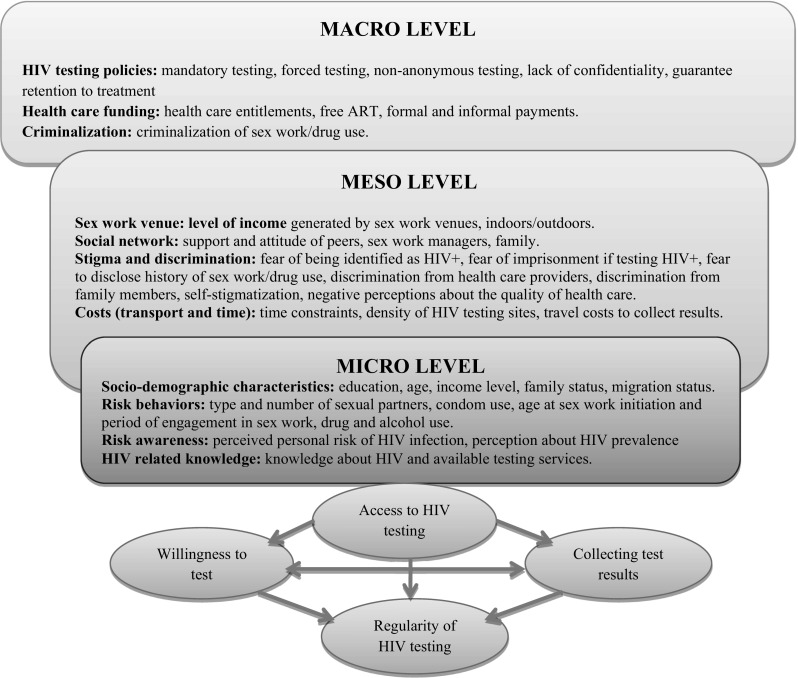
HIV testing uptake continues to be low among Female Sex Workers (FSWs). We synthesizes evidence on barriers and facilitators to HIV testing among FSW as well as frequencies of testing, willingness to test, and return rates to collect results. We systematically searched the MEDLINE/PubMed, EMBASE, SCOPUS databases for articles published in English between January 2000 and November 2017. Out of 5036 references screened, we retained 36 papers. The two barriers to HIV testing most commonly reported were financial and time costs-including low income, transportation costs, time constraints, and formal/informal payments-as well as the stigma and discrimination ascribed to HIV positive people and sex workers. Social support facilitated testing with consistently higher uptake amongst married FSWs and women who were encouraged to test by peers and managers. The consistent finding that social support facilitated HIV testing calls for its inclusion into current HIV testing strategies addressed at FSW.
艾滋病毒检测在女性性工作者(FSW)中仍然很低。我们综合了有关 FSW 艾滋病毒检测的障碍和促进因素的证据,以及检测的频率、检测意愿和返回收集结果的比例。我们系统地在 MEDLINE/PubMed、EMBASE、SCOPUS 数据库中搜索了 2000 年 1 月至 2017 年 11 月期间发表的英文文章。在筛选出的 5036 篇参考文献中,我们保留了 36 篇论文。报告的艾滋病毒检测的两个最常见的障碍是经济和时间成本,包括低收入、交通成本、时间限制以及对艾滋病毒阳性者和性工作者的污名化和歧视。社会支持促进了检测,已婚性工作者和受到同伴和管理者鼓励检测的女性检测率更高。社会支持促进艾滋病毒检测的一致性发现呼吁将其纳入当前针对 FSW 的艾滋病毒检测策略。