Yoshioka Takahiro, Shien Kazuhiko, Namba Kei, Torigoe Hidejiro, Sato Hiroki, Tomida Shuta, Yamamoto Hiromasa, Asano Hiroaki, Soh Junichi, Tsukuda Kazunori, Nagasaka Takeshi, Fujiwara Toshiyoshi, Toyooka Shinichi
Department of Gastroenterological Surgery, Okayama University Graduate School of Medicine, Dentistry and Pharmaceutical Sciences, Okayama, Japan.
Department of General Thoracic Surgery, Breast and Endocrinological Surgery, Okayama University Graduate School of Medicine, Dentistry and Pharmaceutical Sciences, Okayama, Japan.
Cancer Sci. 2018 Apr;109(4):1166-1176. doi: 10.1111/cas.13546. Epub 2018 Mar 25.
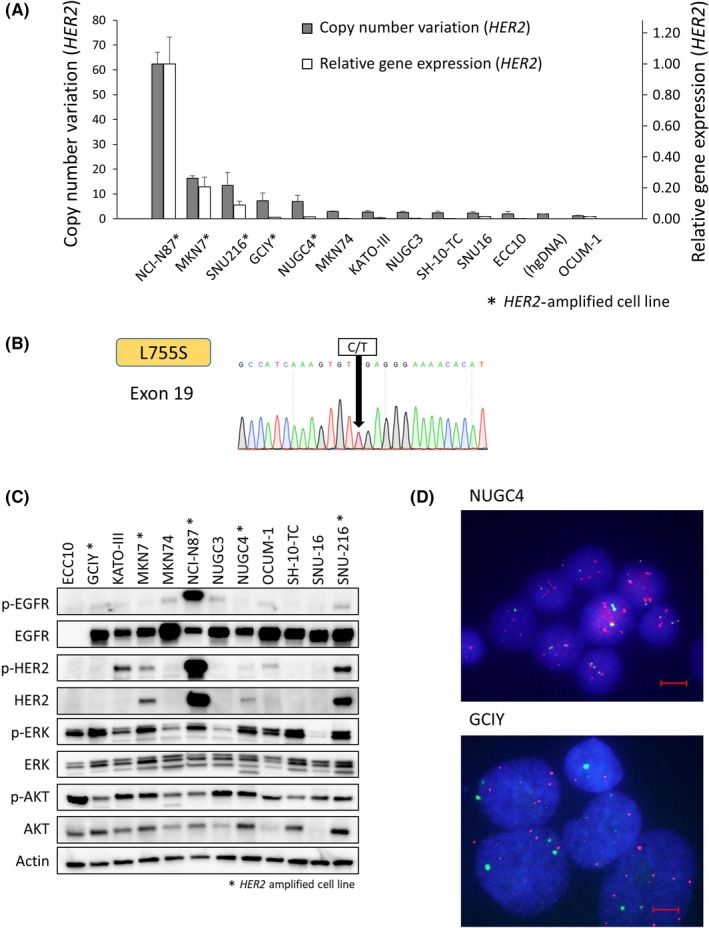
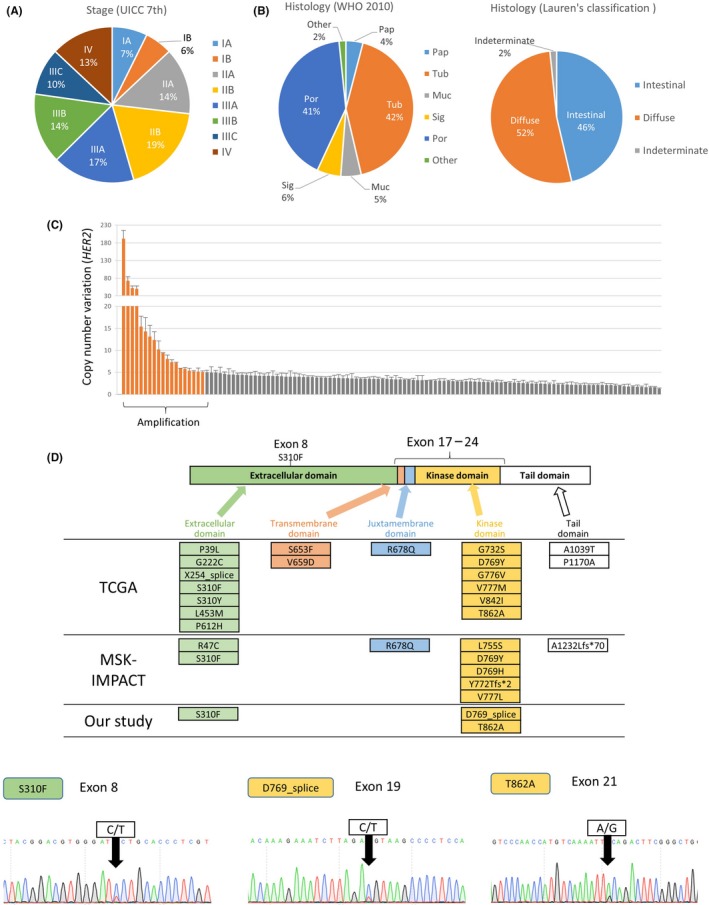
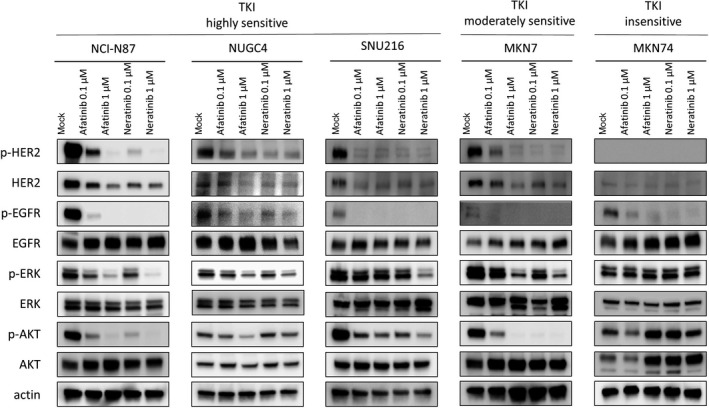
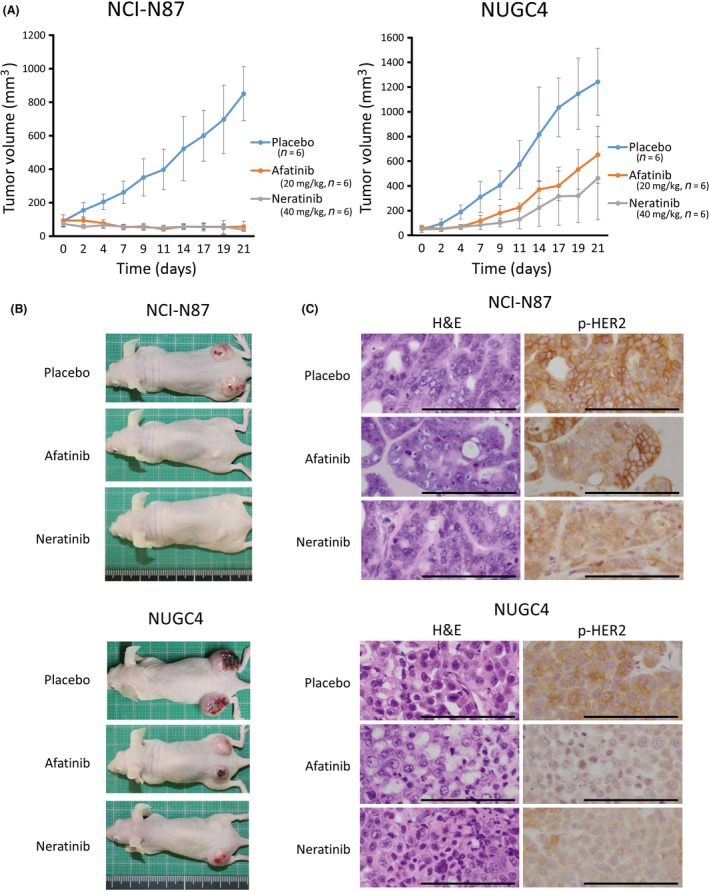
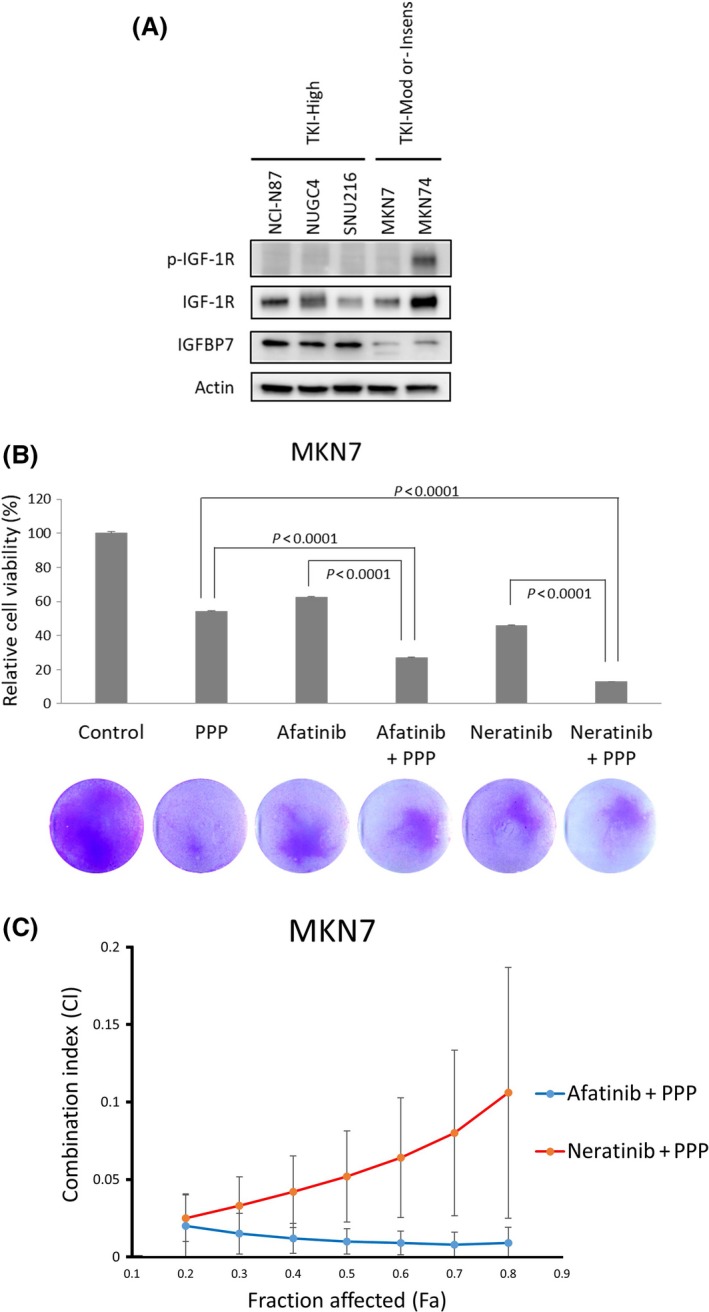
Molecularly targeted therapy has enabled outstanding advances in cancer treatment. Whereas various anti-human epidermal growth factor receptor 2 (HER2) drugs have been developed, trastuzumab is still the only anti-HER2 drug presently available for gastric cancer. In this study, we propose novel treatment options for patients with HER2-positive gastric cancer. First, we determined the molecular profiles of 12 gastric cancer cell lines, and examined the antitumor effect of the pan-HER inhibitors afatinib and neratinib in those cell lines. Additionally, we analyzed HER2 alteration in 123 primary gastric cancers resected from Japanese patients to clarify possible candidates with the potential to respond to these drugs. In the drug sensitivity analysis, both afatinib and neratinib produced an antitumor effect in most of the HER2-amplified cell lines. However, some cells were not sensitive to the drugs. When the molecular profiles of the cells were compared based on the drug sensitivities, we found that cancer cells with lower mRNA expression levels of IGFBP7, a tumor suppressor gene that inhibits the activation of insulin-like growth factor-1 receptor (IGF-1R), were less sensitive to pan-HER inhibitors. A combination therapy consisting of pan-HER inhibitors and an IGF-1R inhibitor, picropodophyllin, showed a notable synergistic effect. Among 123 clinical samples, we found 19 cases of HER2 amplification and three cases of oncogenic mutations. In conclusion, afatinib and neratinib are promising therapeutic options for the treatment of HER2-amplified gastric cancer. In addition to HER2 amplification, IGFBP7 might be a biomarker of sensitivity to these drugs, and IGF-1R-targeting therapy can overcome drug insensitiveness in HER2-amplified gastric cancer.
分子靶向治疗已使癌症治疗取得了显著进展。尽管已经开发出了多种抗人表皮生长因子受体2(HER2)药物,但曲妥珠单抗仍是目前唯一可用于胃癌治疗的抗HER2药物。在本研究中,我们为HER2阳性胃癌患者提出了新的治疗方案。首先,我们测定了12种胃癌细胞系的分子特征,并检测了泛HER抑制剂阿法替尼和来那替尼在这些细胞系中的抗肿瘤作用。此外,我们分析了123例日本患者切除的原发性胃癌中的HER2改变,以明确可能对这些药物有反应的候选对象。在药物敏感性分析中,阿法替尼和来那替尼在大多数HER2扩增的细胞系中均产生了抗肿瘤作用。然而,一些细胞对这些药物不敏感。当根据药物敏感性比较细胞的分子特征时,我们发现,作为一种抑制胰岛素样生长因子-1受体(IGF-1R)激活的肿瘤抑制基因,IGFBP7的mRNA表达水平较低的癌细胞对泛HER抑制剂不太敏感。由泛HER抑制剂和IGF-1R抑制剂鬼臼苦素组成的联合治疗显示出显著的协同效应。在123例临床样本中,我们发现了19例HER2扩增和3例致癌突变。总之,阿法替尼和来那替尼是治疗HER2扩增型胃癌的有前景的治疗选择。除了HER2扩增外,IGFBP7可能是对这些药物敏感性的生物标志物,并且靶向IGF-1R的治疗可以克服HER2扩增型胃癌中的药物不敏感性。