Pushpakom Sudeep P, Adaikalakoteswari Antonysunil, Owen Andrew, Back David J, Tripathi Gyanendra, Kumar Sudhesh, McTernan Philip, Pirmohamed Munir
1 Department of Molecular and Clinical Pharmacology, The Wolfson Centre for Personalised Medicine, University of Liverpool, Liverpool, UK.
2 Warwick Medical School, University of Warwick, Coventry, UK.
Diab Vasc Dis Res. 2018 May;15(3):233-242. doi: 10.1177/1479164118757924. Epub 2018 Feb 21.
Antiretroviral therapy in HIV-positive patients leads to insulin resistance which is central to the pathogenesis of various metabolic abnormalities and cardiovascular disease seen in this patient group. We have investigated the dose-response relationship of telmisartan, an antihypertensive, on adipocytes in vitro in order to determine whether it may have metabolic beneficial effects.
Using in vitro chronic toxicity models (3T3-F442A murine and primary human adipocytes), we evaluated the effects of different concentrations of telmisartan on adipocyte differentiation and adipogenic gene expression using lipid accumulation assays and real-time polymerase chain reaction, respectively. Adipokine secretion and expression of insulin signalling mediators were evaluated using enzyme-linked immunosorbent assays.
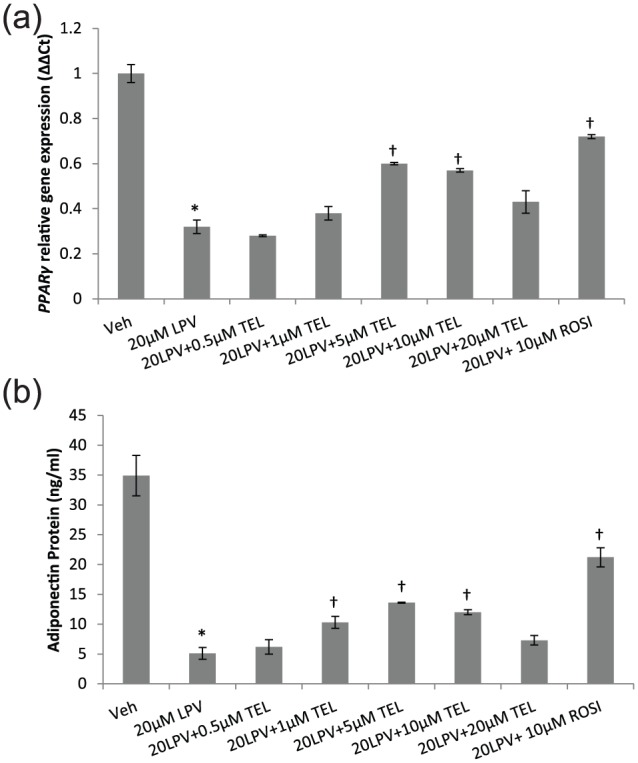
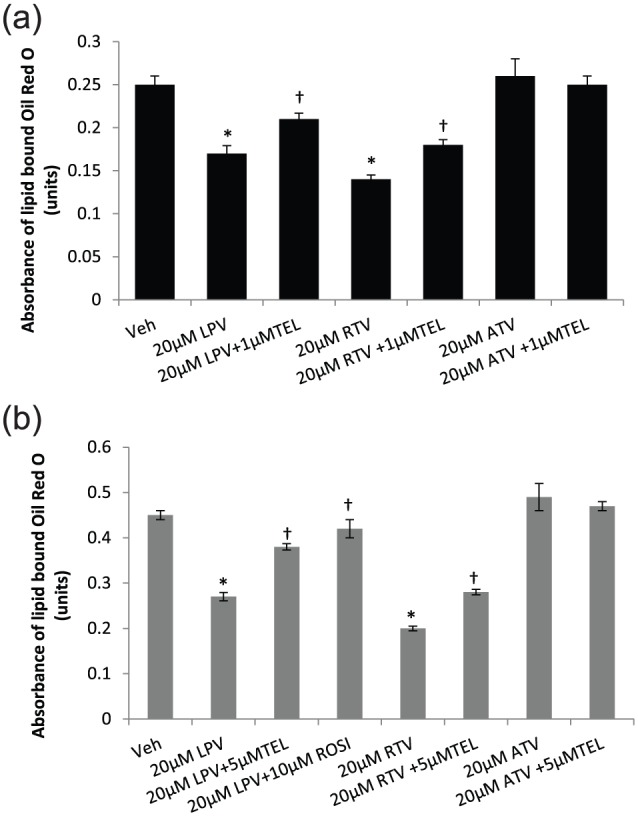
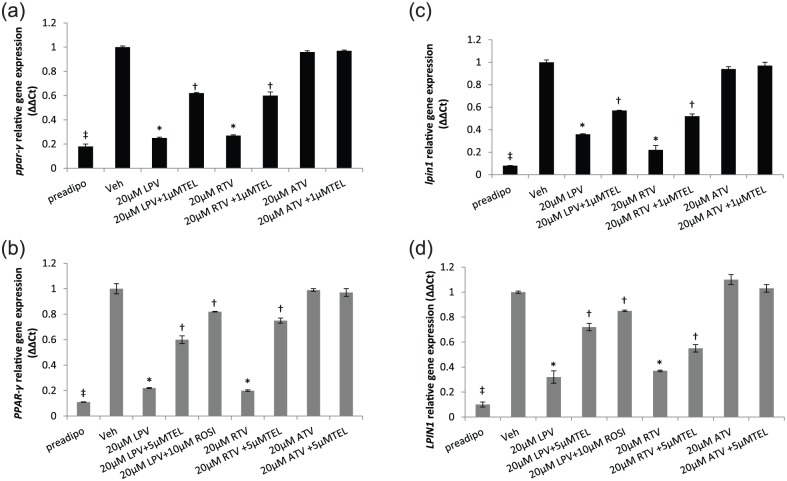
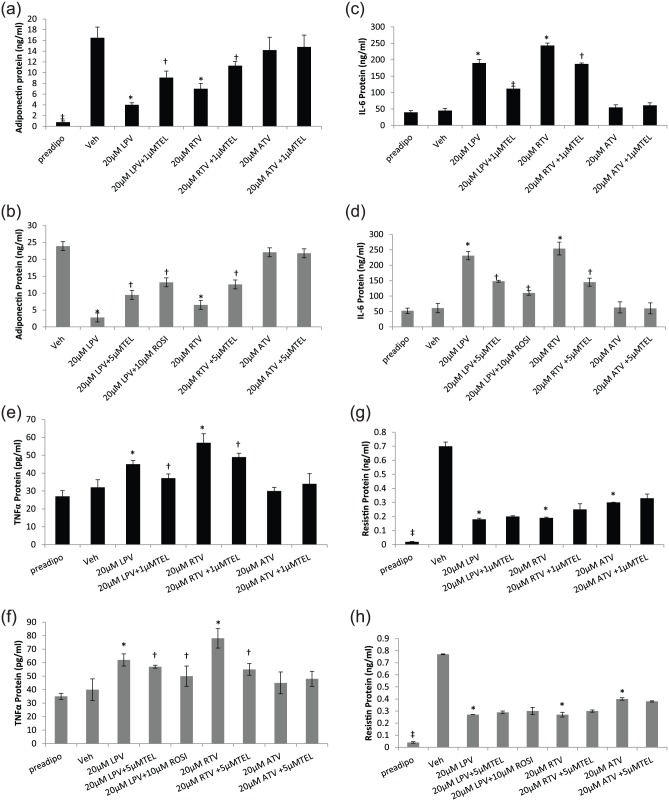
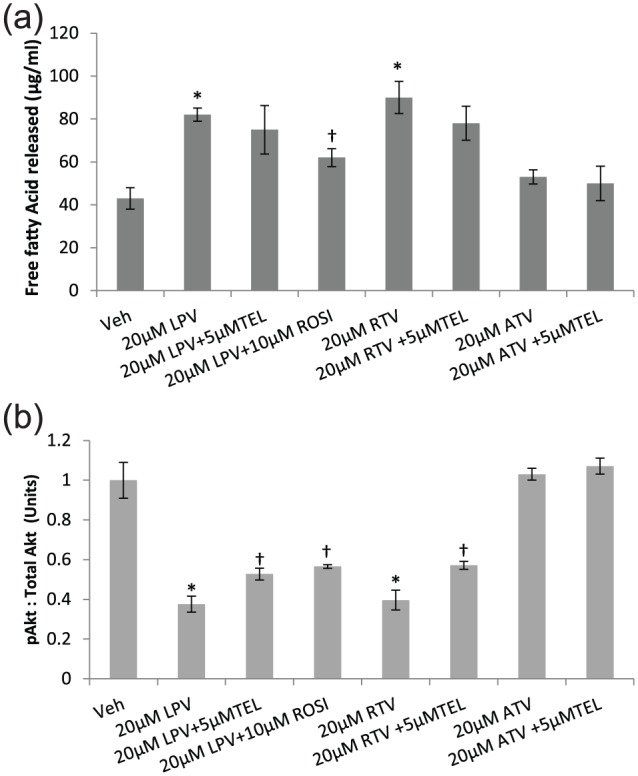
Telmisartan partially reversed the deleterious effects of antiretrovirals on adipocyte lipid accumulation, expression of adipogenic regulators (peroxisome proliferator receptor-gamma and lipin 1), adipokine secretion and expression of the insulin signalling mediator pAkt. The metabolic effects of telmisartan followed a non-monotonic response with the maximal effect observed at 5 µM in the primary human adipocyte model.
Telmisartan has beneficial metabolic effects in adipocytes in vitro, but its potential to reduce antiretroviral-induced cardiometabolic disease in HIV-infected individuals needs to be evaluated in a well-designed adequately powered clinical trial.
对HIV阳性患者进行抗逆转录病毒治疗会导致胰岛素抵抗,而胰岛素抵抗是该患者群体中出现的各种代谢异常和心血管疾病发病机制的核心。我们研究了抗高血压药物替米沙坦在体外对脂肪细胞的剂量反应关系,以确定它是否可能具有代谢有益作用。
使用体外慢性毒性模型(3T3-F442A小鼠和原代人脂肪细胞),我们分别通过脂质积累试验和实时聚合酶链反应评估了不同浓度替米沙坦对脂肪细胞分化和脂肪生成基因表达的影响。使用酶联免疫吸附测定法评估脂肪因子分泌和胰岛素信号介质的表达。
替米沙坦部分逆转了抗逆转录病毒药物对脂肪细胞脂质积累、脂肪生成调节因子(过氧化物酶体增殖物激活受体γ和脂素1)表达、脂肪因子分泌以及胰岛素信号介质pAkt表达的有害影响。替米沙坦的代谢作用呈现非单调反应,在原代人脂肪细胞模型中,5 μM时观察到最大效应。
替米沙坦在体外对脂肪细胞具有有益的代谢作用,但需要通过精心设计、有足够效力的临床试验来评估其降低HIV感染者抗逆转录病毒药物诱导的心脏代谢疾病的潜力。