Lee Joo-Hyeon, Kim Hyung-Jun, Chang Joonyeon, Han Suk Hee, Koo Hyun Cheol, Sayed Shehrin, Hong Seokmin, Datta Supriyo
Center for Spintronics, Korea Institute of Science and Technology, Seoul, 02792, Korea.
KU-KIST Graduate School of Converging Science and Technology, Korea University, Seoul, 02481, Korea.
Sci Rep. 2018 Feb 21;8(1):3397. doi: 10.1038/s41598-018-21760-9.
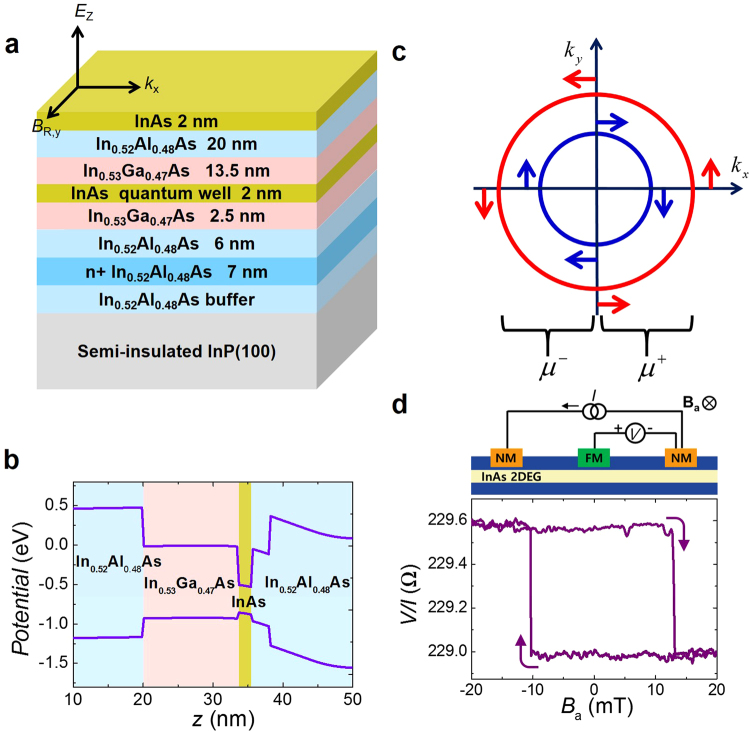
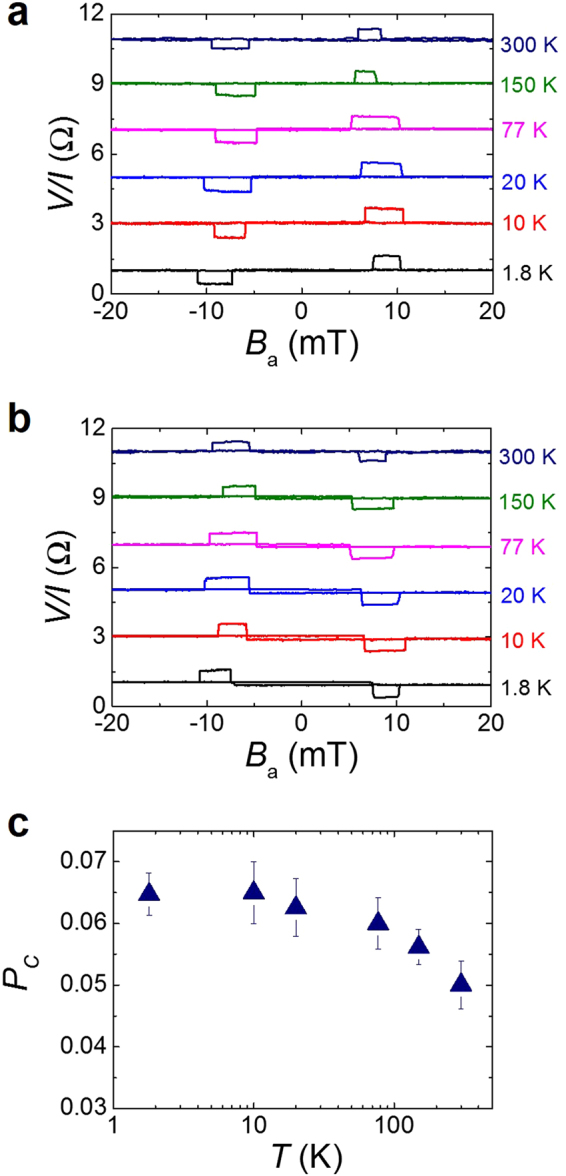
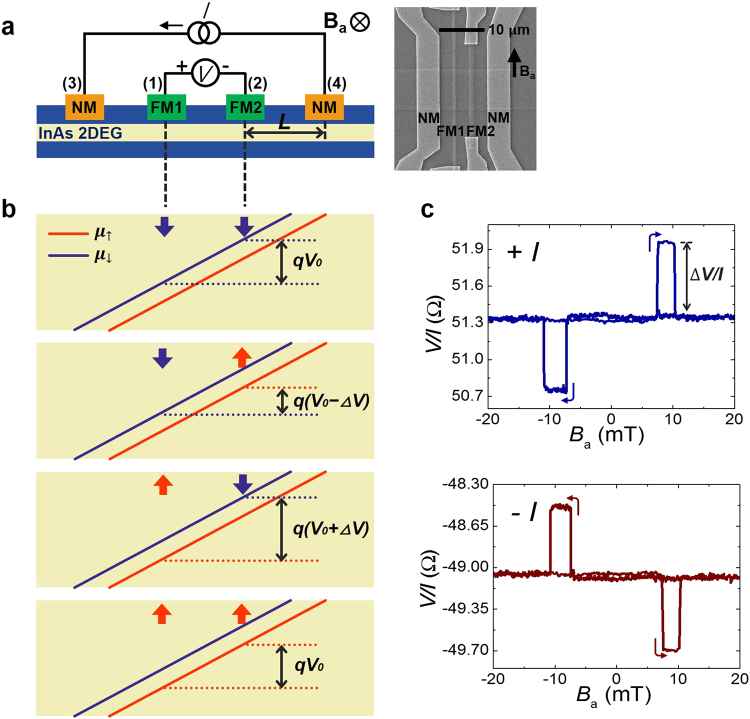
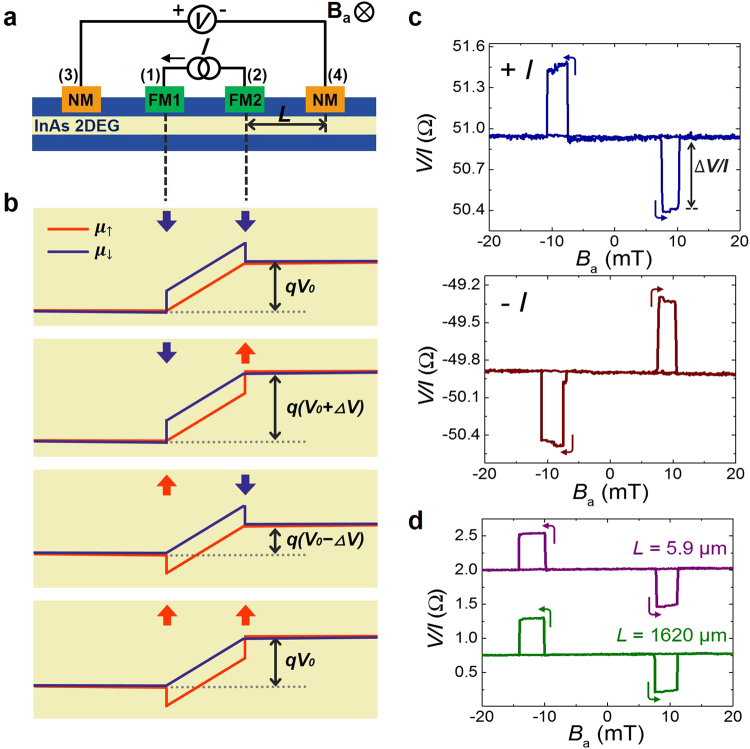
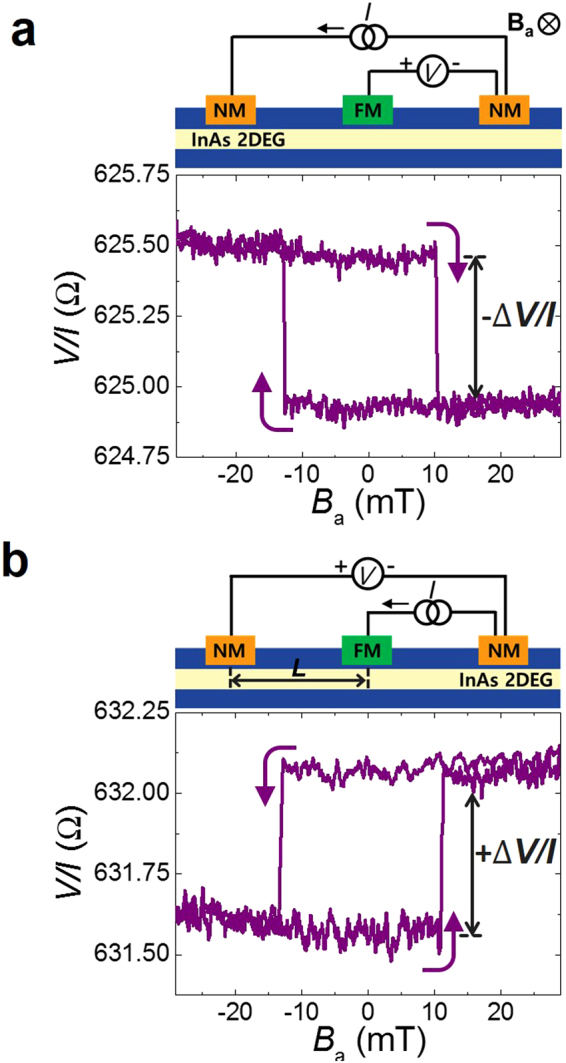
In a strong spin-orbit interaction system, the existence of three resistance states were observed when two ferromagnetic (FM) contacts were used as current terminals while a separate normal metal contact pair was used as voltage terminals. This result is strikingly different from ordinary spin valve or magnetic tunnel junction devices, which have only two resistance states corresponding to parallel (R) and antiparallel (R) alignments of the FM contacts. Our experimental results on a quantum well layer with a strong Rashba effect clearly exhibit unequal antiparallel states, i.e., R > R > R, up to room temperature. The three-states are observed without any degradation when the distance between the non-magnetic voltage probe and the ferromagnetic current probe was increased up to 1.6 mm.
在强自旋轨道相互作用系统中,当使用两个铁磁(FM)接触作为电流端,而使用单独的普通金属接触对作为电压端时,观察到存在三种电阻状态。这一结果与普通自旋阀或磁隧道结器件显著不同,后者仅有对应于FM接触平行(R)和反平行(R)排列的两种电阻状态。我们在具有强Rashba效应的量子阱层上的实验结果清楚地表明,直至室温,反平行状态是不等的,即R>R>R。当非磁性电压探针与铁磁电流探针之间的距离增加至1.6毫米时,仍能观察到这三种状态且无任何退化。