Department of Gastroenterology, Shandong Provincial Hospital Affiliated to Shandong University, Jinan 250021, Shandong Province, China.
World J Gastroenterol. 2018 Feb 21;24(7):819-832. doi: 10.3748/wjg.v24.i7.819.
To investigate the effect of metformin on activated hepatic stellate cells (HSCs) and the possible signaling pathways involved.
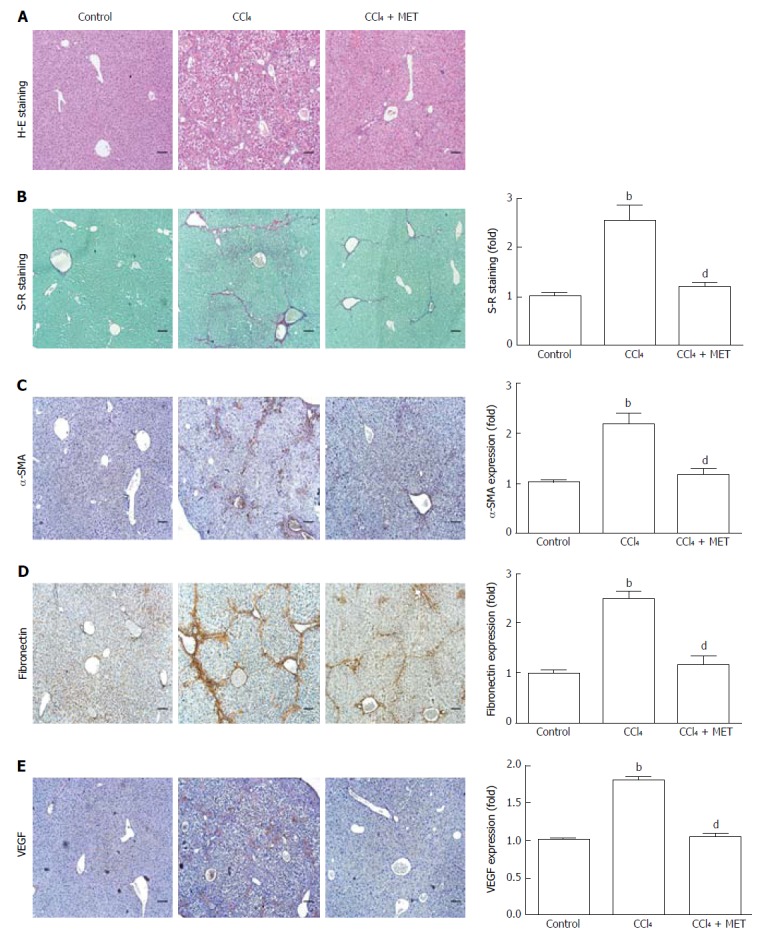
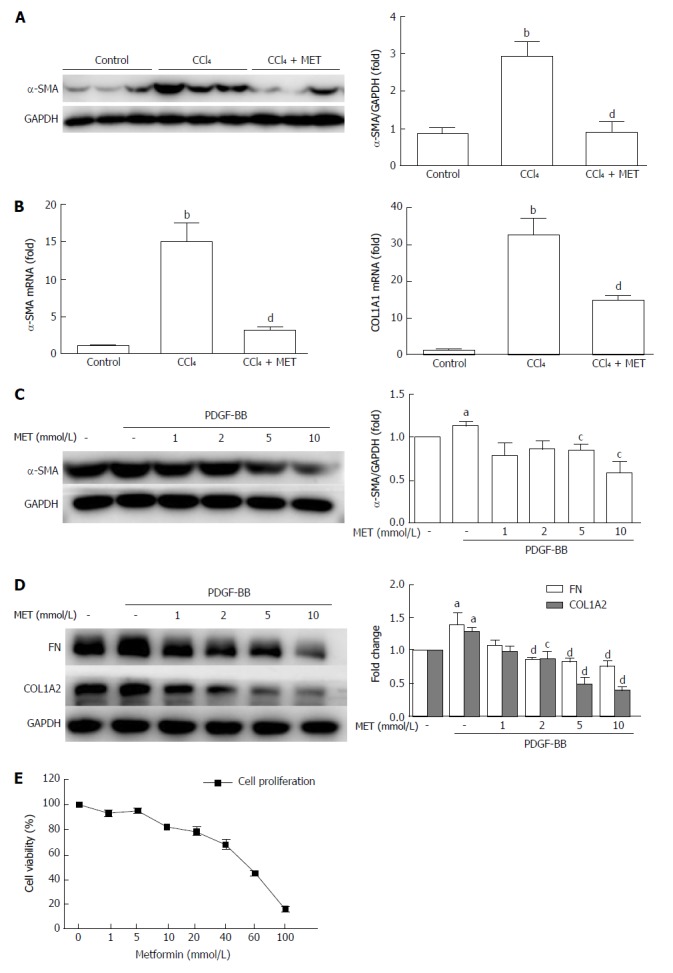
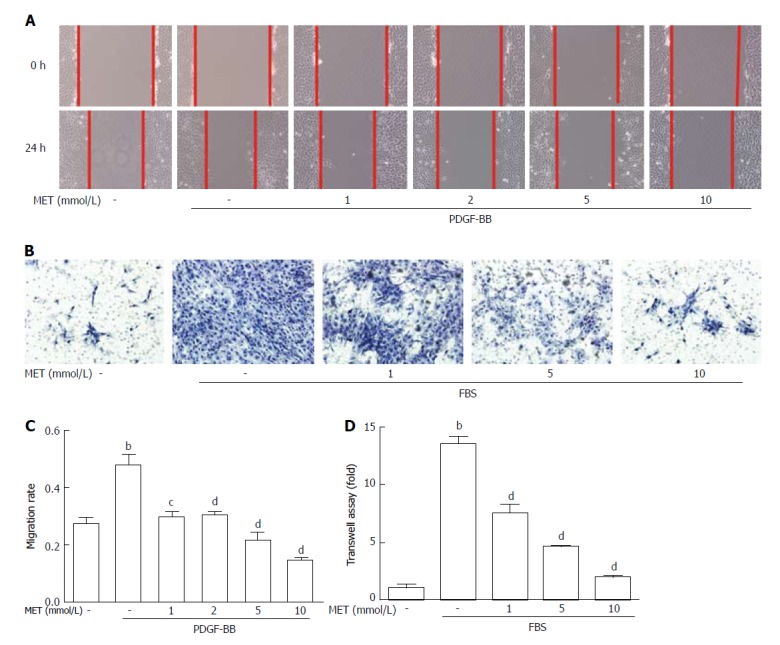
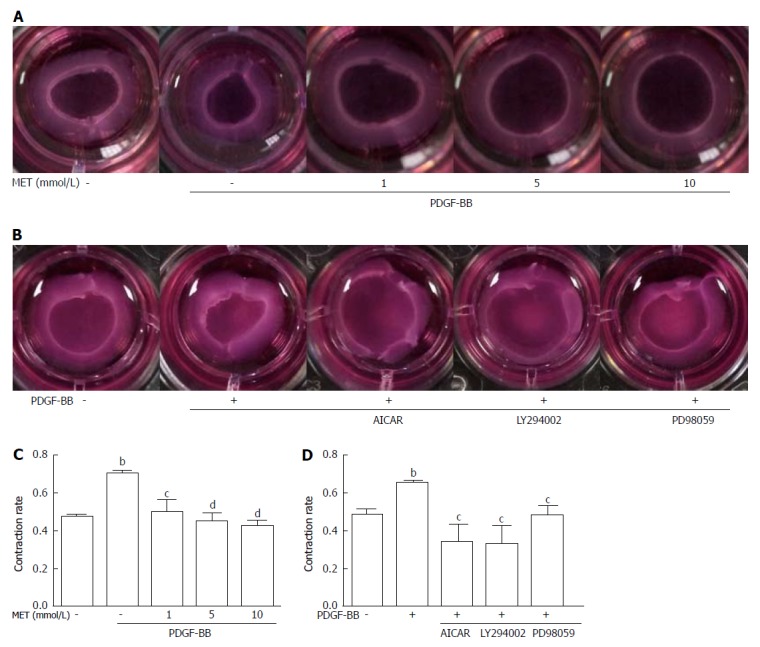
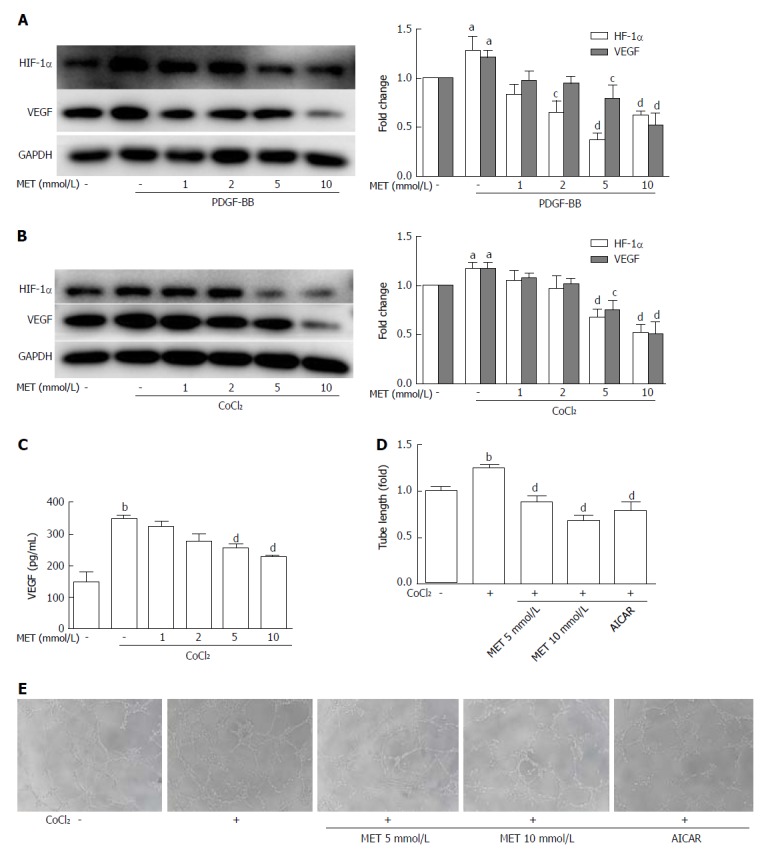
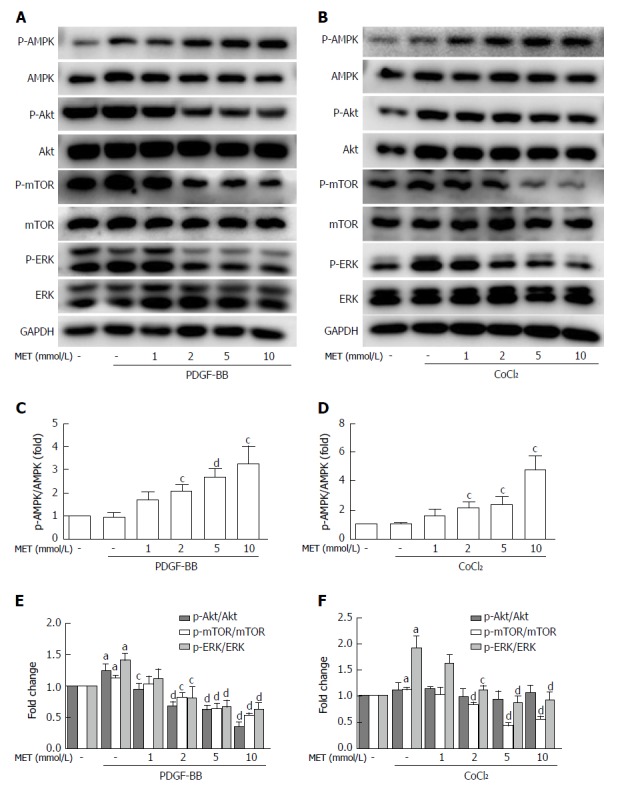
A fibrotic mouse model was generated by intraperitoneal injection of carbon tetrachloride (CCl) and subsequent treatment with or without metformin. The level of fibrosis was detected by hematoxylin-eosin staining, Sirius Red staining, and immunohistochemistry. The HSC cell line LX-2 was used for studies. The effect of metformin on cell proliferation (CCK8 assay), motility (scratch test and Transwell assay), contraction (collagen gel contraction assay), extracellular matrix (ECM) secretion (Western blot), and angiogenesis (ELISA and tube formation assay) was investigated. We also analyzed the possible signaling pathways involved by Western blot analysis.
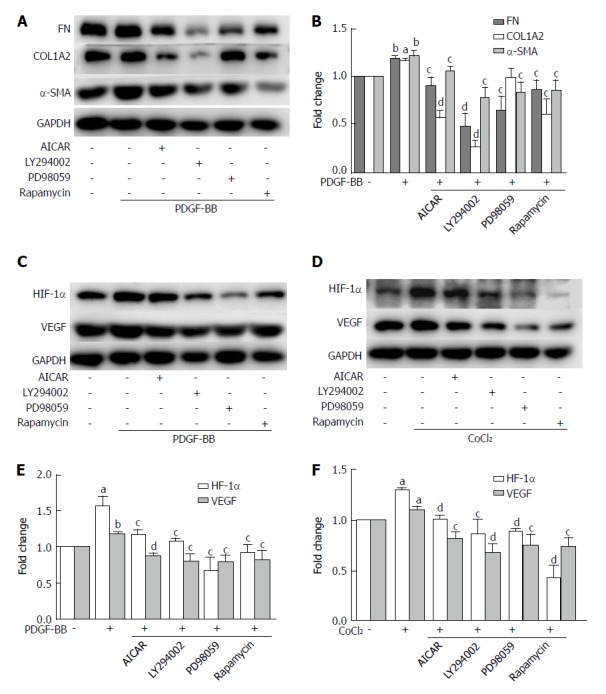
Mice developed marked liver fibrosis after intraperitoneal injection with CCl for 6 wk. Metformin decreased the activation of HSCs, reduced the deposition of ECM, and inhibited angiogenesis in CCl-treated mice. Platelet-derived growth factor (PDGF) promoted the fibrogenic response of HSCs , while metformin inhibited the activation, proliferation, migration, and contraction of HSCs, and reduced the secretion of ECM. Metformin decreased the expression of vascular endothelial growth factor (VEGF) in HSCs through inhibition of hypoxia inducible factor (HIF)-1α in both PDGF-BB treatment and hypoxic conditions, and it down-regulated VEGF secretion by HSCs and inhibited HSC-based angiogenesis in hypoxic conditions . The inhibitory effects of metformin on activated HSCs were mediated by inhibiting the Akt/mammalian target of rapamycin (mTOR) and extracellular signal-regulated kinase (ERK) pathways the activation of adenosine monophosphate-activated protein kinase (AMPK).
Metformin attenuates the fibrogenic response of HSCs and , and may therefore be useful for the treatment of chronic liver diseases.
研究二甲双胍对激活的肝星状细胞(HSCs)的影响及其可能涉及的信号通路。
通过腹腔注射四氯化碳(CCl)并随后用或不用二甲双胍处理,建立纤维化小鼠模型。通过苏木精-伊红染色、天狼星红染色和免疫组织化学检测纤维化程度。使用肝星状细胞系 LX-2 进行研究。通过 CCK8 测定法、划痕试验和 Transwell 测定法研究二甲双胍对细胞增殖、迁移和收缩的影响,通过 Western blot 分析细胞外基质(ECM)分泌,通过 ELISA 和管形成测定法研究血管生成。我们还通过 Western blot 分析分析了可能涉及的信号通路。
腹腔注射 CCl 6 周后,小鼠肝脏发生明显的纤维化。二甲双胍降低了 CCl 处理小鼠中 HSCs 的激活,减少 ECM 的沉积,并抑制血管生成。血小板衍生生长因子(PDGF)促进 HSCs 的纤维生成反应,而二甲双胍抑制 HSCs 的激活、增殖、迁移和收缩,并减少 ECM 的分泌。二甲双胍通过抑制缺氧诱导因子(HIF)-1α降低 PDGF-BB 处理和缺氧条件下 HSCs 中血管内皮生长因子(VEGF)的表达,并通过抑制缺氧条件下 HSCs 中 VEGF 的分泌和抑制 HSCs 为基础的血管生成来降低其分泌。二甲双胍对激活的 HSCs 的抑制作用是通过抑制 Akt/哺乳动物雷帕霉素靶蛋白(mTOR)和细胞外信号调节激酶(ERK)通路以及腺苷单磷酸激活蛋白激酶(AMPK)的激活来介导的。
二甲双胍可减弱 HSCs 的纤维生成反应,因此可能对慢性肝病的治疗有用。