Moy Jamie K, Khoutorsky Arkady, Asiedu Marina N, Dussor Gregory, Price Theodore J
School of Behavioral and Brain Sciences, University of Texas at Dallas, Richardson, TX, United States.
Department of Pharmacology, University of Arizona, Tucson, AZ, United States.
Front Cell Neurosci. 2018 Feb 6;12:29. doi: 10.3389/fncel.2018.00029. eCollection 2018.
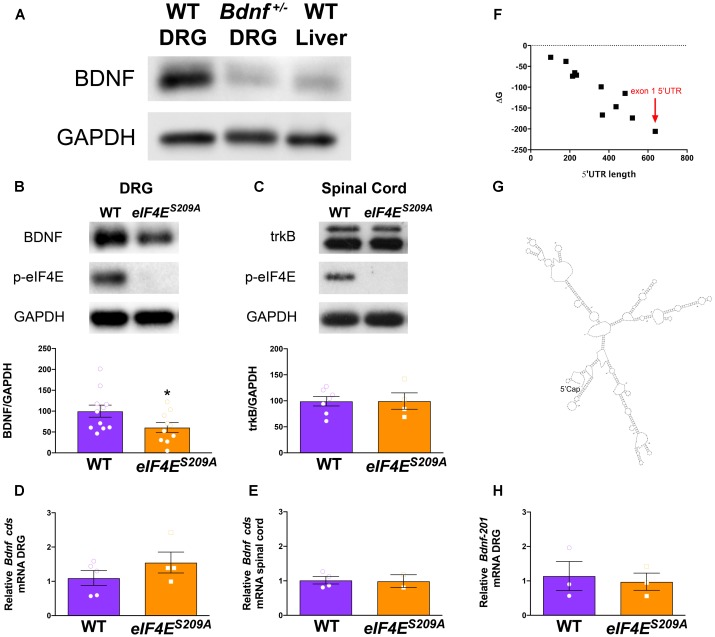
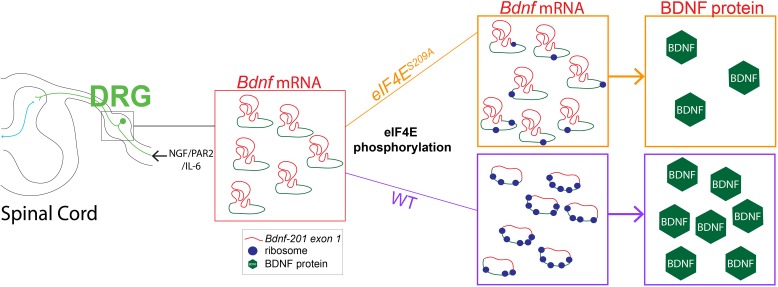
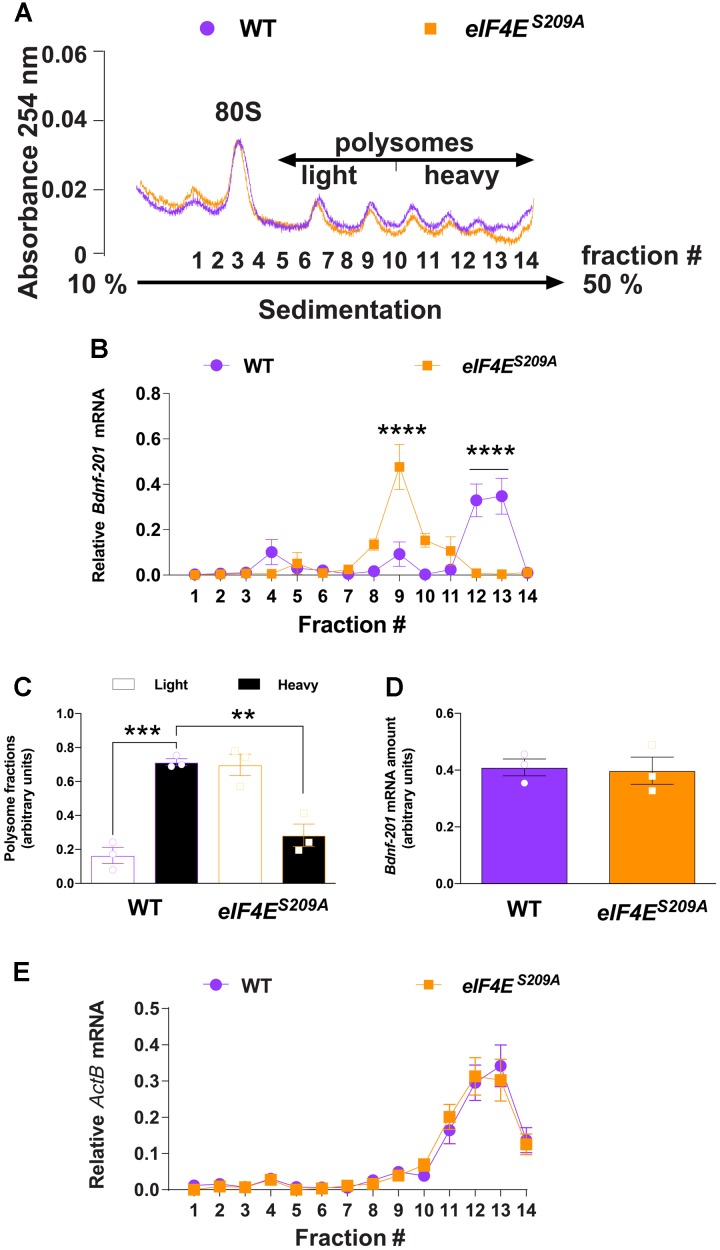
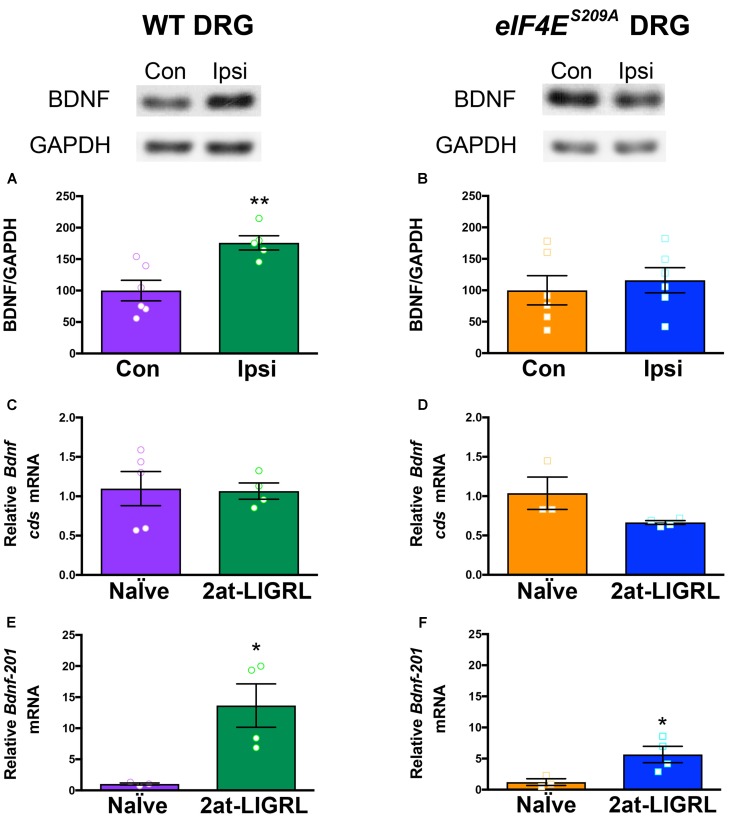
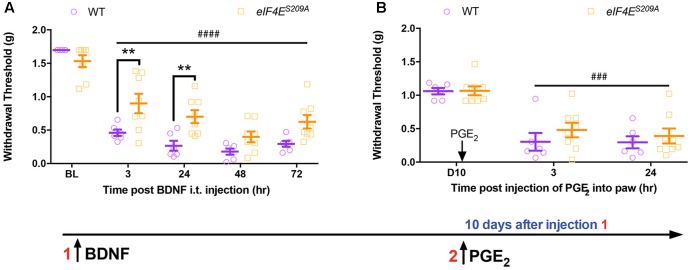
Plasticity in dorsal root ganglion (DRG) neurons that promotes pain requires activity-dependent mRNA translation. Protein synthesis inhibitors block the ability of many pain-promoting molecules to enhance excitability in DRG neurons and attenuate behavioral signs of pain plasticity. In line with this, we have recently shown that phosphorylation of the 5' cap-binding protein, eIF4E, plays a pivotal role in plasticity of DRG nociceptors in models of hyperalgesic priming. However, mRNA targets of eIF4E phosphorylation have not been elucidated in the DRG. Brain-derived neurotrophic factor (BDNF) signaling from nociceptors in the DRG to spinal dorsal horn neurons is an important mediator of hyperalgesic priming. Regulatory mechanisms that promote pain plasticity via controlling BDNF expression that is involved in promoting pain plasticity have not been identified. We show that phosphorylation of eIF4E is paramount for mRNA translation in the DRG. mRNA translation is reduced in mice lacking eIF4E phosphorylation ( ) and pro-nociceptive factors fail to increase BDNF protein levels in the DRGs of these mice despite robust upregulation of mRNA levels. Importantly, bypassing the DRG by giving intrathecal injection of BDNF in mice creates a strong hyperalgesic priming response that is normally absent or reduced in these mice. We conclude that eIF4E phosphorylation-mediated translational control of BDNF expression is a key mechanism for nociceptor plasticity leading to hyperalgesic priming.
背根神经节(DRG)神经元中促进疼痛的可塑性需要依赖活动的mRNA翻译。蛋白质合成抑制剂会阻断许多促进疼痛的分子增强DRG神经元兴奋性以及减轻疼痛可塑性行为迹象的能力。与此一致的是,我们最近发现5'帽结合蛋白eIF4E的磷酸化在痛觉过敏预处理模型中DRG伤害感受器的可塑性中起关键作用。然而,DRG中eIF4E磷酸化的mRNA靶点尚未阐明。从DRG中的伤害感受器到脊髓背角神经元的脑源性神经营养因子(BDNF)信号传导是痛觉过敏预处理的重要介质。尚未确定通过控制参与促进疼痛可塑性的BDNF表达来促进疼痛可塑性的调节机制。我们表明,eIF4E的磷酸化对于DRG中的mRNA翻译至关重要。在缺乏eIF4E磷酸化的小鼠中,mRNA翻译减少( ),并且尽管mRNA水平强烈上调,但伤害感受性前体因子未能增加这些小鼠DRG中的BDNF蛋白水平。重要的是,通过在小鼠中鞘内注射BDNF绕过DRG会产生强烈的痛觉过敏预处理反应,而这种反应在这些小鼠中通常不存在或减弱。我们得出结论,eIF4E磷酸化介导的BDNF表达的翻译控制是导致痛觉过敏预处理的伤害感受器可塑性的关键机制。