Kimball Bruce A, Alonso-Rodríguez Aura M, Cavaleri Molly A, Reed Sasha C, González Grizelle, Wood Tana E
The Greenleaf Group Phoenix AZ USA.
International Institute of Tropical Forestry USDA Forest Service Luquillo PR USA.
Ecol Evol. 2018 Jan 15;8(4):1932-1944. doi: 10.1002/ece3.3780. eCollection 2018 Feb.
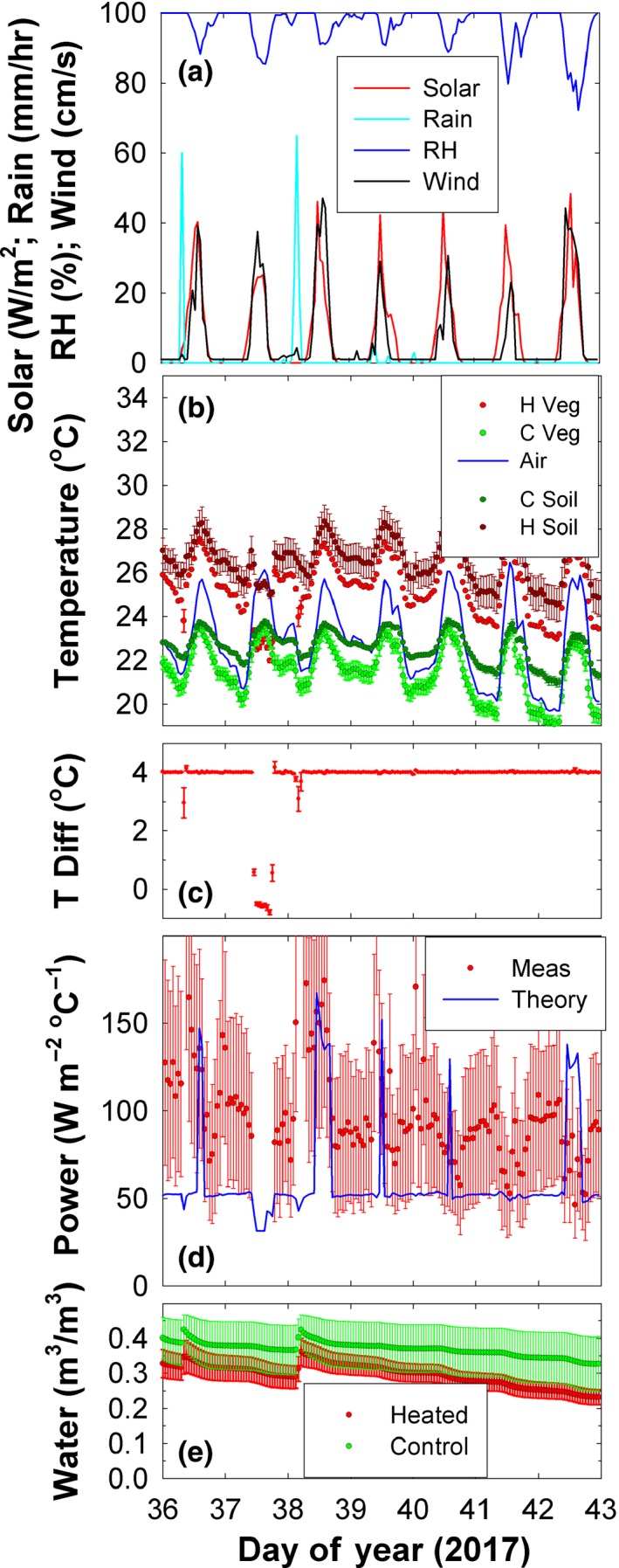
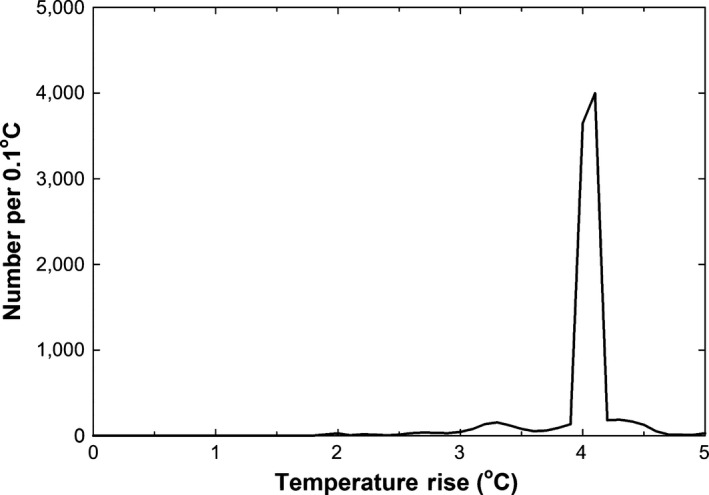
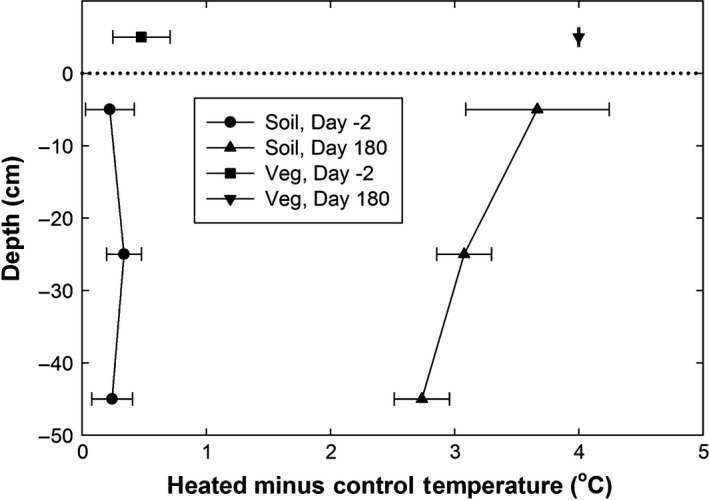
The response of tropical forests to global warming is one of the largest uncertainties in predicting the future carbon balance of Earth. To determine the likely effects of elevated temperatures on tropical forest understory plants and soils, as well as other ecosystems, an infrared (IR) heater system was developed to provide in situ warming for the Tropical Responses to Altered Climate Experiment (TRACE) in the Luquillo Experimental Forest in Puerto Rico. Three replicate heated 4-m-diameter plots were warmed to maintain a 4°C increase in understory vegetation compared to three unheated control plots, as sensed by IR thermometers. The equipment was larger than any used previously and was subjected to challenges different from those of many temperate ecosystem warming systems, including frequent power surges and outages, high humidity, heavy rains, hurricanes, saturated clayey soils, and steep slopes. The system was able to maintain the target 4.0°C increase in hourly average vegetation temperatures to within ± 0.1°C. The vegetation was heterogeneous and on a 21° slope, which decreased uniformity of the warming treatment on the plots; yet, the green leaves were fairly uniformly warmed, and there was little difference among 0-10 cm depth soil temperatures at the plot centers, edges, and midway between. Soil temperatures at the 40-50 cm depth increased about 3°C compared to the controls after a month of warming. As expected, the soil in the heated plots dried faster than that of the control plots, but the average soil moisture remained adequate for the plants. The TRACE heating system produced an adequately uniform warming precisely controlled down to at least 50-cm soil depth, thereby creating a treatment that allows for assessing mechanistic responses of tropical plants and soil to warming, with applicability to other ecosystems. No physical obstacles to scaling the approach to taller vegetation (i.e., trees) and larger plots were observed.
热带森林对全球变暖的响应是预测地球未来碳平衡时最大的不确定因素之一。为了确定气温升高对热带森林林下植物、土壤以及其他生态系统可能产生的影响,人们开发了一种红外(IR)加热器系统,用于为波多黎各卢基约实验森林中的热带气候变化响应实验(TRACE)提供原位加热。通过红外温度计感应,与三个未加热的对照样地相比,三个重复的直径4米的加热样地被加热,以使林下植被温度升高4°C。该设备比以往使用的任何设备都要大,并且面临着与许多温带生态系统变暖系统不同的挑战,包括频繁的电涌和停电、高湿度、暴雨、飓风、饱和的黏性土壤以及陡坡。该系统能够将每小时平均植被温度维持在目标升高的4.0°C以内,误差在±0.1°C 。植被是异质的,且位于21°的斜坡上,这降低了样地升温处理的均匀性;然而,绿叶被相当均匀地加热,样地中心、边缘和中间位置0 - 10厘米深度的土壤温度差异不大。加热一个月后,40 - 50厘米深度的土壤温度比对照样地升高了约3°C。正如预期的那样,加热样地的土壤比对照样地干燥得更快,但平均土壤湿度对植物来说仍然充足。TRACE加热系统产生了足够均匀的升温,精确控制到至少50厘米的土壤深度,从而创建了一种能够评估热带植物和土壤对变暖的机制响应的处理方法,并且适用于其他生态系统。未观察到将该方法扩展到更高植被(即树木)和更大样地时存在的物理障碍。