van de Wal Marieke, Servaes Petra, Berry Rebecca, Thewes Belinda, Prins Judith
Department of Medical Psychology, Radboud University Medical Center, P.O. Box 9101, 6500 HB, Nijmegen, The Netherlands.
Department of Medical Psychology, Maxima Medical Center, Eindhoven/Veldhoven, The Netherlands.
J Clin Psychol Med Settings. 2018 Dec;25(4):390-407. doi: 10.1007/s10880-018-9545-z.
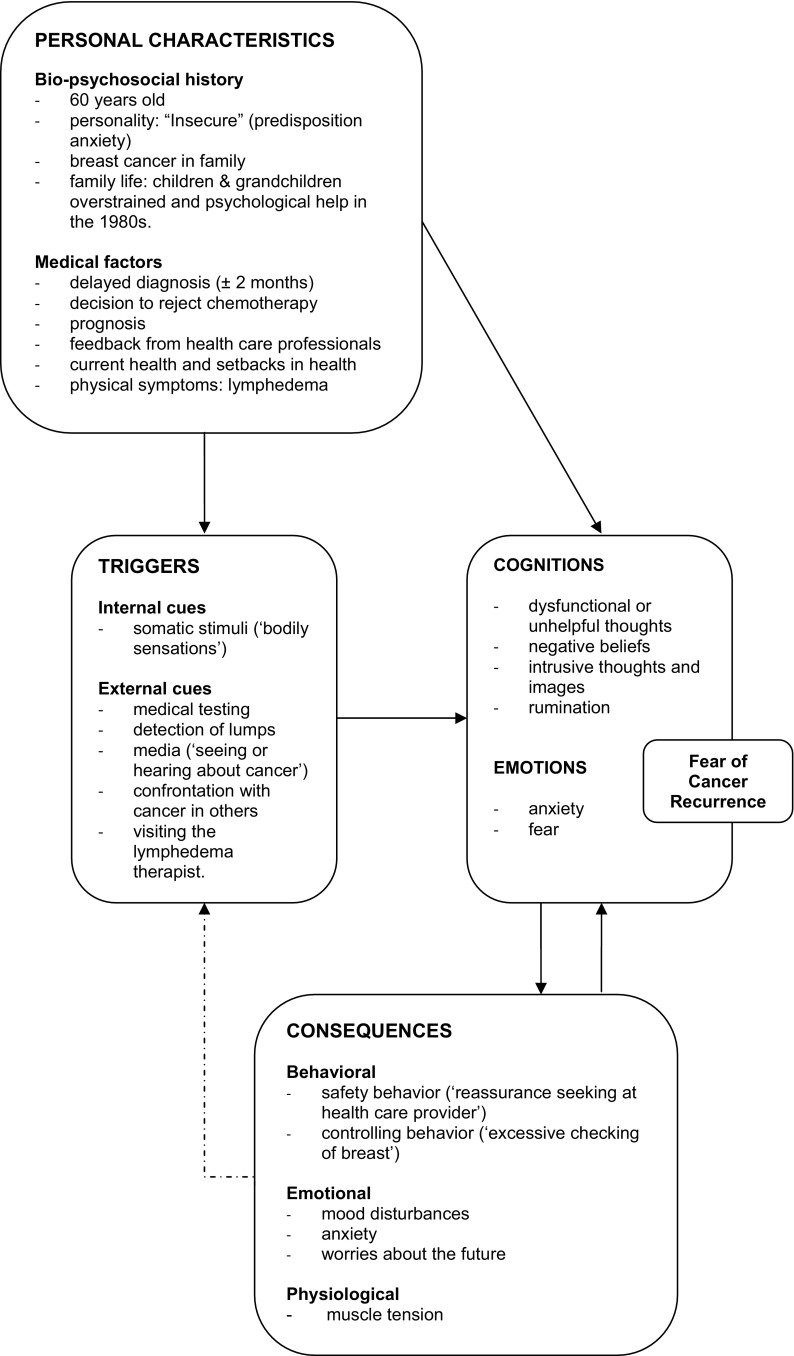
This case study describes the course and content of cognitive behavior therapy (CBT) for clinical fear of cancer recurrence (FCR) in a breast cancer survivor. The CBT for clinical FCR consisted of seven face-to-face therapy sessions and one telephone session. The primary treatment goal was to reduce FCR severity by modifying cognitive processes and dysfunctional behavior. Assessments of FCR and quality of life were completed by the breast cancer survivor pre-therapy, post-therapy, and at 6 and 12 months of post-therapy. In each treatment session, perceived control over FCR was assessed. A clinical nurse specialist participated in evaluation interviews. The patient's perceived control over FCR increased during the therapy, and FCR severity declined to a non-clinical level. This improvement was still evident at the 6- and 12-month follow-up assessments and was supported by results for secondary and exploratory outcomes measures. FCR offers a great challenge for health care professionals due to the lack of effective treatment options. This case study shows how clinical FCR can be addressed with CBT and can contribute to the improvement of care for cancer survivors.
本案例研究描述了一名乳腺癌幸存者针对临床癌症复发恐惧(FCR)的认知行为疗法(CBT)的过程和内容。针对临床FCR的CBT包括七次面对面治疗课程和一次电话会议。主要治疗目标是通过改变认知过程和功能失调行为来降低FCR的严重程度。FCR和生活质量评估由乳腺癌幸存者在治疗前、治疗后以及治疗后6个月和12个月完成。在每次治疗课程中,评估对FCR的感知控制。一名临床护士专家参与了评估访谈。患者在治疗期间对FCR的感知控制增加,FCR严重程度降至非临床水平。这种改善在6个月和12个月的随访评估中仍然明显,并得到了次要和探索性结果指标结果的支持。由于缺乏有效的治疗选择,FCR给医疗保健专业人员带来了巨大挑战。本案例研究展示了如何通过CBT解决临床FCR问题,并有助于改善对癌症幸存者的护理。