Chen Qizhi, Zhu Chenghao, Thouas George A
Department of Materials Engineering, Monash University, Clayton, Victoria, 3800, Australia.
Department of Zoology, The University of Melbourne, Parkville, Victoria, 3010, Australia.
Prog Biomater. 2012 Sep 26;1(1):2. doi: 10.1186/2194-0517-1-2.
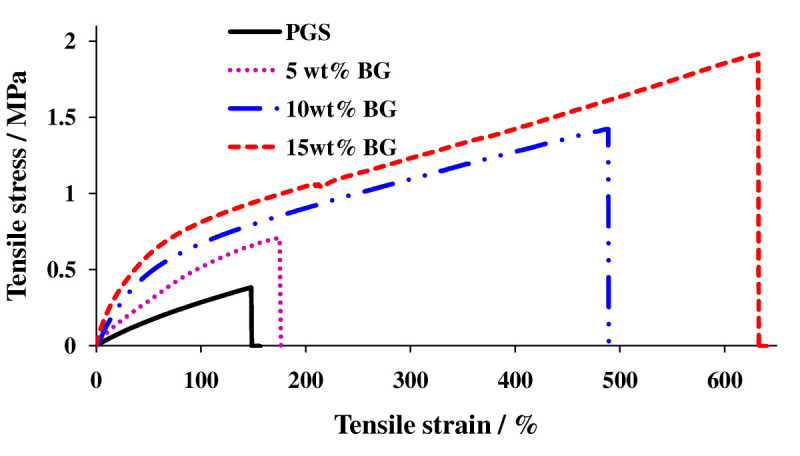
Driven by the increasing economic burden associated with bone injury and disease, biomaterial development for bone repair represents the most active research area in the field of tissue engineering. This article provides an update on recent advances in the development of bioactive biomaterials for bone regeneration. Special attention is paid to the recent developments of sintered Na-containing bioactive glasses, borate-based bioactive glasses, those doped with trace elements (such as Cu, Zn, and Sr), and novel elastomeric composites. Although bioactive glasses are not new to bone tissue engineering, their tunable mechanical properties, biodegradation rates, and ability to support bone and vascular tissue regeneration, as well as osteoblast differentiation from stem and progenitor cells, are superior to other bioceramics. Recent progresses on the development of borate bioactive glasses and trace element-doped bioactive glasses expand the repertoire of bioactive glasses. Although boride and other trace elements have beneficial effects on bone remodeling and/or associated angiogenesis, the risk of toxicity at high levels must be highly regarded in the design of new composition of bioactive biomaterials so that the release of these elements must be satisfactorily lower than their biologically safe levels. Elastomeric composites are superior to the more commonly used thermoplastic-matrix composites, owing to the well-defined elastic properties of elastomers which are ideal for the replacement of collagen, a key elastic protein within the bone tissue. Artificial bone matrix made from elastomeric composites can, therefore, offer both sound mechanical integrity and flexibility in the dynamic environment of injured bone.
受与骨损伤和疾病相关的经济负担日益增加的驱动,用于骨修复的生物材料开发是组织工程领域最活跃的研究领域。本文提供了用于骨再生的生物活性生物材料开发的最新进展。特别关注了烧结含钠生物活性玻璃、硼酸盐基生物活性玻璃、掺杂微量元素(如铜、锌和锶)的生物活性玻璃以及新型弹性体复合材料的最新进展。尽管生物活性玻璃在骨组织工程中并不新鲜,但其可调节的机械性能、生物降解速率、支持骨和血管组织再生的能力以及促进干细胞和祖细胞向成骨细胞分化的能力均优于其他生物陶瓷。硼酸盐生物活性玻璃和掺杂微量元素的生物活性玻璃开发的最新进展扩大了生物活性玻璃的种类。尽管硼化物和其他微量元素对骨重塑和/或相关血管生成有有益影响,但在设计新型生物活性生物材料成分时,必须高度重视高剂量时的毒性风险,以便这些元素的释放必须令人满意地低于其生物安全水平。弹性体复合材料优于更常用的热塑性基体复合材料,这是因为弹性体具有明确的弹性性能,非常适合替代骨组织中的关键弹性蛋白胶原蛋白。因此,由弹性体复合材料制成的人工骨基质在受伤骨骼的动态环境中既可以提供良好的机械完整性,又具有柔韧性。