Simões Eric A F, Bont Louis, Manzoni Paolo, Fauroux Brigitte, Paes Bosco, Figueras-Aloy Josep, Checchia Paul A, Carbonell-Estrany Xavier
Center for Global Health, Colorado School of Public Health, University of Colorado School of Medicine, Aurora, CO, USA.
University Medical Center Utrecht, Utrecht, The Netherlands.
Infect Dis Ther. 2018 Mar;7(1):87-120. doi: 10.1007/s40121-018-0188-z. Epub 2018 Feb 22.
The REGAL (RSV Evidence - A Geographical Archive of the Literature) series has provided a comprehensive review of the published evidence in the field of respiratory syncytial virus (RSV) in Western countries over the last 20 years. This seventh and final publication covers the past, present and future approaches to the prevention and treatment of RSV infection among infants and children.
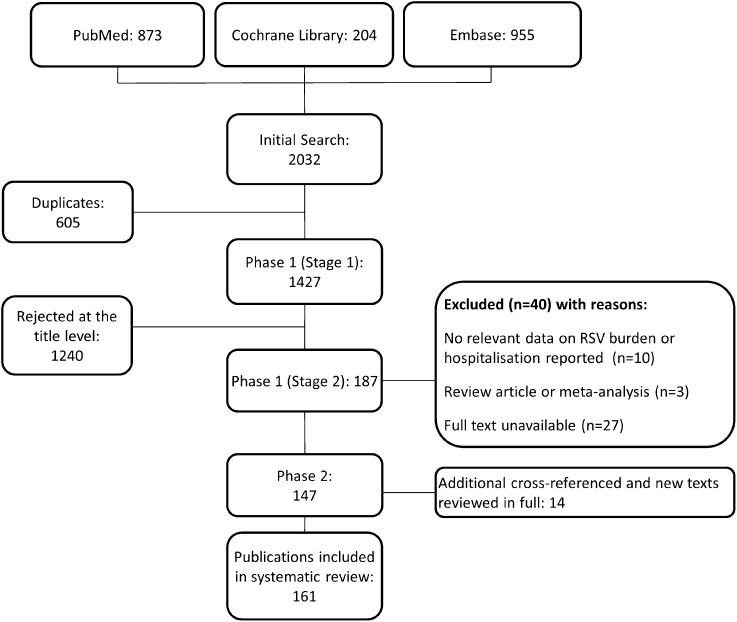
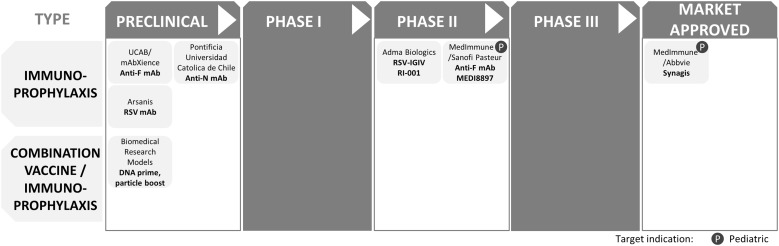
A systematic review was undertaken of publications between January 1, 1995 and December 31, 2017 across PubMed, Embase and The Cochrane Library. Studies reporting data on the effectiveness and tolerability of prophylactic and therapeutic agents for RSV infection were included. Study quality and strength of evidence (SOE) were graded using recognized criteria. A further nonsystematic search of the published literature and Clinicaltrials.gov on antiviral therapies and RSV vaccines currently in development was also undertaken.
The systematic review identified 1441 studies of which 161 were included. Management of RSV remains centered around prophylaxis with the monoclonal antibody palivizumab, which has proven effective in reducing RSV hospitalization (RSVH) in preterm infants < 36 weeks' gestational age (72% reduction), children with bronchopulmonary dysplasia (65% reduction), and infants with hemodynamically significant congenital heart disease (53% reduction) (high SOE). Palivizumab has also shown to be effective in reducing recurrent wheezing following RSVH (high SOE). Treatment of RSV with ribavirin has conflicting success (moderate SOE). Antibodies with increased potency and extended half-life are currently entering phase 3 trials. There are approximately 15 RSV vaccines in clinical development targeting the infant directly or indirectly via the mother.
Palivizumab remains the only product licensed for RSV prophylaxis, and only available for high-risk infants. For the general population, there are several promising vaccines and monoclonal antibodies in various stages of clinical development, with the aim to significantly reduce the global healthcare impact of this common viral infection.
AbbVie.
REGAL(呼吸道合胞病毒文献地理档案)系列对过去20年西方国家呼吸道合胞病毒(RSV)领域已发表的证据进行了全面综述。这第七篇也是最后一篇出版物涵盖了婴幼儿RSV感染预防和治疗的过去、现在及未来方法。
对1995年1月1日至2017年12月31日期间发表在PubMed、Embase和考科蓝图书馆的文献进行了系统综述。纳入了报告RSV感染预防和治疗药物有效性和耐受性数据的研究。使用公认标准对研究质量和证据强度(SOE)进行分级。还对已发表文献和Clinicaltrials.gov进行了进一步的非系统检索,以了解目前正在研发的抗病毒疗法和RSV疫苗。
系统综述共识别出1441项研究,其中161项被纳入。RSV的管理仍以使用单克隆抗体帕利珠单抗进行预防为中心,该药物已被证明可有效降低胎龄<36周的早产儿(降低72%)、支气管肺发育不良患儿(降低65%)和有血流动力学意义的先天性心脏病婴儿(降低53%)的RSV住院率(高证据强度)。帕利珠单抗还被证明可有效降低RSV住院后的反复喘息(高证据强度)。利巴韦林治疗RSV的效果存在争议(中等证据强度)。效力增强且半衰期延长的抗体目前正进入3期试验。目前约有15种RSV疫苗正在进行临床开发,直接或通过母亲间接针对婴儿。
帕利珠单抗仍然是唯一获许可用于RSV预防的产品,且仅适用于高危婴儿。对于普通人群,有几种有前景的疫苗和单克隆抗体正处于临床开发的不同阶段,目标是显著降低这种常见病毒感染对全球医疗保健的影响。
艾伯维公司。