Department of Biochemistry and Molecular Biology, Faculty of Biology, VNU University of Science, Vietnam National University, 334 Nguyen Trai St., Thanh Xuan Dist, Hanoi, Vietnam.
High school for Gifted Students, VNU University of Science, Hanoi, Vietnam.
Environ Health Prev Med. 2018 Feb 23;23(1):9. doi: 10.1186/s12199-018-0699-y.
Currently, it is recognized that water polluted with toxic heavy metal ions may cause serious effects on human health. Therefore, the development of new materials for effective removal of heavy metal ions from water is still a widely important area. Melanin is being considered as a potential material for removal of heavy metal from water.
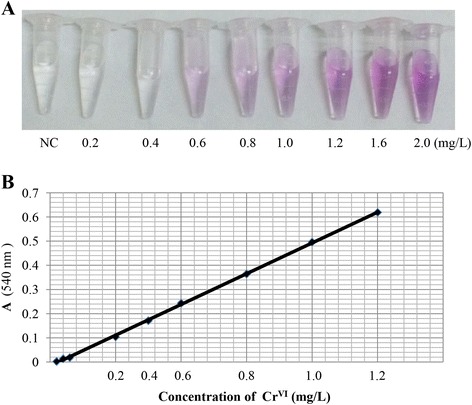
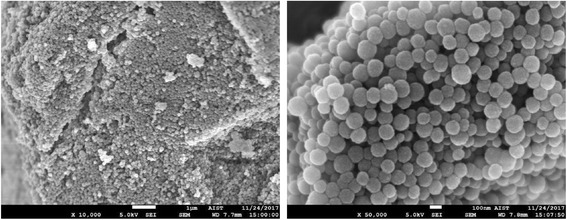
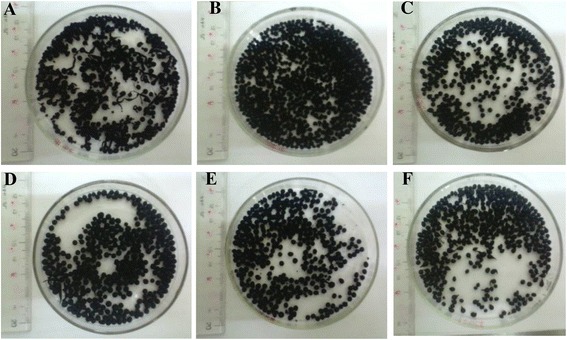
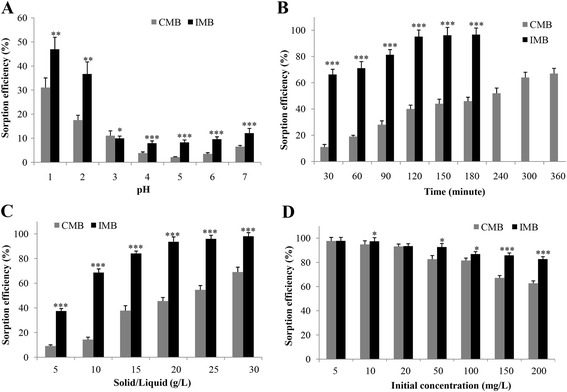
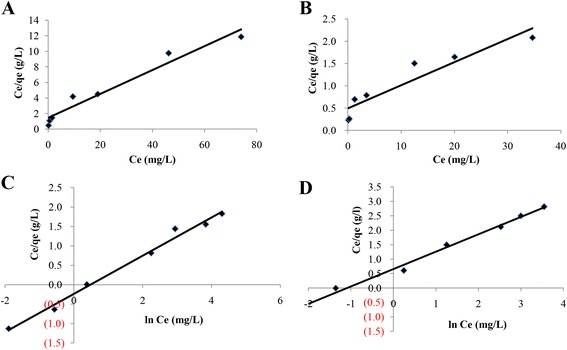
In this study, we synthesized two melanin-embedded beads from two different melanin powder sources and named IMB (Isolated Melanin Bead originated from squid ink sac) and CMB (Commercial Melanin Bead originated from sesame seeds). These beads were of globular shape and 2-3 mm in diameter. We investigated and compared the sorption abilities of these two bead materials toward hexavalent-chromium (Cr) in water. The isotherm sorption curves were established using Langmuir and Freundlich models in the optimized conditions of pH, sorption time, solid/liquid ratio, and initial concentration of Cr. The FITR analysis was also carried out to show the differences in surface properties of these two beads.
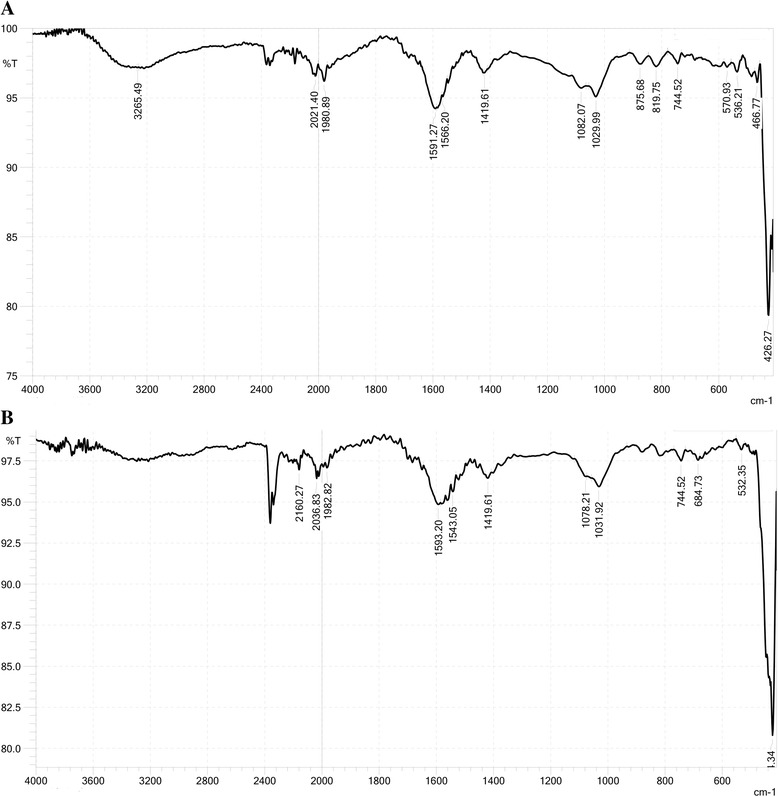
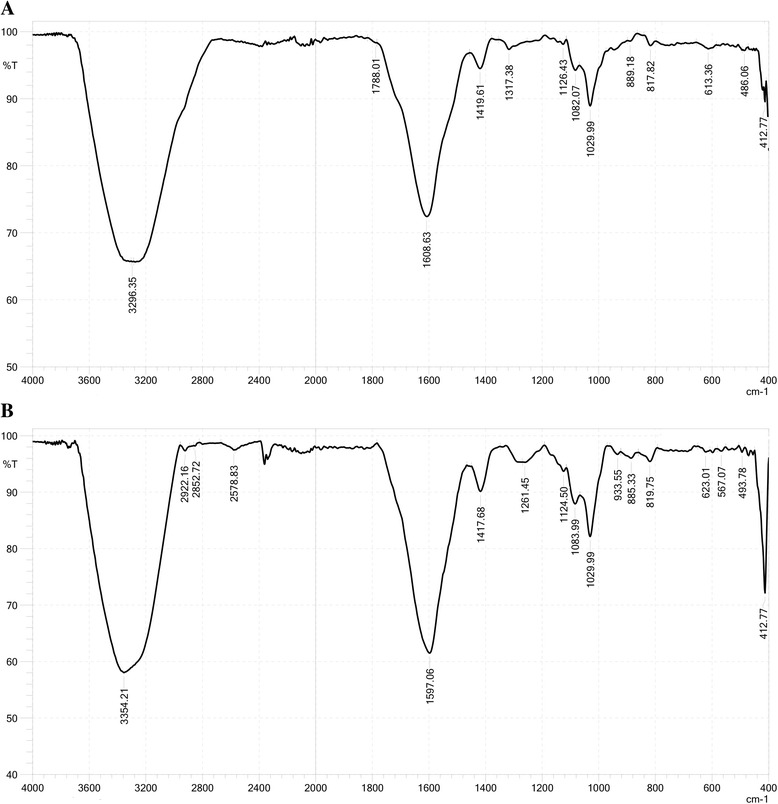
The optimized conditions for isotherm sorption of Cr on IMB/CMB were set at pH values of 2/2, sorption times of 90/300 min, and solid-liquid ratios of 10/20 mg/mL. The maximum sorption capacities calculated based on the Langmuir model were 19.60 and 6.24 for IMB and CMB, respectively. However, the adsorption kinetic of Cr on the beads fitted the Freundlich model with R values of 0.992 for IMB and 0.989 for CMB. The deduced Freundlich constant, 1/n, in the range of 0.2-0.8 indicated that these beads are good adsorption materials. In addition, structure analysis data revealed great differences in physical and chemical properties between IMB and CMB. Interestingly, FTIR analysis results showed strong signals of -OH (3295.35 cm) and -C=O (1608.63 cm) groups harboring on the IMB but not CMB. Moreover, loading of Cr on the IMB caused a shift of broad peaks from 3295.35 cm and 1608.63 cm to 3354.21 cm and 1597.06 cm, respectively, due to -OH and -C=O stretching.
Taken together, our study suggests that IMB has great potential as a bead material for the elimination of Cr from aqueous solutions and may be highly useful for water treatment applications.
目前,人们认识到受有毒重金属离子污染的水可能对人类健康造成严重影响。因此,开发用于有效去除水中重金属离子的新材料仍然是一个广泛关注的领域。黑色素被认为是一种从水中去除重金属的潜在材料。
在这项研究中,我们从两种不同的黑色素粉末来源合成了两种黑色素嵌入珠,分别命名为 IMB(源自鱿鱼墨囊的分离黑色素珠)和 CMB(源自芝麻的商业黑色素珠)。这些珠子呈球形,直径为 2-3 毫米。我们研究并比较了这两种珠材料对水中六价铬(Cr)的吸附能力。在优化的 pH 值、吸附时间、固液比和 Cr 的初始浓度条件下,使用 Langmuir 和 Freundlich 模型建立等温吸附曲线。还进行了 FITR 分析以显示这两种珠之间表面性质的差异。
在 pH 值为 2/2、吸附时间为 90/300 min 和固液比为 10/20 mg/mL 的条件下,优化了 Cr 在 IMB/CMB 上的等温吸附条件。基于 Langmuir 模型计算的最大吸附容量分别为 19.60 和 6.24 用于 IMB 和 CMB。然而,Cr 在珠上的吸附动力学符合 Freundlich 模型,R 值分别为 0.992 用于 IMB 和 0.989 用于 CMB。推断的 Freundlich 常数 1/n 在 0.2-0.8 范围内表明这些珠是良好的吸附材料。此外,结构分析数据显示 IMB 和 CMB 之间在物理和化学性质上存在很大差异。有趣的是,FTIR 分析结果表明,在 IMB 上存在强的-OH(3295.35 cm)和-C=O(1608.63 cm)基团信号,但 CMB 上不存在。此外,由于-OH 和-C=O 拉伸,Cr 加载在 IMB 上导致宽峰从 3295.35 cm 和 1608.63 cm 分别移动到 3354.21 cm 和 1597.06 cm。
综上所述,我们的研究表明 IMB 作为一种从水溶液中去除 Cr 的珠材料具有很大的潜力,可能对水处理应用非常有用。