Laboratorio de Microbiología Ambiental y de Suelos, Grupo de Biotecnología Ambiental e Industrial (GBAI) Departamento de Microbiología, Facultad de Ciencias, Pontificia Universidad Javeriana, Bogotá, DC, Colombia.
Laboratorio de Biotecnología Molecular, Grupo de Biotecnología Ambiental e Industrial (GBAI), Departamento de Microbiología, Facultad de Ciencias, Pontificia Universidad Javeriana, Bogotá, DC, Colombia.
Sci Rep. 2018 Feb 22;8(1):3503. doi: 10.1038/s41598-018-21597-2.
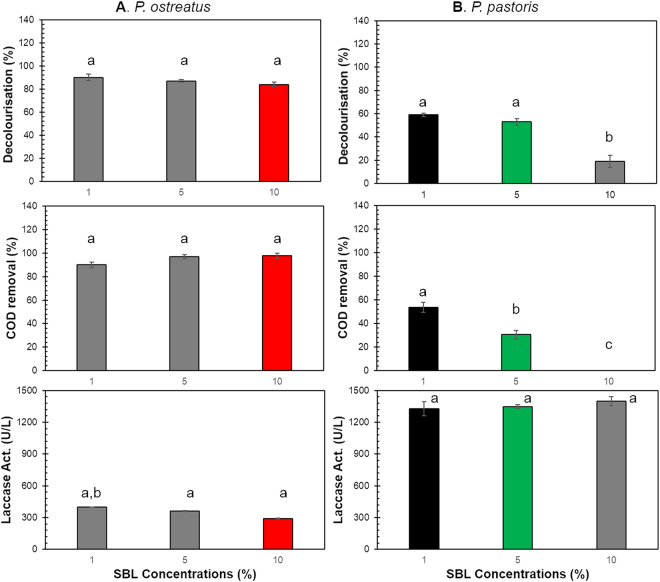
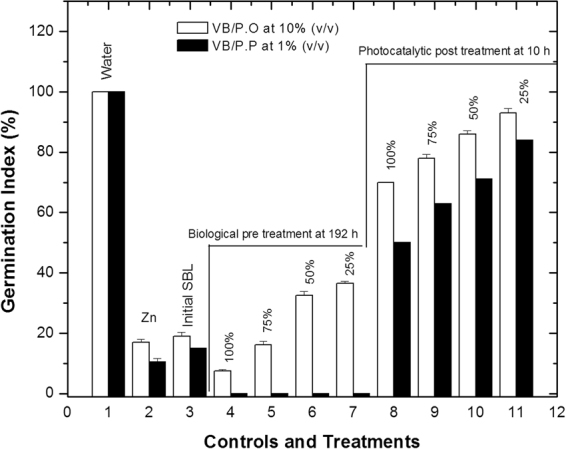
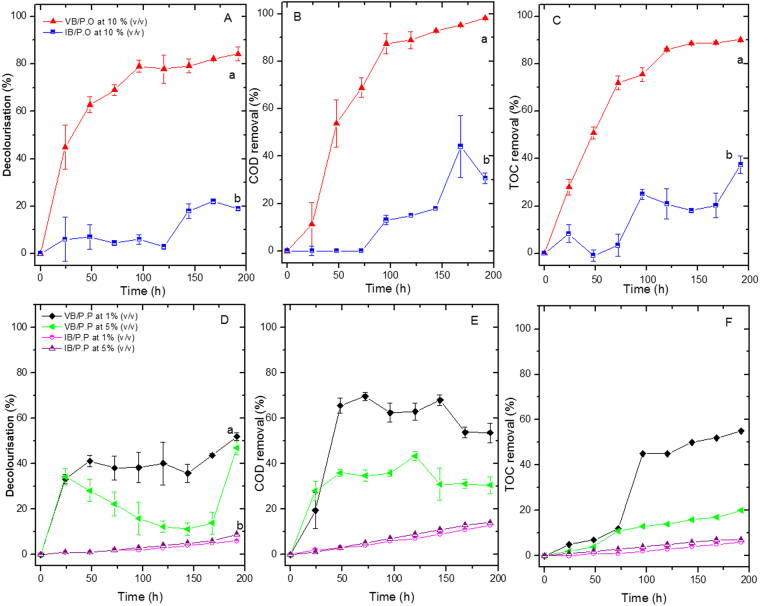
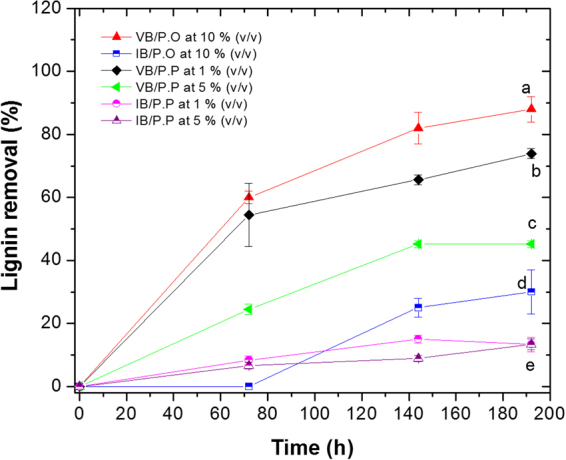
Cellulose-pulping requires chemicals such as Cl, ClO, HO, and O. The black liquor (BL) generated exhibits a high chemical oxygen demand (COD), five-day biochemical oxygen demand (BOD), and chlorophenol content, along with an augmented colour and increased pH. BL is often discharged into water bodies, where it has a negative impact on the environment. Towards that end, laccases are of great interest for bioremediation, since they can degrade aromatic and non-aromatic compounds while reducing O to water instead of HO. As such, we evaluated Pleurotus ostreatus and Pichia pastoris (which produces rPOXA 1B laccase) in the treatment of synthetic BL (SBL) in an "in vitro" modified Kraft process followed by CuO/TiO/visible light photocatalysis. Treating SBL with P. ostreatus viable biomass (VB) followed by CuO/TiO/visible light photocatalysis resulted in 80.3% COD removal and 70.6% decolourisation. Toxic compounds such as 2-methylphenol, 4-methylphenol, and 2-methoxyphenol were eliminated. Post-treated SBL exhibited low phytotoxicity, as evidenced by a Lactuca sativa L seed germination index (GI) > 50%. Likewise, SBL treatment with P. pastoris followed by VB/CuO/TiO/visible light photocatalysis resulted in 63.7% COD removal and 46% decolourisation. Moreover, this treatment resulted in the elimination of most unwanted compounds, with the exception of 4-chlorophenol. The Lactuca sativa L seed GI of the post-treated SBL was 40%, indicating moderate phytotoxicity.
制浆需要使用氯、次氯酸盐、过氧化物和氧气等化学物质。产生的黑液(BL)具有高化学需氧量(COD)、五日生化需氧量(BOD)和氯苯酚含量,同时具有较高的颜色和 pH 值。BL 通常排放到水体中,对环境造成负面影响。为此,漆酶在生物修复中非常重要,因为它们可以降解芳香族和非芳香族化合物,同时将 O 还原为水而不是 HO。因此,我们在“体外”改良 kraft 工艺中评估了糙皮侧耳(Pleurotus ostreatus)和巴斯德毕赤酵母(Pichia pastoris)(可产生 rPOXA 1B 漆酶)处理合成黑液(SBL),然后进行 CuO/TiO/可见光光催化。用糙皮侧耳活生物质(VB)处理 SBL,然后进行 CuO/TiO/可见光光催化,可使 COD 去除率达到 80.3%,脱色率达到 70.6%。有毒化合物如 2-甲基苯酚、4-甲基苯酚和 2-甲氧基苯酚被消除。经后处理的 SBL 表现出低的植物毒性,这可以从莴苣(Lactuca sativa L)种子发芽指数(GI)>50%得到证明。同样,用巴斯德毕赤酵母处理 SBL,然后用 VB/CuO/TiO/可见光光催化处理,可使 COD 去除率达到 63.7%,脱色率达到 46%。此外,这种处理方法消除了大多数不需要的化合物,除了 4-氯苯酚。后处理 SBL 的莴苣种子 GI 为 40%,表明具有中度植物毒性。