DAHFMO Unit of Histology and Medical Embryology, Interuniversity Institute of Myology, Sapienza University of Rome, Rome, 00161, Italy.
IRCCS Fondazione Santa Lucia, Via del Fosso di Fiorano, 64, Rome, 00143, Italy.
Sci Rep. 2018 Feb 22;8(1):3448. doi: 10.1038/s41598-018-21835-7.
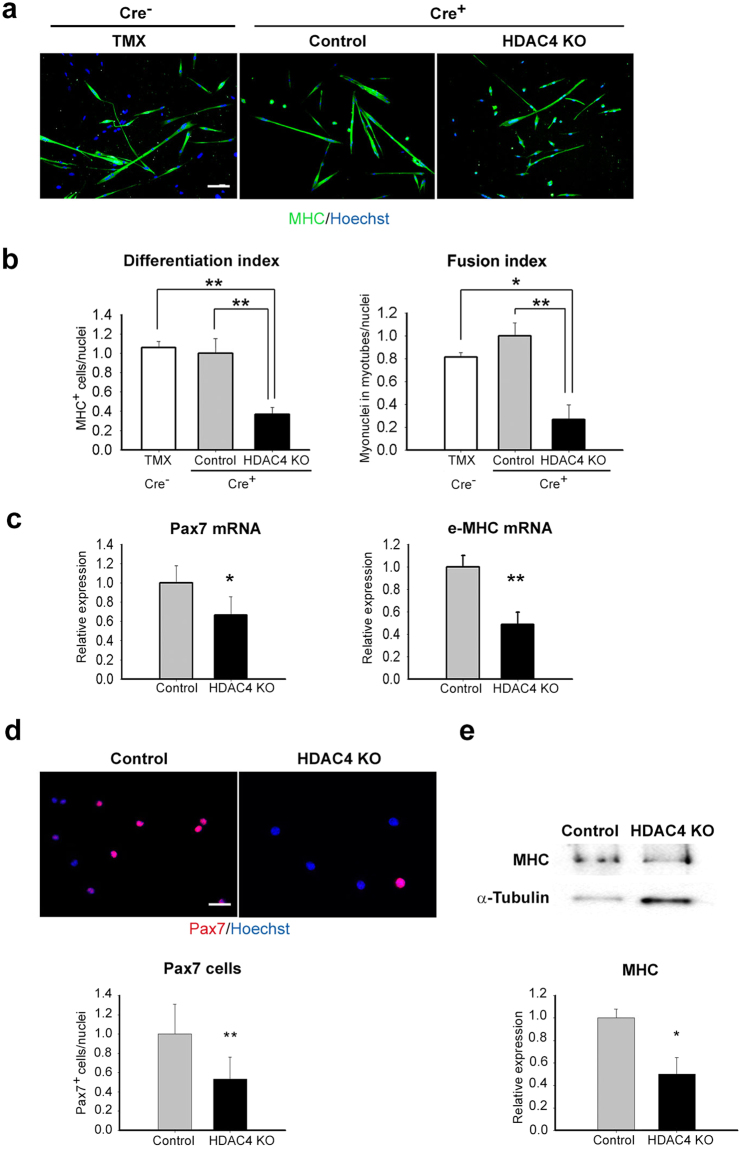
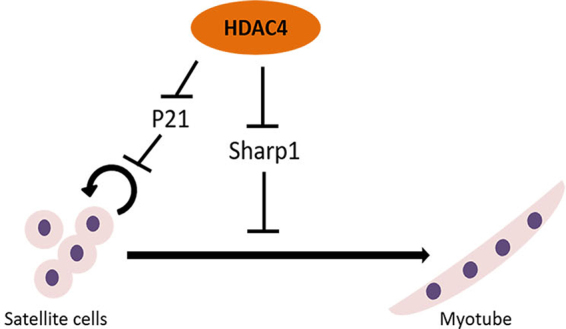
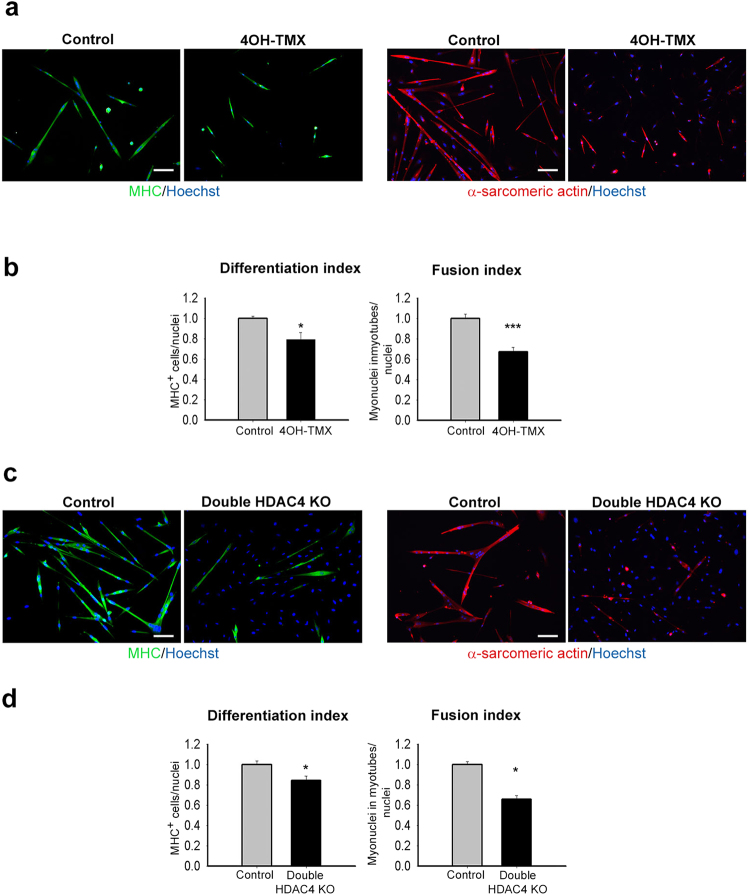
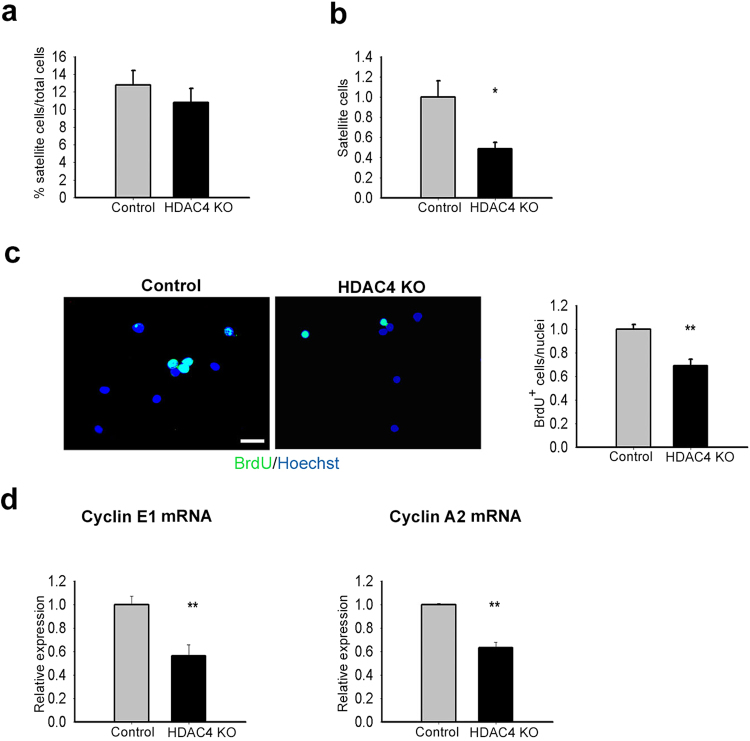
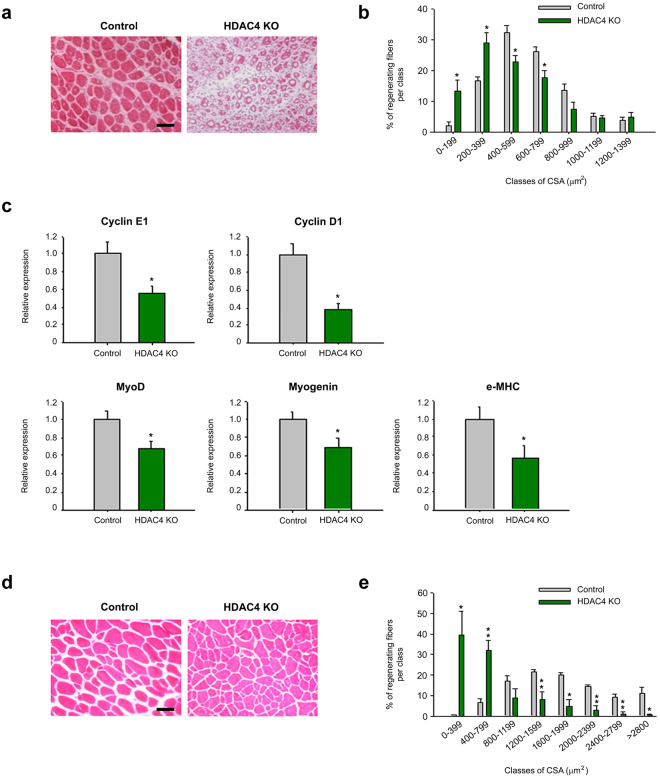
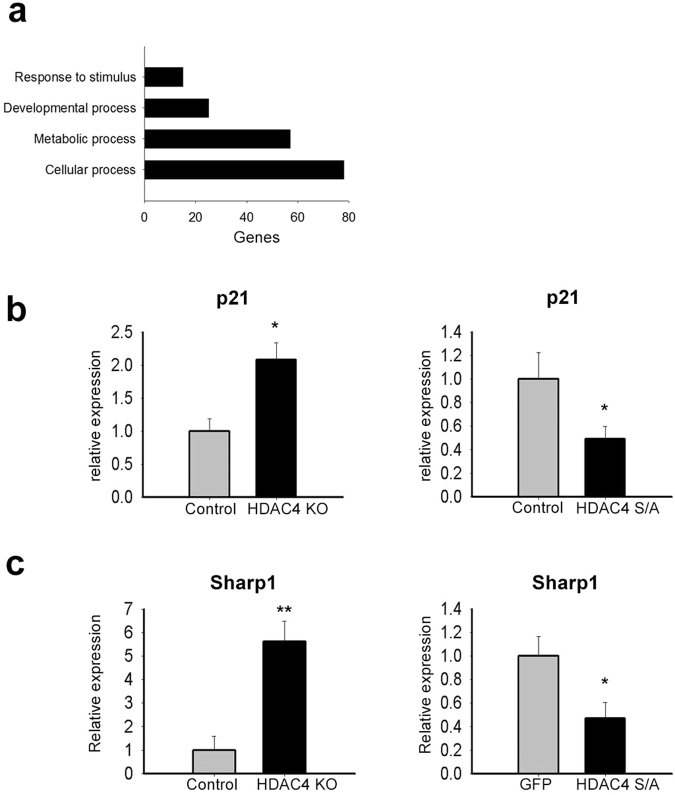
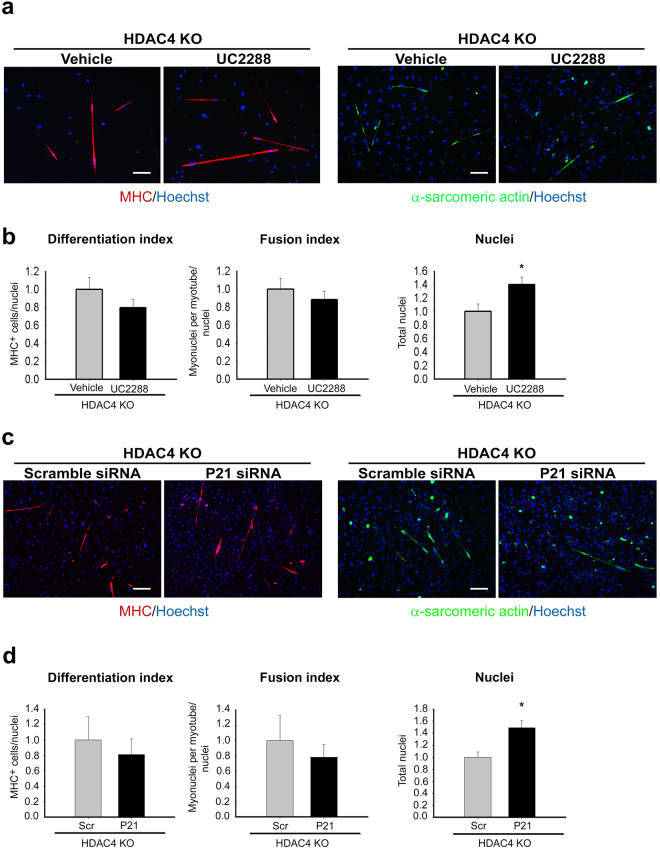
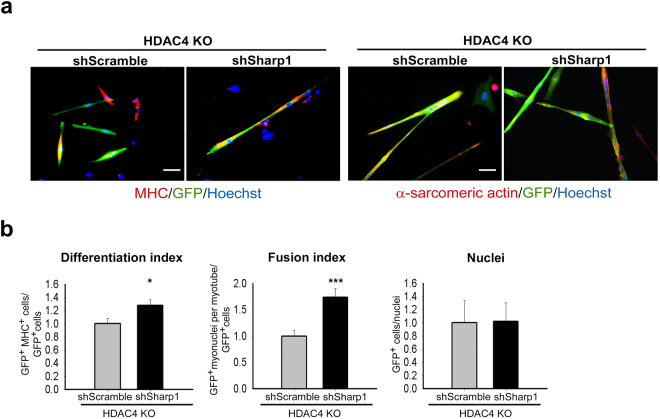
Skeletal muscle exhibits a high regenerative capacity, mainly due to the ability of satellite cells to replicate and differentiate in response to appropriate stimuli. Epigenetic control is effective at different stages of this process. It has been shown that the chromatin-remodeling factor HDAC4 is able to regulate satellite cell proliferation and commitment. However, its molecular targets are still uncovered. To explain the signaling pathways regulated by HDAC4 in satellite cells, we generated tamoxifen-inducible mice with conditional inactivation of HDAC4 in Pax7 cells (HDAC4 KO mice). We found that the proliferation and differentiation of HDAC4 KO satellite cells were compromised, although similar amounts of satellite cells were found in mice. Moreover, we found that the inhibition of HDAC4 in satellite cells was sufficient to block the differentiation process. By RNA-sequencing analysis we identified P21 and Sharp1 as HDAC4 target genes. Reducing the expression of these target genes in HDAC4 KO satellite cells, we also defined the molecular pathways regulated by HDAC4 in the epigenetic control of satellite cell expansion and fusion.
骨骼肌具有很强的再生能力,这主要得益于卫星细胞在适当刺激下复制和分化的能力。表观遗传控制在这个过程的不同阶段都很有效。已经表明,染色质重塑因子 HDAC4 能够调节卫星细胞的增殖和分化。然而,其分子靶标仍未被揭示。为了解释 HDAC4 在卫星细胞中调节的信号通路,我们生成了条件性敲除 Pax7 细胞中 HDAC4(HDAC4 KO 小鼠)的诱导型 tamoxifen 小鼠。我们发现 HDAC4 KO 卫星细胞的增殖和分化受到了损害,尽管在小鼠中发现了相似数量的卫星细胞。此外,我们发现抑制卫星细胞中的 HDAC4 足以阻断分化过程。通过 RNA-seq 分析,我们确定了 P21 和 Sharp1 是 HDAC4 的靶基因。在 HDAC4 KO 卫星细胞中降低这些靶基因的表达,我们还定义了 HDAC4 在卫星细胞扩增和融合的表观遗传调控中调节的分子途径。