Deptartment of Physiology & Pharmacology, Hotchkiss Brain and Libin Cardiovascular Institutes, University of Calgary, Alberta, Canada.
Deptartment Physiology & Pharmacology, University of Western Ontario, London, Ontario, Canada.
Sci Rep. 2018 Feb 22;8(1):3445. doi: 10.1038/s41598-018-21899-5.
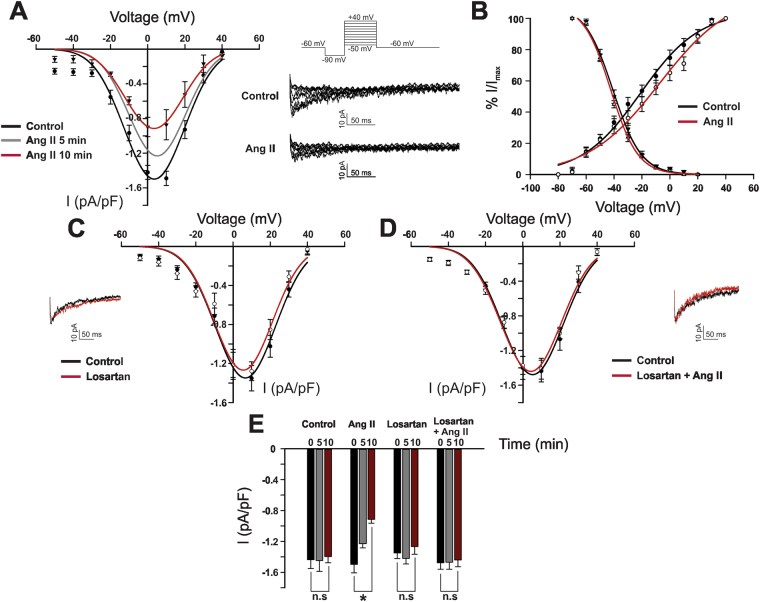
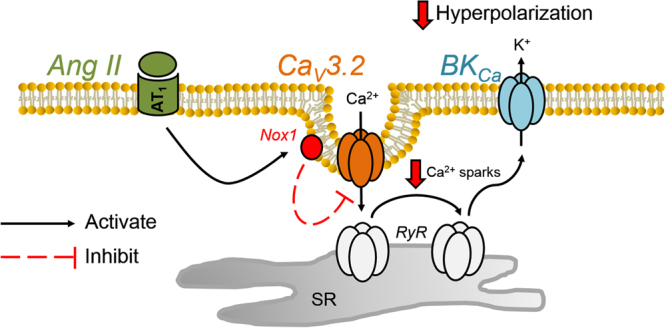
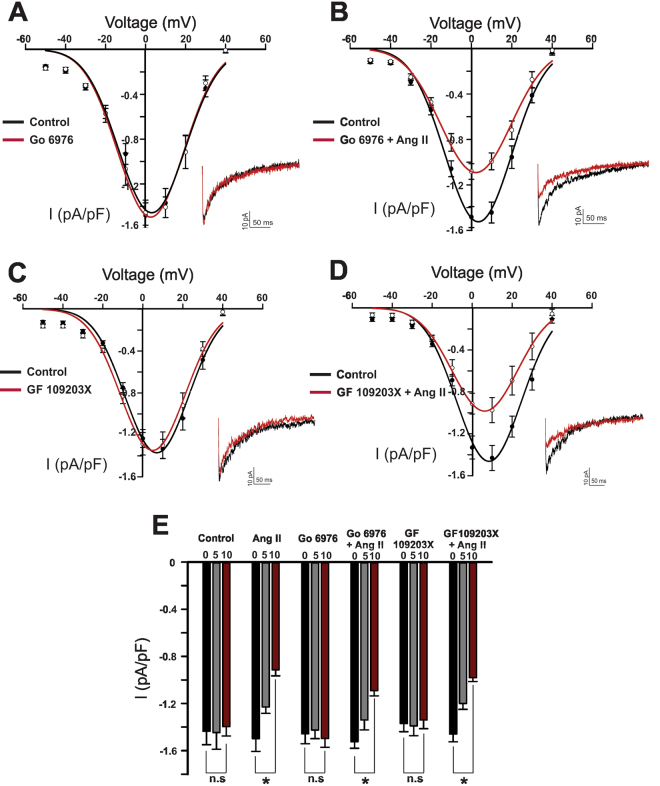
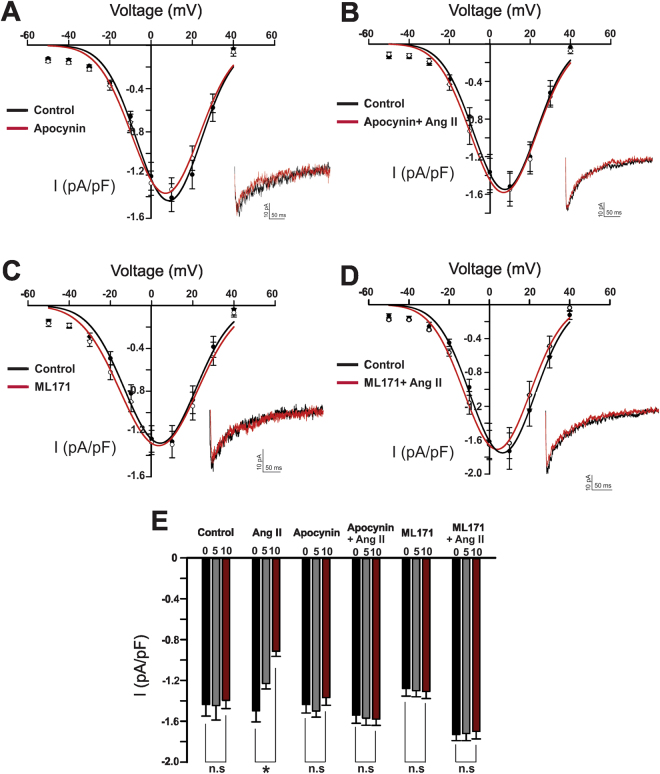
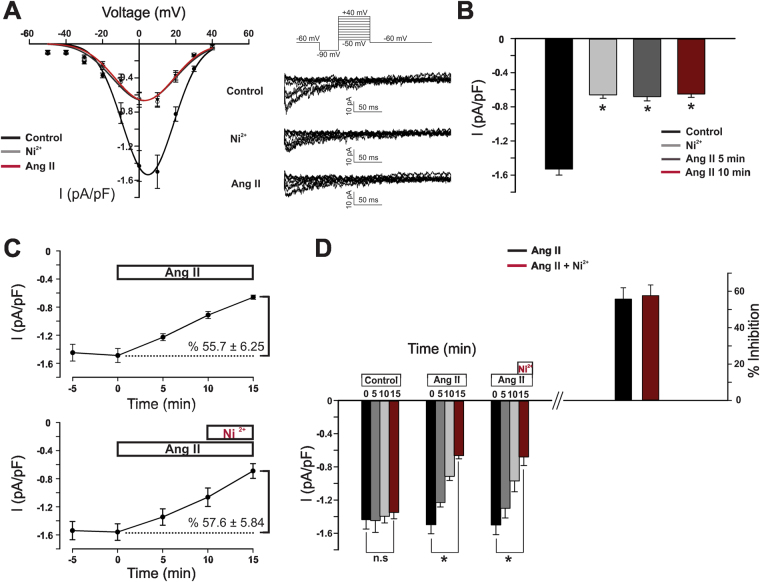
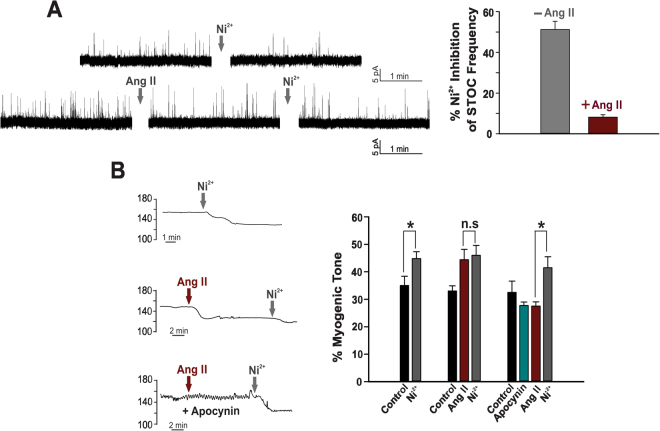
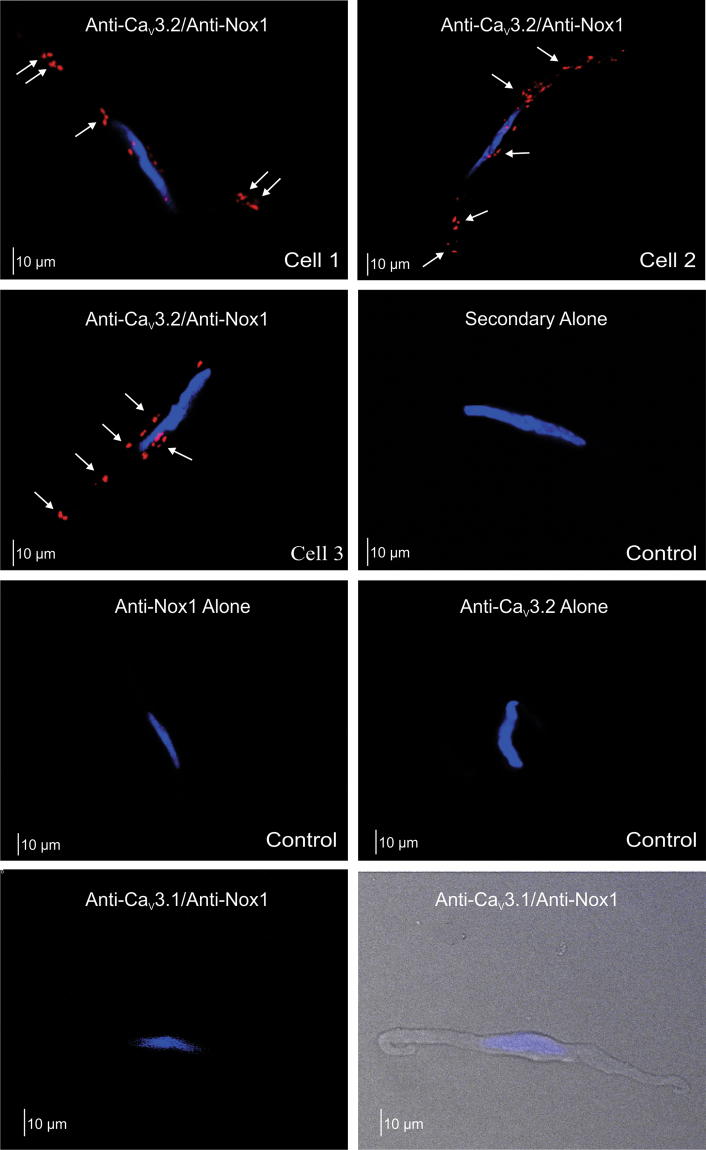
Vascular T-type Ca channels (Ca3.1 and Ca3.2) play a key role in arterial tone development. This study investigated whether this conductance is a regulatory target of angiotensin II (Ang II), a vasoactive peptide that circulates and which is locally produced within the arterial wall. Patch clamp electrophysiology performed on rat cerebral arterial smooth muscle cells reveals that Ang II (100 nM) inhibited T-type currents through AT receptor activation. Blocking protein kinase C failed to eliminate channel suppression, a finding consistent with unique signaling proteins enabling this response. In this regard, inhibiting NADPH oxidase (Nox) with apocynin or ML171 (Nox1 selective) abolished channel suppression highlighting a role for reactive oxygen species (ROS). In the presence of Ni (50 µM), Ang II failed to modulate the residual T-type current, an observation consistent with this peptide targeting Ca3.2. Selective channel suppression by Ang II impaired the ability of Ca3.2 to alter spontaneous transient outward currents or vessel diameter. Proximity ligation assay confirmed Nox1 colocalization with Ca3.2. In closing, Ang II targets Ca3.2 channels via a signaling pathway involving Nox1 and the generation of ROS. This unique regulatory mechanism alters BK mediated feedback giving rise to a "constrictive" phenotype often observed with cerebrovascular disease.
血管 T 型钙通道(Ca3.1 和 Ca3.2)在动脉张力的发展中起着关键作用。本研究探讨了这种电导率是否是血管活性肽血管紧张素 II(Ang II)的调节靶点,该肽在循环中循环,并在动脉壁内局部产生。在大鼠脑动脉平滑肌细胞上进行的膜片钳电生理学研究表明,Ang II(100 nM)通过 AT 受体激活抑制 T 型电流。阻断蛋白激酶 C 未能消除通道抑制,这一发现与使这种反应成为可能的独特信号蛋白一致。在这方面,用 apocynin 或 ML171(Nox1 选择性)抑制 NADPH 氧化酶(Nox)消除了通道抑制,突出了活性氧(ROS)的作用。在 Ni(50 μM)存在下,Ang II 未能调节残余的 T 型电流,这一观察结果与该肽靶向 Ca3.2 一致。Ang II 对选择性通道的抑制损害了 Ca3.2 改变自发瞬时外向电流或血管直径的能力。邻近连接测定证实了 Nox1 与 Ca3.2 的共定位。总之,Ang II 通过涉及 Nox1 和 ROS 生成的信号通路靶向 Ca3.2 通道。这种独特的调节机制改变了 BK 介导的反馈,导致脑血管疾病中经常观察到的“收缩”表型。