Department of Anatomy and Cell Biology, Martin Luther University, Faculty of Medicine, Grosse Steinstrasse 52, D-06097, Halle (Saale), Germany.
IDT Biologika, Am Pharmapark, D-06861, Dessau-Roßlau, Germany.
Sci Rep. 2018 Feb 22;8(1):3447. doi: 10.1038/s41598-018-21800-4.
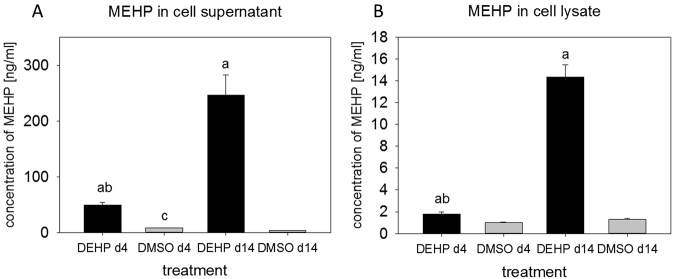
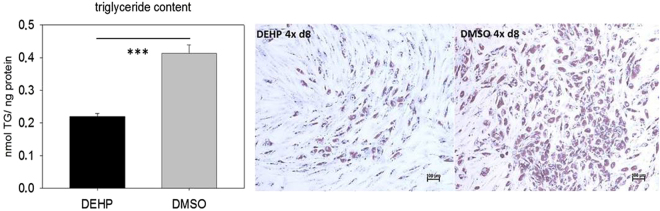
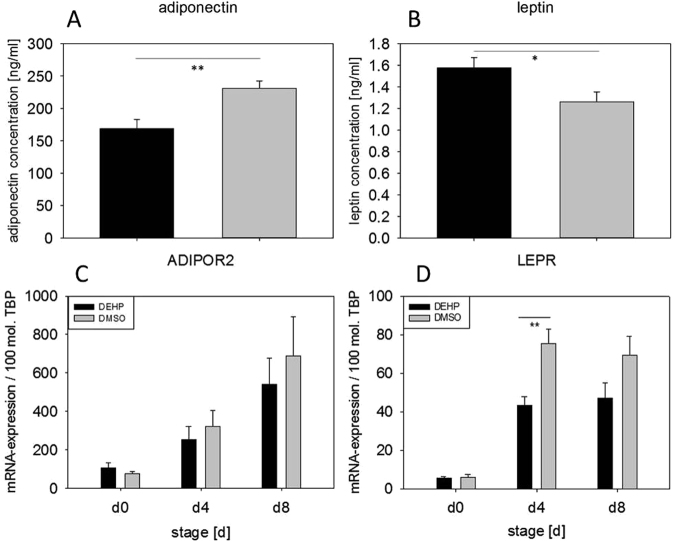
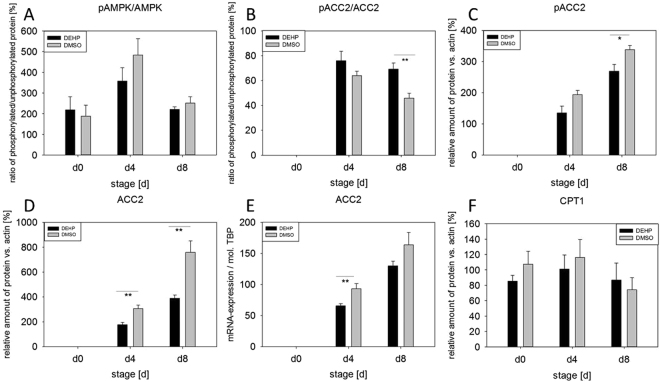
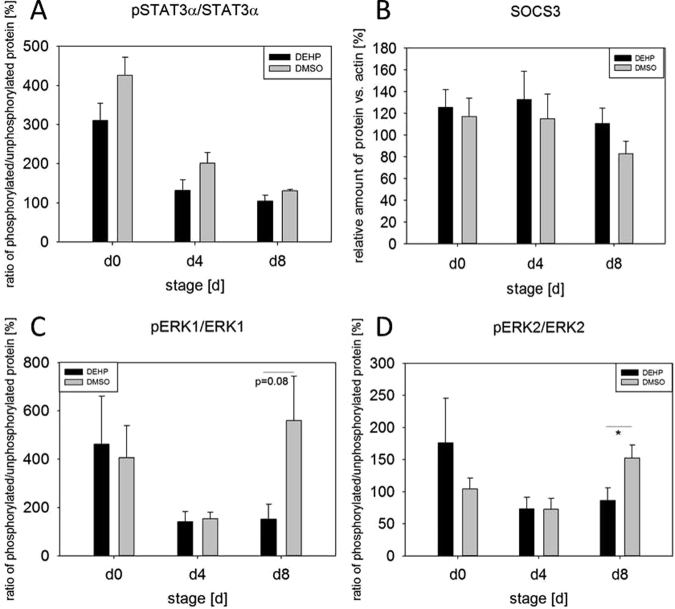
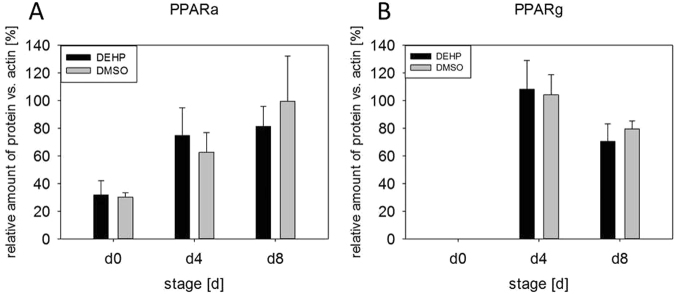
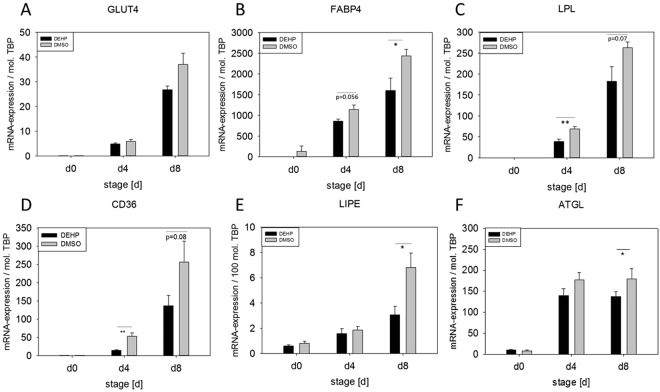
DEHP is a plasticizer which has been used in plastic products of everyday use for decades. Studies in mice and murine cell culture models identified DEHP as an endocrine disruptor that may also act as an obesogen. As this is of high concern in respect of the worldwide obesity epidemic, our aim is the translation of these findings into a human model system. On the basis of DOHaD, we investigated the influence of an environmentally relevant dose of DEHP [50 µg/ml] on adipogenesis in the human cell culture model SGBS. Pre-adipocytes were exposed to DEHP and differentiated into mature adipocytes. At different stages of differentiation, markers of adipogenesis like GLUT4, FABP4, LPL and PPARs, and of signaling pathways like AMPK/ACC2, JAK/STAT and MAPK were analyzed. Functional markers like adipokine secretion and triglyceride content as well as ROS production were measured in mature adipocytes. We found significantly lower expression levels of adipogenic markers, a reduction in lipid accumulation, higher leptin- and reduced adiponectin levels in the supernatant of treated adipocytes. Moreover, ROS production was significantly elevated after DEHP-exposure. In conclusion, DEHP led to lower grade of adipogenic differentiation in human SGBS-adipocytes under the chosen conditions.
DEHP 是一种增塑剂,几十年来一直用于日常用途的塑料制品中。在小鼠和鼠类细胞培养模型中的研究表明,DEHP 是一种内分泌干扰物,也可能作为肥胖物发挥作用。鉴于这与全球肥胖症的流行密切相关,我们的目标是将这些发现转化为人类模型系统。基于发育源性疾病起源学说(DOHaD),我们研究了环境相关剂量的 DEHP(50μg/ml)对人类细胞培养模型 SGBS 中脂肪生成的影响。前脂肪细胞暴露于 DEHP 中并分化为成熟的脂肪细胞。在分化的不同阶段,分析脂肪生成标志物,如 GLUT4、FABP4、LPL 和 PPARs,以及信号通路标志物,如 AMPK/ACC2、JAK/STAT 和 MAPK。在成熟脂肪细胞中测量功能性标志物,如脂肪细胞因子的分泌和甘油三酯含量以及 ROS 的产生。我们发现,在处理的脂肪细胞的上清液中,脂肪生成标志物的表达水平显著降低,脂质积累减少,瘦素水平升高,脂联素水平降低。此外,DEHP 暴露后 ROS 的产生显著增加。总之,在所选条件下,DEHP 导致人 SGBS 脂肪细胞的脂肪生成分化程度降低。