Singh Raj K, Dhama Kuldeep, Khandia Rekha, Munjal Ashok, Karthik Kumaragurubaran, Tiwari Ruchi, Chakraborty Sandip, Malik Yashpal S, Bueno-Marí Rubén
ICAR-Indian Veterinary Research Institute, Izatnagar, Bareilly, India.
Division of Pathology, ICAR-Indian Veterinary Research Institute, Izatnagar, Bareilly, India.
Front Microbiol. 2018 Feb 8;9:87. doi: 10.3389/fmicb.2018.00087. eCollection 2018.
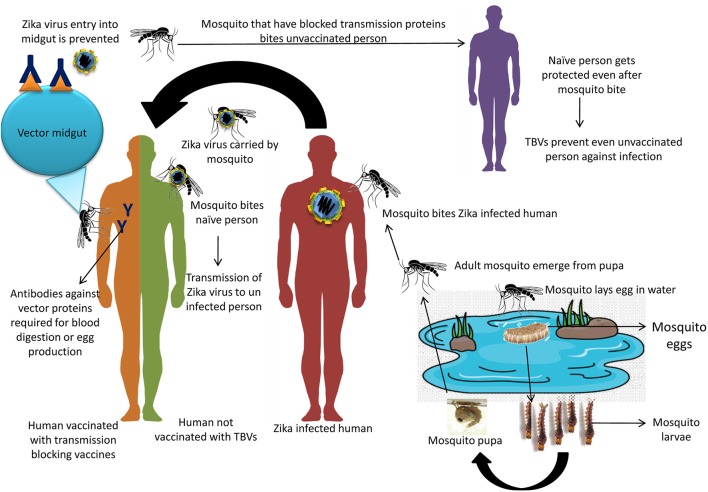
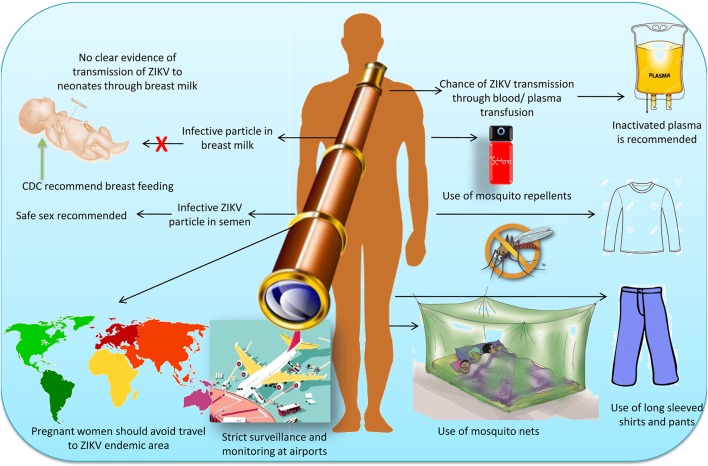
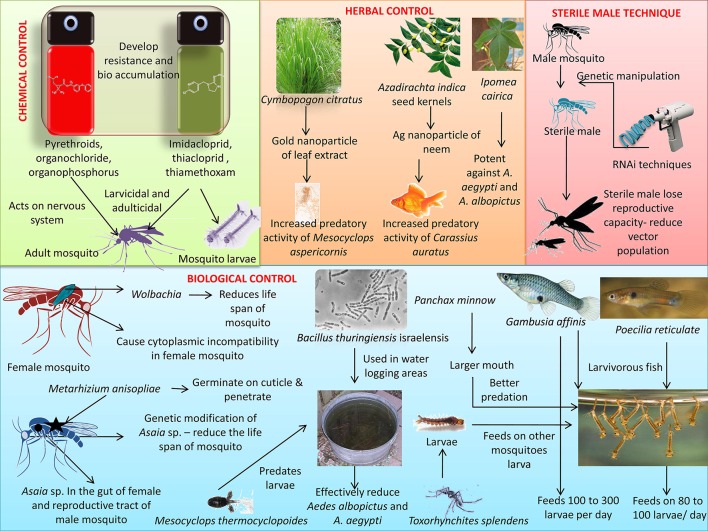
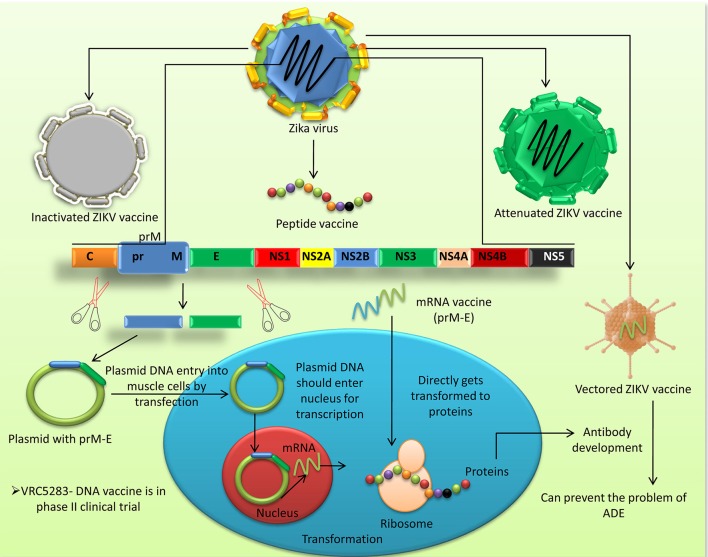
Zika virus (ZIKV) is the most recent intruder that acquired the status of global threat creating panic and frightening situation to public owing to its rapid spread, attaining higher virulence and causing complex clinical manifestations including microcephaly in newborns and Guillain Barré Syndrome. Alike other flaviviruses, the principal mode of ZIKV transmission is by mosquitoes. Advances in research have provided reliable diagnostics for detecting ZIKV infection, while several drug/therapeutic targets and vaccine candidates have been identified recently. Despite these progresses, currently there is neither any effective drug nor any vaccine available against ZIKV. Under such circumstances and to tackle the problem at large, control measures of which mosquito population control need to be strengthened following appropriate mechanical, chemical, biological and genetic control measures. Apart from this, several other known modes of ZIKV transmission which have gained importance in recent past such as intrauterine, sexual intercourse, and blood-borne spread need to be checked and kept under control by adopting appropriate precautions and utmost care during sexual intercourse, blood transfusion and organ transplantation. The virus inactivation by pasteurization, detergents, chemicals, and filtration can effectively reduce viral load in plasma-derived medicinal products. Added to this, strengthening of the surveillance and monitoring of ZIKV as well as avoiding travel to Zika infected areas would aid in keeping viral infection under check. Here, we discuss the salient advances in the prevention and control strategies to combat ZIKV with a focus on highlighting various intervention approaches against the vector mosquitoes of this viral pathogen along with presenting an overview regarding human intervention measures to counter other modes of ZIKV transmission and spread. Additionally, owing to the success of vaccines for a number of infections globally, a separate section dealing with advances in ZIKV vaccines and transmission blocking vaccines has also been included.
寨卡病毒(ZIKV)是最近出现的一种入侵者,因其迅速传播、毒力增强并导致包括新生儿小头畸形和吉兰-巴雷综合征在内的复杂临床表现,已成为一种全球威胁,引发了公众的恐慌和担忧。与其他黄病毒一样,寨卡病毒的主要传播方式是通过蚊子。研究进展已提供了用于检测寨卡病毒感染的可靠诊断方法,同时最近也确定了几种药物/治疗靶点和候选疫苗。尽管有这些进展,但目前尚无针对寨卡病毒的有效药物或疫苗。在这种情况下,为了全面解决该问题,需要遵循适当的机械、化学、生物和基因控制措施,加强以控制蚊子种群为重点的控制措施。除此之外,最近变得重要的寨卡病毒其他几种已知传播方式,如宫内传播、性交传播和血液传播,需要通过在性交、输血和器官移植期间采取适当的预防措施和格外小心来加以检查和控制。通过巴氏消毒法、洗涤剂、化学物质和过滤进行病毒灭活,可以有效降低血浆衍生药品中的病毒载量。此外,加强对寨卡病毒的监测以及避免前往寨卡病毒感染地区,将有助于控制病毒感染。在此,我们讨论抗击寨卡病毒的预防和控制策略方面的显著进展,重点突出针对这种病毒病原体的媒介蚊子的各种干预方法,同时概述针对寨卡病毒其他传播和扩散方式的人类干预措施。此外,鉴于全球范围内多种感染疫苗取得的成功,还单独设立了一个章节介绍寨卡病毒疫苗和传播阻断疫苗的进展情况。