H. L. Moffitt Cancer Center, 12902 USF Magnolia Drive, Tampa, FL 33612, USA; University of South Florida, 4202 E. Fowler Avenue, Tampa, FL 33620, USA; King Fahad Specialist Hospital at Dammam, Saudi Arabia.
H. L. Moffitt Cancer Center, 12902 USF Magnolia Drive, Tampa, FL 33612, USA; University of South Florida, 4202 E. Fowler Avenue, Tampa, FL 33620, USA.
Phys Med. 2018 Feb;46:180-188. doi: 10.1016/j.ejmp.2017.10.009. Epub 2018 Feb 21.
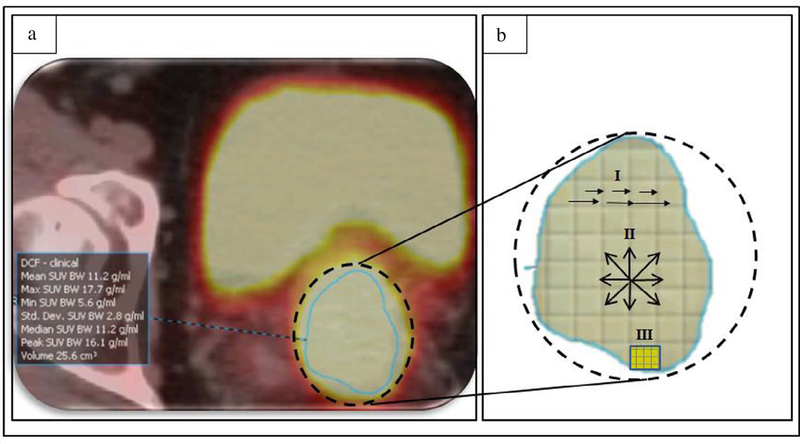
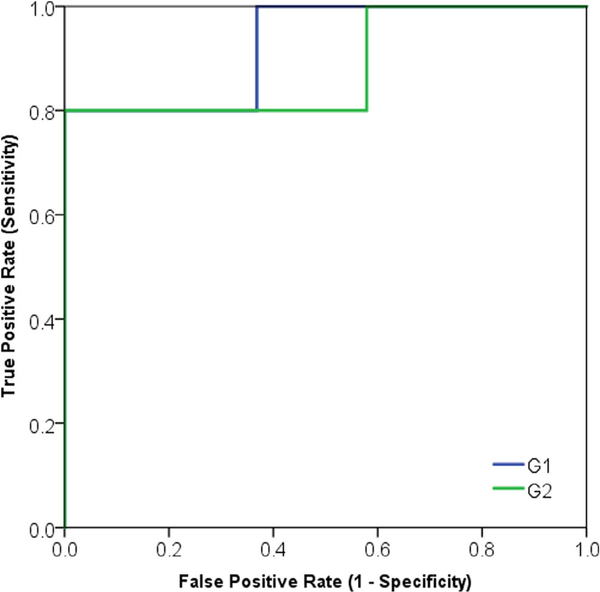
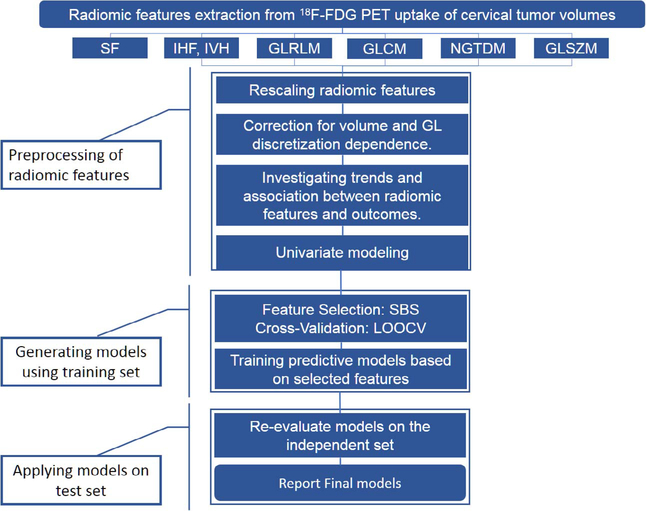
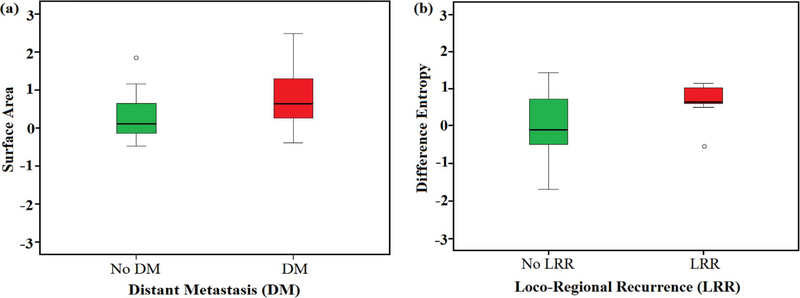
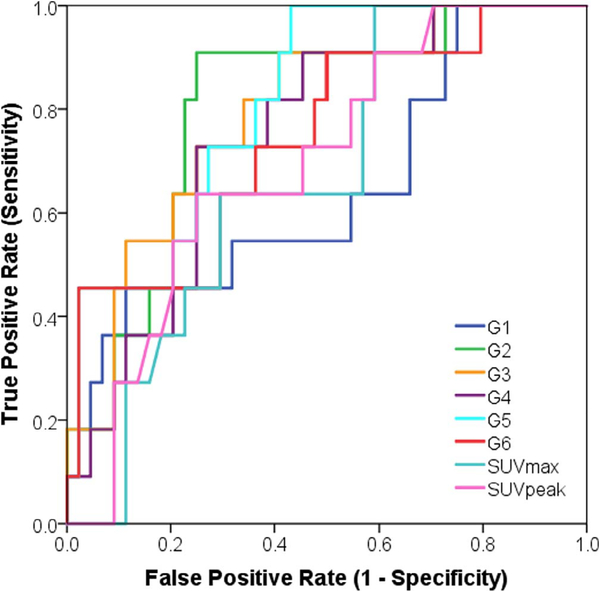
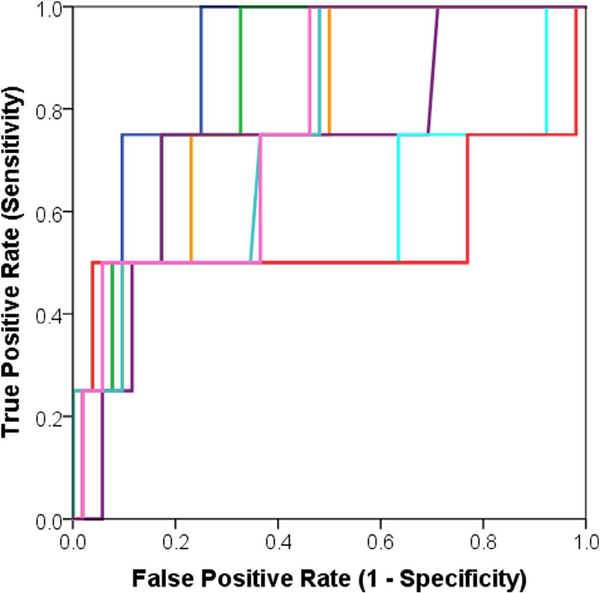
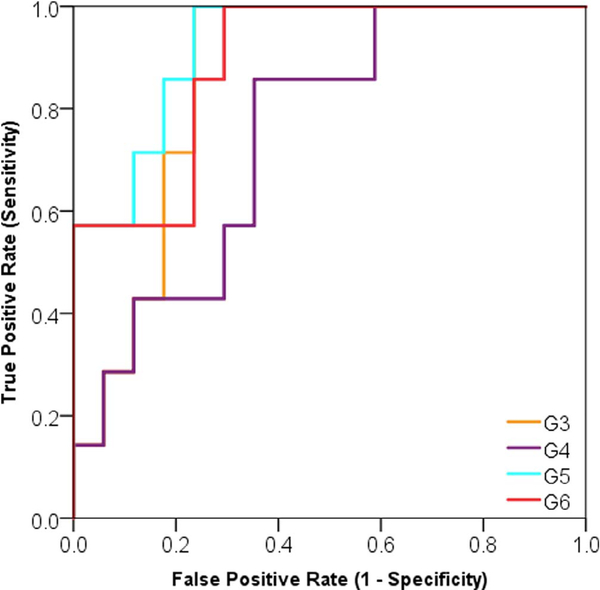
Quantitative image features, also known as radiomic features, have shown potential for predicting treatment outcomes in several body sites. We quantitatively analyzed Fluorine-fluorodeoxyglucose (F-FDG) Positron Emission Tomography (PET) uptake heterogeneity in the Metabolic Tumor Volume (MTV) of eighty cervical cancer patients to investigate the predictive performance of radiomic features for two treatment outcomes: the development of distant metastases (DM) and loco-regional recurrent disease (LRR). We aimed to fit the highest predictive features in multiple logistic regression models (MLRs). To generate such models, we applied backward feature selection method as part of Leave-One-Out Cross Validation (LOOCV) within a training set consisting of 70% of the original patient cohort. The trained MLRs were tested on an independent set consisted of 30% of the original cohort. We evaluated the performance of the final models using the Area under the Receiver Operator Characteristic Curve (AUC). Accordingly, six models demonstrated superior predictive performance for both outcomes (four for DM and two for LRR) when compared to both univariate-radiomic feature models and Standard Uptake Value (SUV) measurements. This demonstrated approach suggests that the ability of the pre-radiochemotherapy PET radiomics to stratify patient risk for DM and LRR could potentially guide management decisions such as adjuvant systemic therapy or radiation dose escalation.
定量影像特征,也称为放射组学特征,已在多个部位显示出预测治疗结果的潜力。我们对 80 例宫颈癌患者的代谢肿瘤体积 (MTV) 中氟-氟代脱氧葡萄糖 (F-FDG) 正电子发射断层扫描 (PET) 摄取异质性进行了定量分析,以研究放射组学特征对两种治疗结果的预测性能:远处转移 (DM) 和局部区域复发疾病 (LRR)。我们的目标是在多个逻辑回归模型 (MLR) 中拟合最高预测特征。为了生成这些模型,我们在由原始患者队列的 70%组成的训练集中应用了基于 Leave-One-Out 交叉验证 (LOOCV) 的向后特征选择方法。经过训练的 MLR 在由原始队列的 30%组成的独立集上进行了测试。我们使用接收器操作特征曲线下的面积 (AUC) 来评估最终模型的性能。相应地,与单变量放射组学特征模型和标准摄取值 (SUV) 测量相比,有六个模型在两个结果(四个用于 DM,两个用于 LRR)方面表现出优越的预测性能。这种经过验证的方法表明,放化疗前 PET 放射组学分层患者 DM 和 LRR 风险的能力可能有助于指导管理决策,例如辅助全身治疗或增加放疗剂量。