Zhan Yu, Marchand Christophe H, Maes Alexandre, Mauries Adeline, Sun Yi, Dhaliwal James S, Uniacke James, Arragain Simon, Jiang Heng, Gold Nicholas D, Martin Vincent J J, Lemaire Stéphane D, Zerges William
Department of Biology & Centre for Structural and Functional Genomics, Concordia University, Montreal, Quebec, Canada.
Laboratoire de Biologie Moléculaire et Cellulaire des Eucaryotes, Institut de Biologie Physico-Chimique, UMR8226, CNRS, Sorbonne Universités, UPMC Univ Paris 06, 13 rue Pierre et Marie Curie, Paris, France.
PLoS One. 2018 Feb 26;13(2):e0185039. doi: 10.1371/journal.pone.0185039. eCollection 2018.
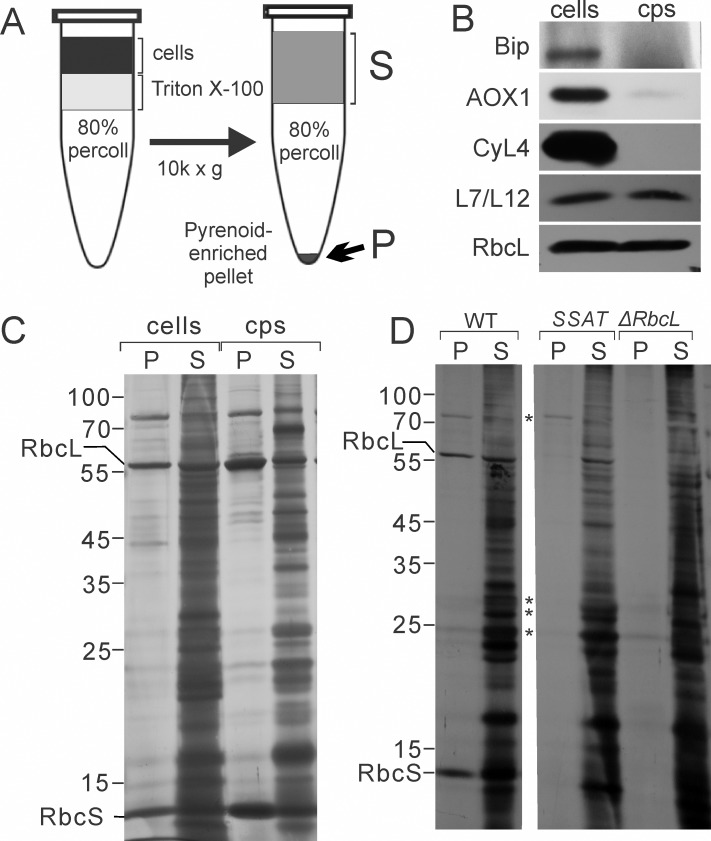
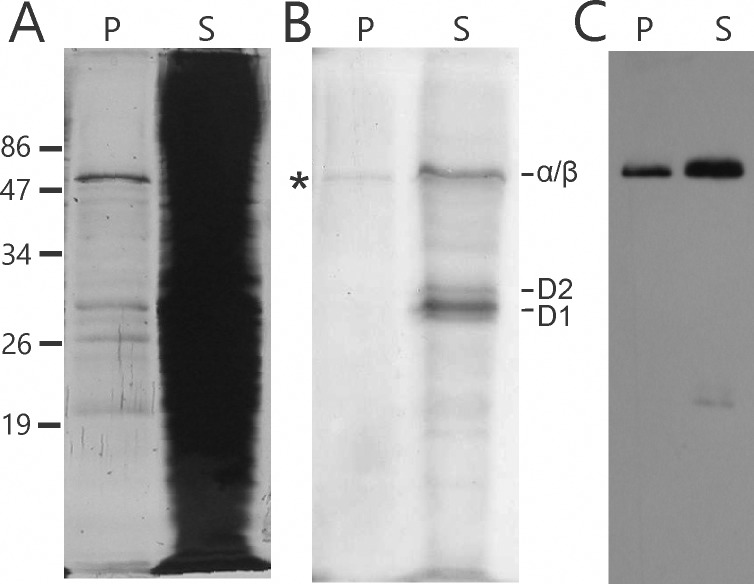
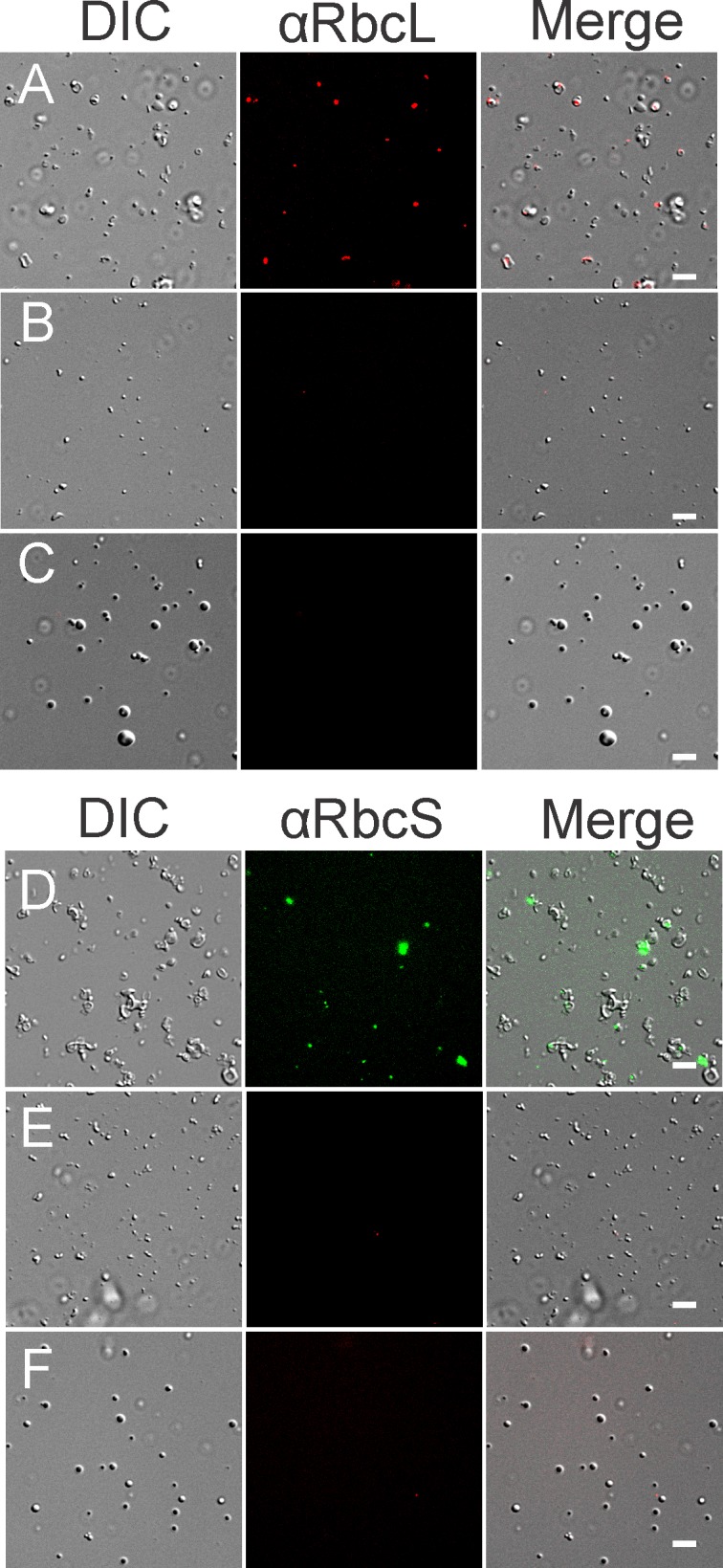
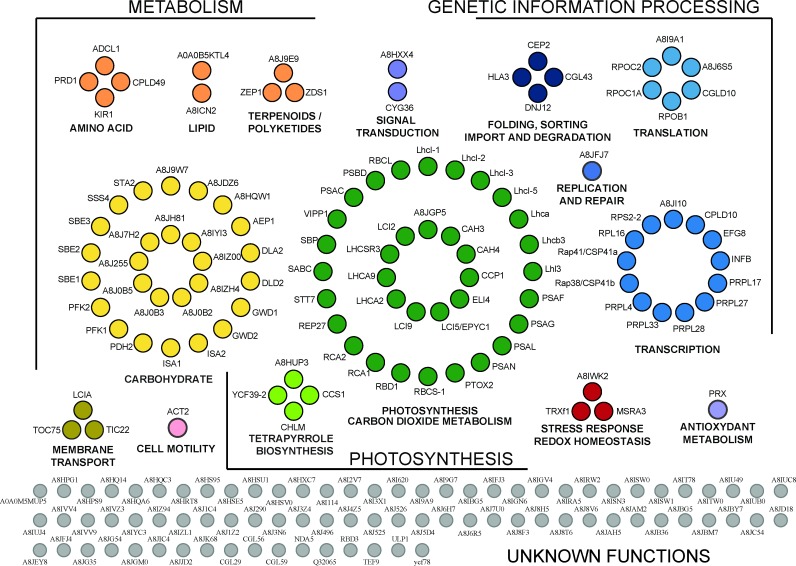
Organelles are intracellular compartments which are themselves compartmentalized. Biogenic and metabolic processes are localized to specialized domains or microcompartments to enhance their efficiency and suppress deleterious side reactions. An example of intra-organellar compartmentalization is the pyrenoid in the chloroplasts of algae and hornworts. This microcompartment enhances the photosynthetic CO2-fixing activity of the Calvin-Benson cycle enzyme Rubisco, suppresses an energetically wasteful oxygenase activity of Rubisco, and mitigates limiting CO2 availability in aquatic environments. Hence, the pyrenoid is functionally analogous to the carboxysomes in cyanobacteria. However, a comprehensive analysis of pyrenoid functions based on its protein composition is lacking. Here we report a proteomic characterization of the pyrenoid in the green alga Chlamydomonas reinhardtii. Pyrenoid-enriched fractions were analyzed by quantitative mass spectrometry. Contaminant proteins were identified by parallel analyses of pyrenoid-deficient mutants. This pyrenoid proteome contains 190 proteins, many of which function in processes that are known or proposed to occur in pyrenoids: e.g. the carbon concentrating mechanism, starch metabolism or RNA metabolism and translation. Using radioisotope pulse labeling experiments, we show that pyrenoid-associated ribosomes could be engaged in the localized synthesis of the large subunit of Rubisco. New pyrenoid functions are supported by proteins in tetrapyrrole and chlorophyll synthesis, carotenoid metabolism or amino acid metabolism. Hence, our results support the long-standing hypothesis that the pyrenoid is a hub for metabolism. The 81 proteins of unknown function reveal candidates for new participants in these processes. Our results provide biochemical evidence of pyrenoid functions and a resource for future research on pyrenoids and their use to enhance agricultural plant productivity. Data are available via ProteomeXchange with identifier PXD004509.
细胞器是细胞内的区室,其本身又被进一步分隔。生物合成和代谢过程定位于特定的区域或微区室,以提高其效率并抑制有害的副反应。藻类和角苔叶绿体中的蛋白核就是细胞器内部分隔的一个例子。这个微区室增强了卡尔文-本森循环酶核酮糖-1,5-二磷酸羧化酶/加氧酶(Rubisco)的光合固定二氧化碳活性,抑制了Rubisco耗能的加氧酶活性,并缓解了水生环境中二氧化碳供应受限的问题。因此,蛋白核在功能上类似于蓝细菌中的羧酶体。然而,基于其蛋白质组成对蛋白核功能进行的全面分析尚缺。在此,我们报道了莱茵衣藻中蛋白核的蛋白质组特征。通过定量质谱分析了富含蛋白核的组分。通过对缺乏蛋白核的突变体进行平行分析来鉴定污染蛋白。这个蛋白核蛋白质组包含190种蛋白质,其中许多蛋白质在已知或推测发生在蛋白核中的过程中发挥作用,例如碳浓缩机制、淀粉代谢或RNA代谢及翻译。通过放射性同位素脉冲标记实验,我们表明与蛋白核相关的核糖体可能参与Rubisco大亚基的定位合成。四吡咯和叶绿素合成、类胡萝卜素代谢或氨基酸代谢中的蛋白质支持了蛋白核的新功能。因此,我们的结果支持了长期以来的假说,即蛋白核是代谢的中心。81种功能未知的蛋白质揭示了这些过程中新参与者的候选对象。我们的结果为蛋白核功能提供了生化证据,并为未来关于蛋白核及其用于提高农业植物生产力的研究提供了资源。数据可通过ProteomeXchange获得,标识符为PXD004509。