Department of Psychosomatic Medicine and Psychotherapy, University of Leipzig, Semmelweisstraße 10, 04103, Leipzig, Germany.
Division of Haematology and Medical Oncology, University of Leipzig, Johannisallee 32A, 04103, Leipzig, Germany.
BMC Psychiatry. 2018 Feb 27;18(1):52. doi: 10.1186/s12888-018-1633-y.
Approximately 10% of the individuals experiencing the death of a loved one develop prolonged grief disorder (PGD) after bereavement. Family members of haematological cancer patients might be particularly burdened since their loss experience is preceded by a very strenuous time of disease and aggressive treatment. However, support needs of relatives of cancer patients often remain unmet, also after the death of the patient. Therapeutic possibilities are enhanced by providing easily available and accessible Internet-based therapies. This study will adapt and evaluate an Internet-based grief therapy for bereaved individuals after the loss of a significant other due to haematological cancer.
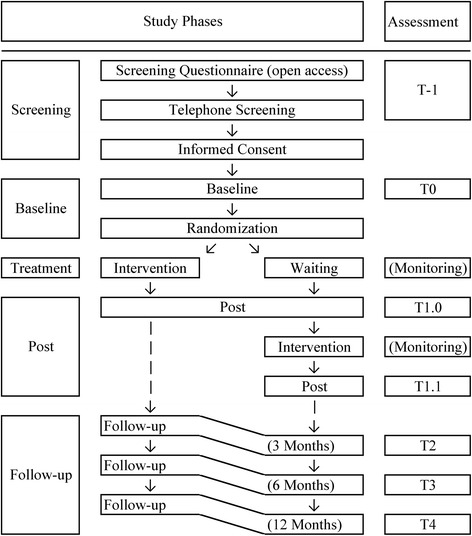
The efficacy of the Internet-based grief therapy is evaluated in a randomized controlled trial with a wait-list control group. Inclusion criteria are bereavement due to hematological cancer and meeting the diagnostic criteria for PGD. Exclusion criteria are severe depression, suicidality, dissociative tendency, psychosis, posttraumatic stress disorder, substance use disorder, and current psychotherapeutic or psychopharmacological treatment. The main outcome is PGD severity. Secondary outcomes are depression, anxiety, somatization, posttraumatic stress, quality of life, sleep quality, and posttraumatic growth. Data is collected pre- and posttreatment. Follow-up assessments will be conducted 3, 6, and 12 months after completion of the intervention. The Internet-based grief therapy is assumed to have at least moderate effects regarding PGD and other bereavement-related mental health outcomes. Predictors and moderators of the treatment outcome and PGD will be determined.
Individuals bereaved due to haematological cancer are at high risk for psychological distress. Tailored treatment for this particularly burdened target group is missing. Our study results will contribute to a closing of this healthcare gap.
German Clinical Trial Register UTN: U1111-1186-6255 . Registered 1 December 2016.
大约有 10%经历过亲人离世的个体在丧亲后会发展为延长哀伤障碍(PGD)。由于血液病癌症患者的家属在经历亲人离世前已经经历了一段非常艰难的疾病和积极治疗的时期,他们可能会承受特别大的负担。然而,癌症患者家属的支持需求往往得不到满足,即使在患者去世后也是如此。通过提供易于获取和使用的基于互联网的治疗方法,可以增强治疗的可能性。本研究将对一种基于互联网的哀伤治疗方法进行改编和评估,用于治疗因血液病癌症而失去重要他人的丧亲个体。
本研究采用随机对照试验和等待名单对照组来评估基于互联网的哀伤治疗方法的疗效。纳入标准为因血液病癌症而丧亲,且符合 PGD 诊断标准。排除标准为严重抑郁、自杀意念、分离倾向、精神病、创伤后应激障碍、物质使用障碍,以及目前正在接受心理治疗或精神药理学治疗。主要结局为 PGD 严重程度。次要结局为抑郁、焦虑、躯体化、创伤后应激、生活质量、睡眠质量和创伤后成长。在治疗前和治疗后收集数据。完成干预后,将在 3、6 和 12 个月进行随访评估。假设基于互联网的哀伤治疗方法对 PGD 和其他与丧亲相关的心理健康结局具有至少中等程度的效果。将确定治疗结局和 PGD 的预测因素和调节因素。
因血液病癌症而丧亲的个体面临较高的心理困扰风险。针对这个负担较重的特定目标群体,缺乏针对性的治疗方法。我们的研究结果将有助于填补这一医疗保健空白。
德国临床试验注册处 UTN:U1111-1186-6255。注册于 2016 年 12 月 1 日。