School of Life Science and Technology, ShanghaiTech University, 100 Haike Rd., Pudong New Area, Shanghai, 201210, China.
College of Biotechnology, Guilin Medical University, Guilin, 541100, China.
J Transl Med. 2018 Feb 27;16(1):41. doi: 10.1186/s12967-018-1409-7.
Laron syndrome is an autosomal disease resulting from mutations in the growth hormone receptor (GHR) gene. The only therapeutic treatment for Laron syndrome is recombinant insulin-like growth factor I (IGF-I), which has been shown to have various side effects. The improved Laron syndrome models are important for better understanding the pathogenesis of the disease and developing corresponding therapeutics. Pigs have become attractive biomedical models for human condition due to similarities in anatomy, physiology, and metabolism relative to humans, which could serve as an appropriate model for Laron syndrome.
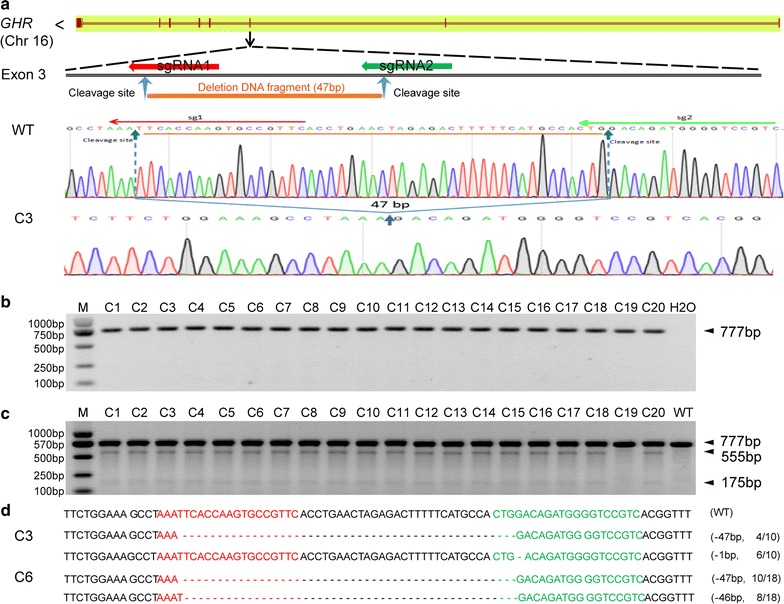
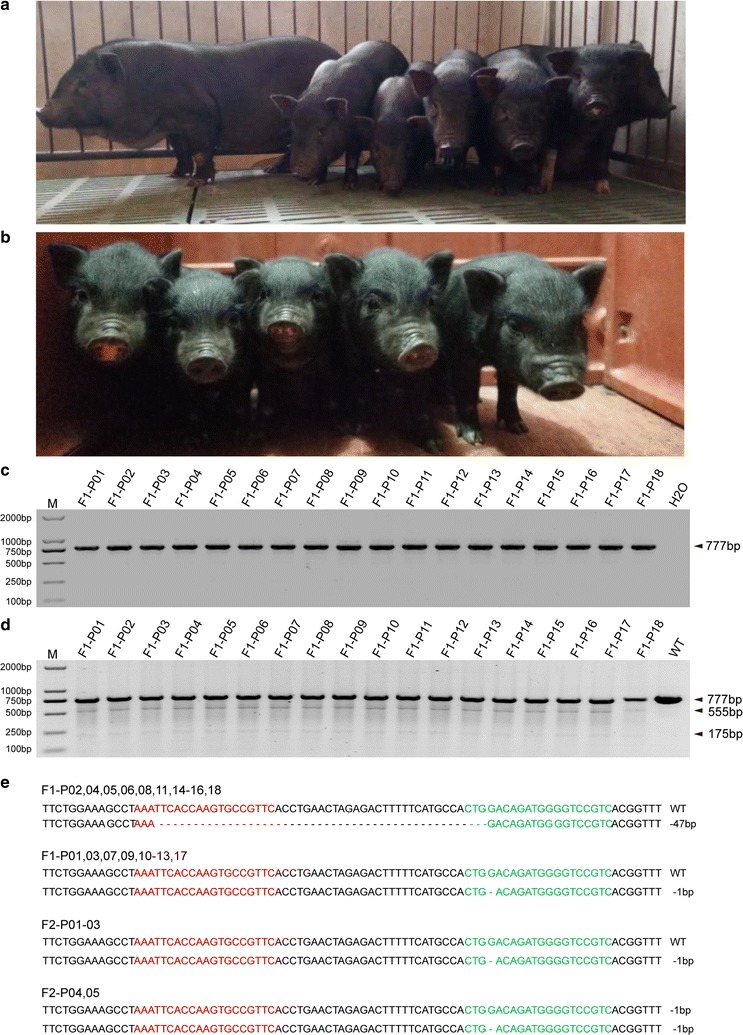
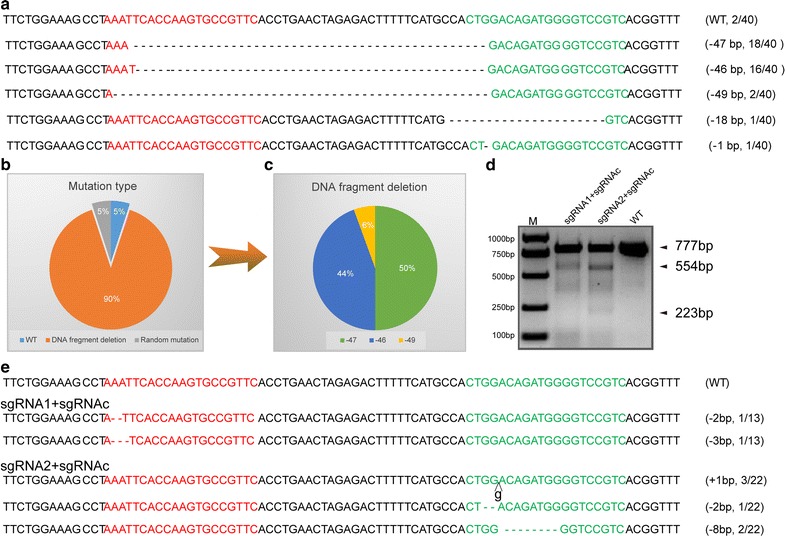
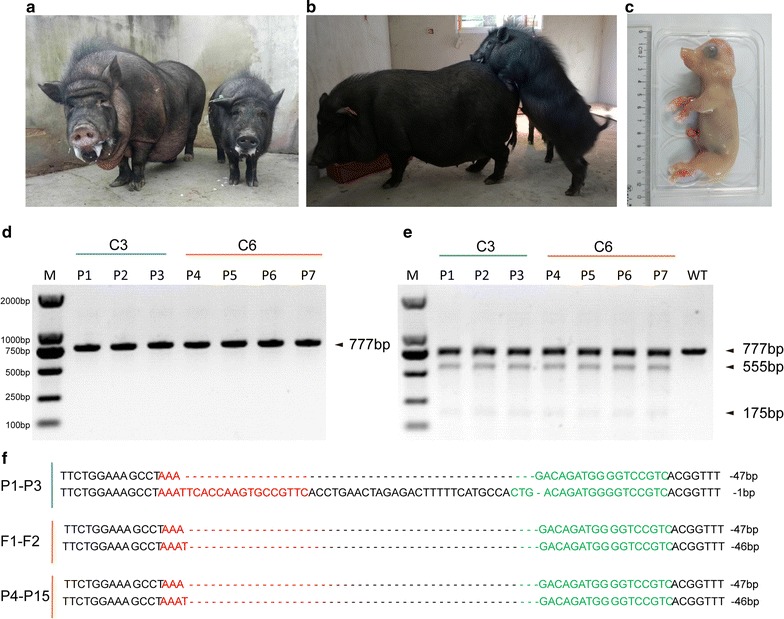
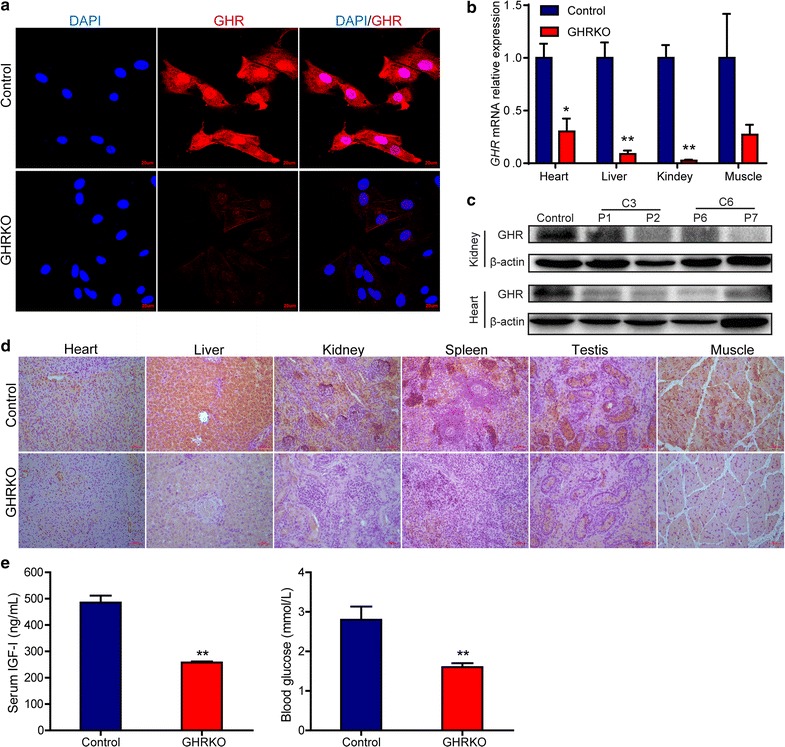
To further improve the GHR knockout (GHRKO) efficiency and explore the feasibility of precise DNA deletion at targeted sites, the dual-sgRNAs/Cas9 system was designed to target GHR exon 3 in pig fetal fibroblasts (PFFs). The vectors encoding sgRNAs and Cas9 were co-transfected into PFFs by electroporation and GHRKO cell lines were established by single cell cloning culture. Two biallelic knockout cell lines were selected as the donor cell line for somatic cell nuclear transfer for the generation of GHRKO pigs. The genotype of colonies, cloned fetuses and piglets were identified by T7 endonuclease I (T7ENI) assay and sequencing. The GHR expression in the fibroblasts and piglets was analyzed by confocal microscopy, quantitative polymerase chain reaction (q-PCR), western blotting (WB) and immunohistochemical (IHC) staining. The phenotype of GHRKO pigs was recapitulated through level detection of IGF-I and glucose, and measurement of body weight and body size. GHRKO F1 generation were generated by crossing with wild-type pigs, and their genotype was detected by T7ENI assay and sequencing. GHRKO F2 generation was obtained via self-cross of GHRKO F1 pigs. Their genotypes of GHRKO F2 generation was also detected by Sanger sequencing.
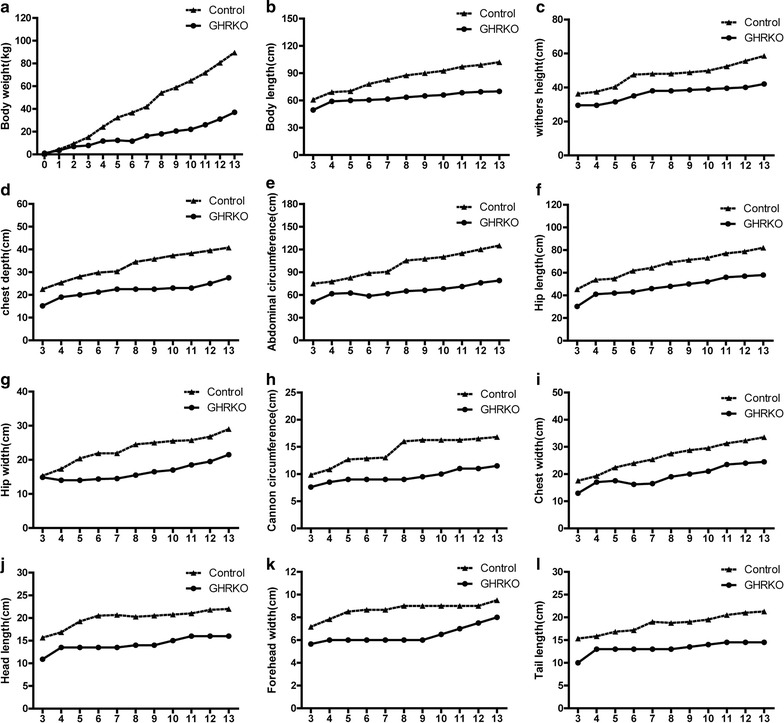
In total, 19 of 20 single-cell colonies exhibited biallelic modified GHR (95%), and the efficiency of DNA deletion mediated by dual-sgRNAs/Cas9 was as high as 90% in 40 GHR alleles of 20 single-cell colonies. Two types of GHR allelic single-cell colonies (GHR, GHR) were selected as donor cells for the generation of GHRKO pigs. The reconstructed embryos were transferred into 15 recipient gilts, resulting in 15 GHRKO newborn piglets and 2 fetuses. The GHRKO pigs exhibited slow growth rates and small body sizes. From birth to 13 months old, the average body weight of wild-type pigs varied from 0.6 to 89.5 kg, but that of GHRKO pigs varied from only 0.9 to 37.0 kg. Biochemically, the knockout pigs exhibited decreased serum levels of IGF-I and glucose. Furthermore, the GHRKO pigs had normal reproduction ability, as eighteen GHRKO F1 piglets were obtained via mating a GHRKO pig with wild-type pigs and five GHRKO F2 piglets were obtained by self-cross of F1 generation, indicating that modified GHR alleles can pass to the next generation via germline transmission.
The dual-sgRNAs/Cas9 is a reliable system for DNA deletion and that GHRKO pigs conform to typical phenotypes of those observed in Laron patients, suggesting that these pigs could serve as an appropriate model for Laron syndrome.
拉伦综合征是一种由生长激素受体(GHR)基因突变引起的常染色体疾病。拉伦综合征的唯一治疗方法是重组胰岛素样生长因子 I(IGF-I),但其已被证明具有各种副作用。改良的拉伦综合征模型对于更好地理解疾病的发病机制和开发相应的治疗方法非常重要。猪由于与人类在解剖、生理和代谢方面的相似性,已成为有吸引力的生物医学模型,可作为拉伦综合征的合适模型。
为了进一步提高 GHR 敲除(GHRKO)效率,并探索在靶向位点进行精确 DNA 删除的可行性,设计了双 sgRNA/Cas9 系统靶向猪胎儿成纤维细胞(PFF)中的 GHR 外显子 3。通过电穿孔将编码 sgRNA 和 Cas9 的载体共转染到 PFF 中,并通过单细胞克隆培养建立 GHRKO 细胞系。选择两个双等位基因敲除细胞系作为供体细胞系,用于体细胞核移植以产生 GHRKO 猪。通过 T7 内切酶 I(T7ENI)测定和测序鉴定菌落、克隆胎儿和仔猪的基因型。通过共聚焦显微镜、定量聚合酶链反应(q-PCR)、western blot(WB)和免疫组织化学(IHC)染色分析成纤维细胞和仔猪中的 GHR 表达。通过 IGF-I 和葡萄糖水平检测、体重和体型测量来重现 GHRKO 猪的表型。通过与野生型猪交配产生 GHRKO F1 代,并通过 T7ENI 测定和测序检测其基因型。通过 GHRKO F1 猪自交获得 GHRKO F2 代,并通过 Sanger 测序检测其 GHRKO F2 代的基因型。
在总共 20 个单细胞菌落中,有 19 个显示出双等位基因修饰的 GHR(95%),在 20 个单细胞菌落的 40 个 GHR 等位基因中,双 sgRNA/Cas9 介导的 DNA 删除效率高达 90%。选择两种类型的 GHR 等位基因单细胞菌落(GHR,GHR)作为生成 GHRKO 猪的供体细胞。将重构的胚胎移植到 15 只受体母猪中,产生了 15 只 GHRKO 新生仔猪和 2 只胎儿。GHRKO 猪生长速度缓慢,体型较小。从出生到 13 个月大,野生型猪的平均体重从 0.6 到 89.5 公斤不等,而 GHRKO 猪的平均体重仅从 0.9 到 37.0 公斤不等。从生化角度来看,敲除猪的血清 IGF-I 和葡萄糖水平降低。此外,GHRKO 猪具有正常的繁殖能力,因为通过 GHRKO 猪与野生型猪交配获得了 18 只 GHRKO F1 仔猪,通过 F1 代自交获得了 5 只 GHRKO F2 仔猪,表明经过修饰的 GHR 等位基因可以通过种系传递传递给下一代。
双 sgRNA/Cas9 是一种可靠的 DNA 删除系统,GHRKO 猪符合拉伦患者观察到的典型表型,表明这些猪可以作为拉伦综合征的合适模型。