Department of Neurology, Focus Program Translational Neuroscience (FTN), Research Center Immunotherapy (FZI), Rhine Main Neuroscience Network (rmn2), University Medical Center of the Johannes Gutenberg University Mainz, Langenbeckstr. 1, 55131, Mainz, Germany.
Neuroimmunology Unit, Centre de Recherche du Centre Hospitalier de l'Université de Montréal (CRCHUM), Montréal, QC, Canada.
Nat Commun. 2018 Feb 26;9(1):819. doi: 10.1038/s41467-018-03186-z.
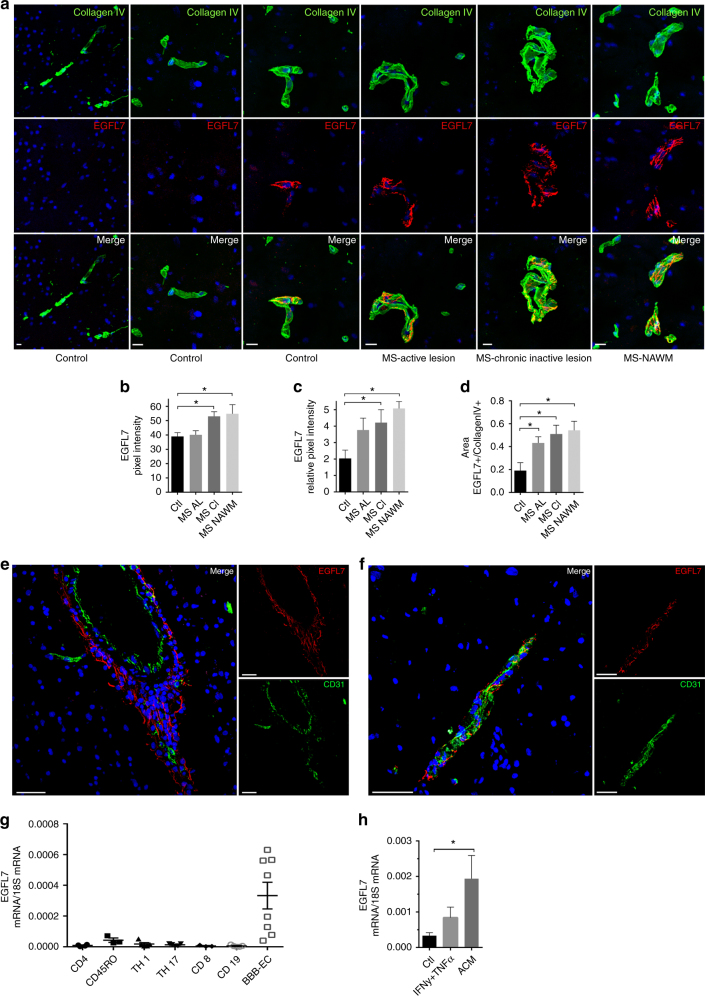
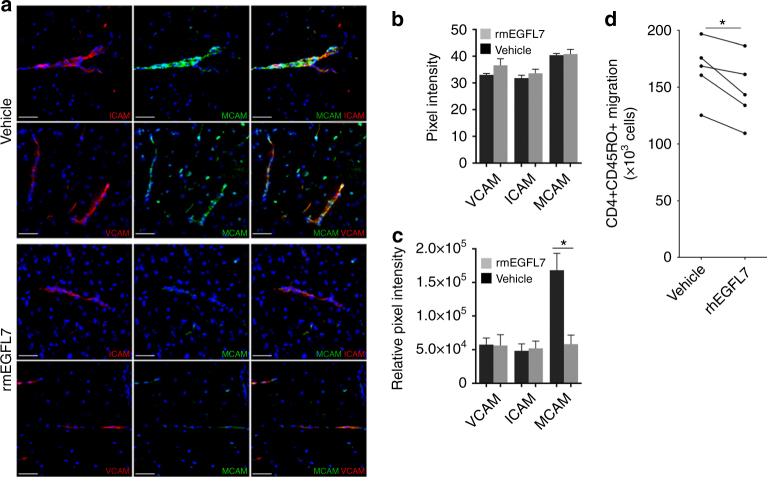
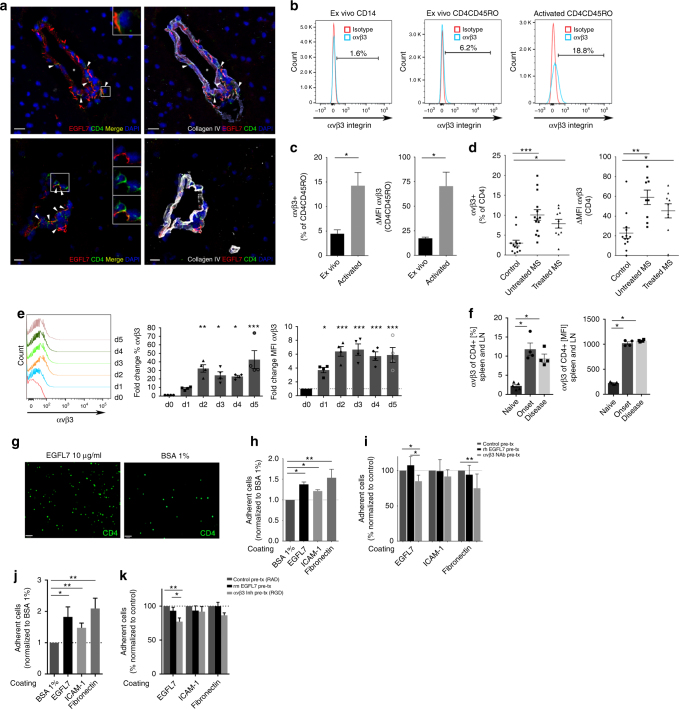
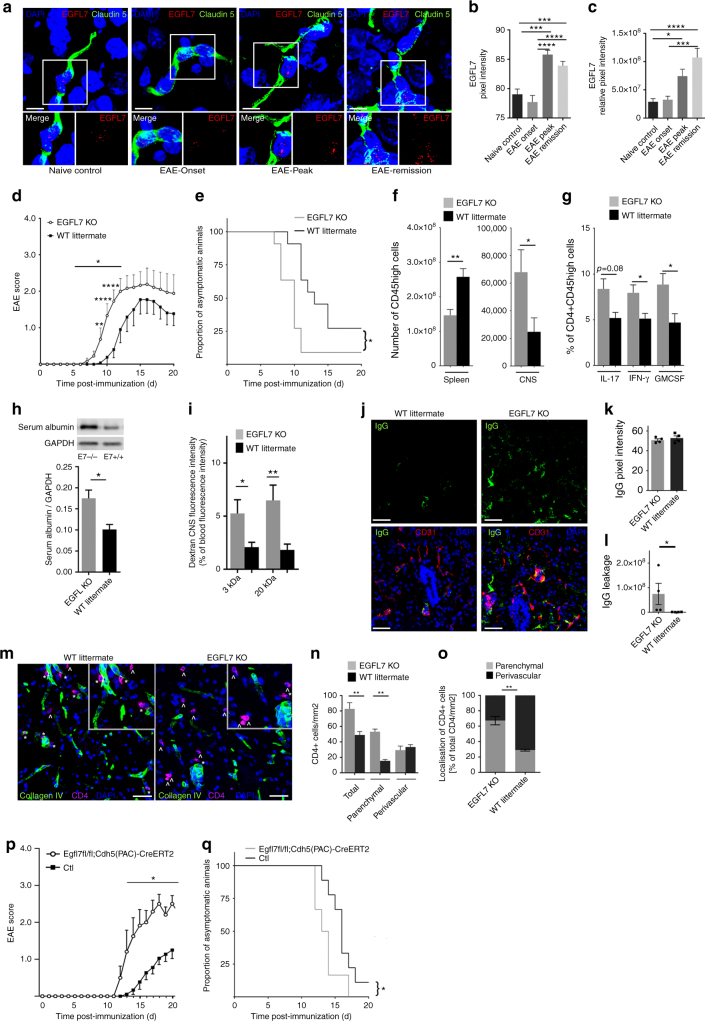
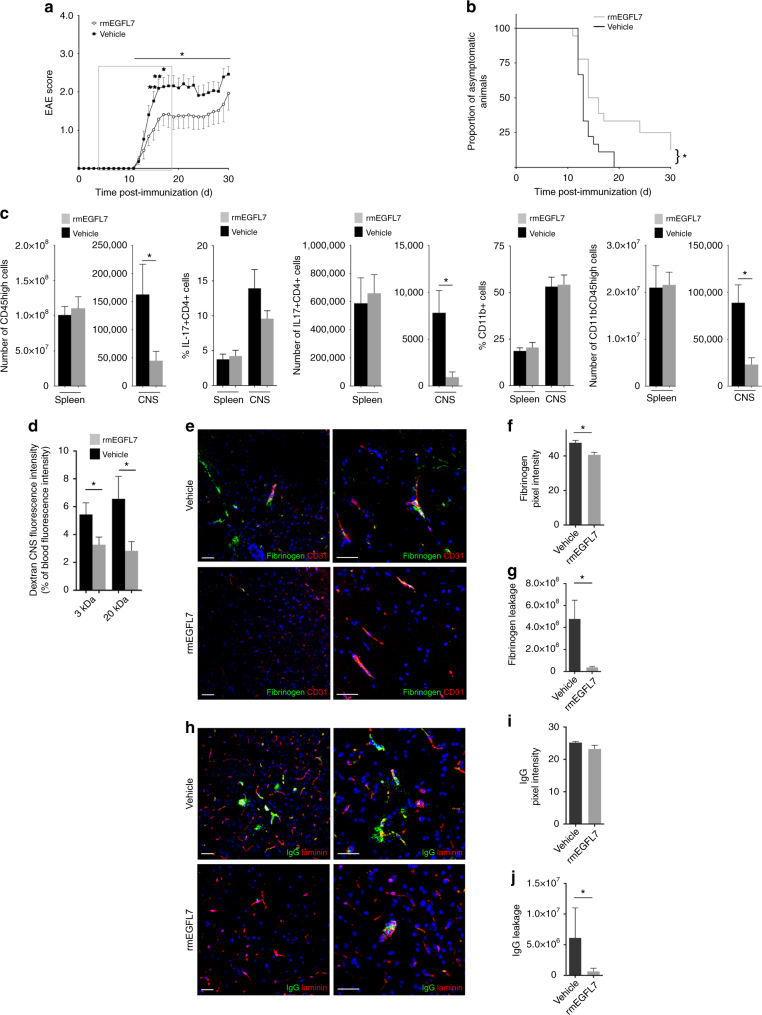
Extracellular matrix (ECM) proteins secreted by blood-brain barrier (BBB) endothelial cells (ECs) are implicated in cell trafficking. We discovered that the expression of ECM epidermal growth factor-like protein 7 (EGFL7) is increased in the CNS vasculature of patients with multiple sclerosis (MS), and in mice with experimental autoimmune encephalomyelitis (EAE). Perivascular CD4 T lymphocytes colocalize with ECM-bound EGFL7 in MS lesions. Human and mouse activated T cells upregulate EGFL7 ligand αvβ3 integrin and can adhere to EGFL7 through integrin αvβ3. EGFL7-knockout (KO) mice show earlier onset of EAE and increased brain and spinal cord parenchymal infiltration of T lymphocytes. Importantly, EC-restricted EGFL7-KO is associated with a similar EAE worsening. Finally, treatment with recombinant EGFL7 improves EAE, reduces MCAM expression, and tightens the BBB in mouse. Our data demonstrate that EGFL7 can limit CNS immune infiltration and may represent a novel therapeutic avenue in MS.
细胞外基质(ECM)蛋白由血脑屏障(BBB)内皮细胞(EC)分泌,与细胞迁移有关。我们发现,多发性硬化症(MS)患者的中枢神经系统血管和实验性自身免疫性脑脊髓炎(EAE)小鼠的 ECM 表皮生长因子样蛋白 7(EGFL7)表达增加。MS 病变中,血管周围的 CD4 T 淋巴细胞与 ECM 结合的 EGFL7 共定位。人和鼠激活的 T 细胞上调 EGFL7 配体αvβ3 整联蛋白,并通过整合素αvβ3 黏附到 EGFL7。EGFL7 敲除(KO)小鼠的 EAE 发病更早,T 淋巴细胞在脑和脊髓实质中的浸润增加。重要的是,EC 特异性 EGFL7-KO 与类似的 EAE 恶化有关。最后,用重组 EGFL7 治疗可改善 EAE,降低 MCAM 的表达,并使小鼠的 BBB 更加紧密。我们的数据表明,EGFL7 可以限制中枢神经系统免疫浸润,可能成为 MS 的一种新的治疗途径。