Xia Yu, Yang Chao, Zhang Tong
School of Environmental Science and Engineering, Southern University of Science and Technology, No. 1008 Xueyuan Blvd, Nanshan, Shenzhen, China.
2Environmental Biotechnology Laboratory, The University of Hong Kong, Pokfulam Road, Hong Kong, Hong Kong.
Biotechnol Biofuels. 2018 Feb 21;11:47. doi: 10.1186/s13068-018-1042-y. eCollection 2018.
Part-stream low-frequency ultrasound (LFUS) was one of the common practices for sludge disintegration in full-scale anaerobic digestion (AD) facilities. However, the effectiveness of part-stream LFUS treatment and its effect on AD microbiome have not been fully elucidated.
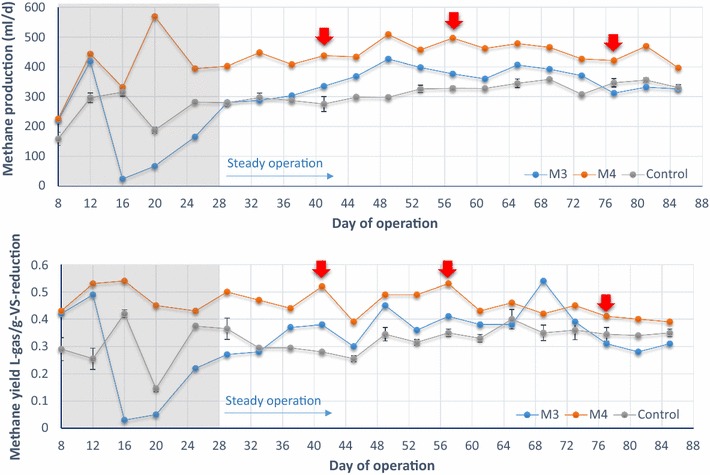
Here we testified the effectiveness of part-stream LFUS pretreatment by treating only a fraction of feed sludge (23% and 33% total solid of the feed sludge) with 20 Hz LFUS for 70 s. State-of-the-art metagenomic and metatranscriptomic analysis was used to investigate the microbial process underpinning the enhanced AD performance by part-stream LFUS pretreatment.
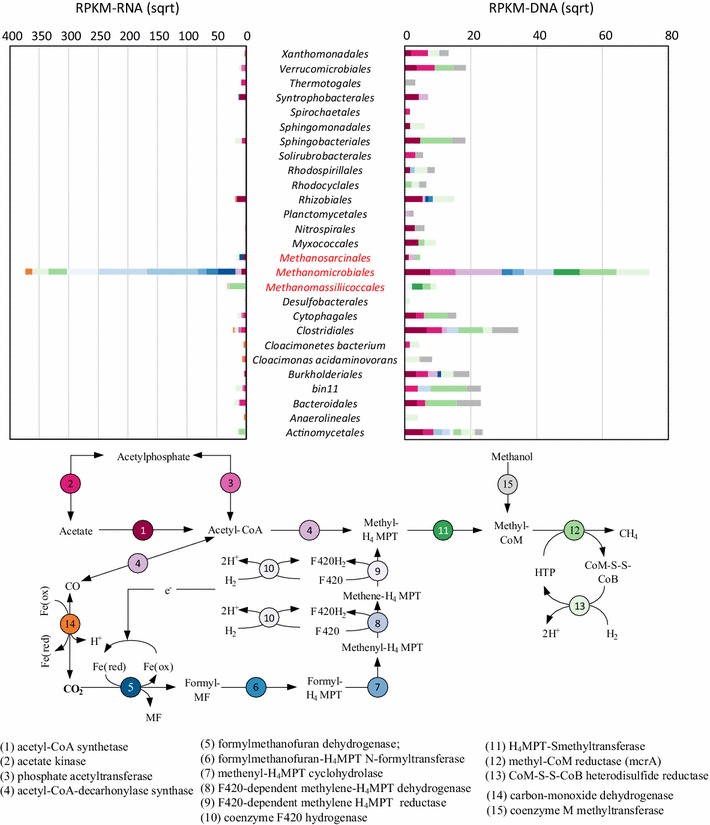
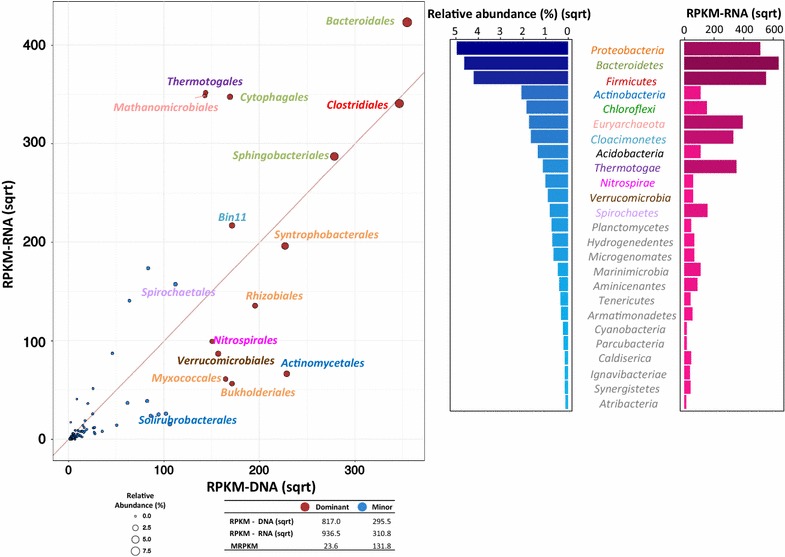
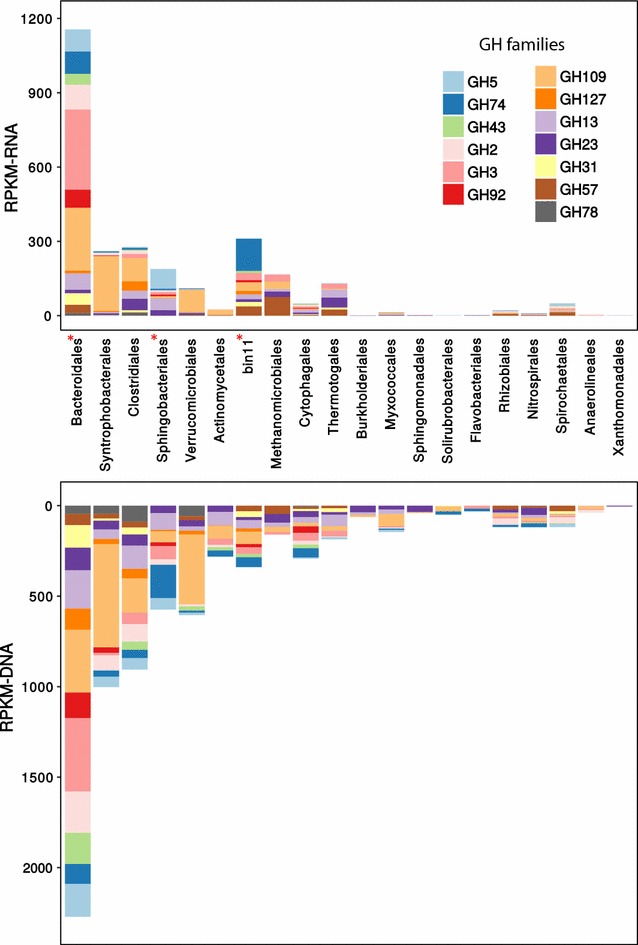
By pretreating 33% total solid of the feed sludge, methane yield was increased by 36.5%, while the volatile solid reduction ratio remained unchanged. RNA-seq of the microbiome at stable stage showed that the continuous dosage of easy-degradable LFUS-pretreated feed sludge had gradually altered the microbial community by selecting hydrolyzer with greater metabolic capability to hydrolyze cellulosic biomass without substrate attachment. Meanwhile, with excellent cell mobility for nutrient capturing was highly active within the community. Foremost proportion of the methanogenesis was contributed by the dominant via carbon dioxide reduction. More interestingly, a perceivable proportion of the reverse electron flow of the community was input from species other than syntrophic acetate-oxidizing bacteria. In addition, metagenomic binning retrieved several interesting novel metagenomic-assembled genomes (MAGs): MAG-bin6 of showed exceptional transcriptional activities towards protein degradation and MAG-bin11 of Candidatus with active cellulolytic GH74 gene detected.
In summary, despite the unchanged sludge digestibility, the applied part-stream LFUS pretreatment strategy was robust in adjusting the microbial pathways towards more effective substrate conversion enabled by free-living hydrolyser and beta-oxidation-capable methanogens.
部分流低频超声(LFUS)是全规模厌氧消化(AD)设施中污泥解体的常见方法之一。然而,部分流LFUS处理的有效性及其对AD微生物群落的影响尚未完全阐明。
在此,我们通过用20 Hz LFUS处理仅一部分进料污泥(进料污泥总固体的23%和33%)70秒来验证部分流LFUS预处理的有效性。采用最先进的宏基因组和宏转录组分析来研究部分流LFUS预处理增强AD性能的微生物过程。
通过预处理进料污泥33%的总固体,甲烷产量提高了36.5%,而挥发性固体减少率保持不变。稳定阶段微生物群落的RNA测序表明,持续添加易于降解的LFUS预处理进料污泥通过选择具有更强代谢能力的水解菌来水解无底物附着的纤维素生物质,逐渐改变了微生物群落。同时,具有出色细胞流动性以捕获养分的微生物在群落中高度活跃。甲烷生成的最大比例由优势菌通过二氧化碳还原贡献。更有趣的是,群落中可感知比例的逆向电子流来自互营乙酸氧化菌以外的物种。此外,宏基因组分箱检索到几个有趣的新型宏基因组组装基因组(MAGs):显示对蛋白质降解具有异常转录活性的MAG-bin6和检测到具有活跃纤维素分解GH74基因的候选 菌的MAG-bin11。
总之,尽管污泥消化率不变,但应用的部分流LFUS预处理策略在调整微生物途径以实现更有效的底物转化方面表现出色,这是由自由生活的水解菌和具有β-氧化能力的产甲烷菌实现的。