The University of Texas at Austin.
Florida State University.
Child Dev. 2018 Nov;89(6):1956-1969. doi: 10.1111/cdev.13049. Epub 2018 Feb 27.
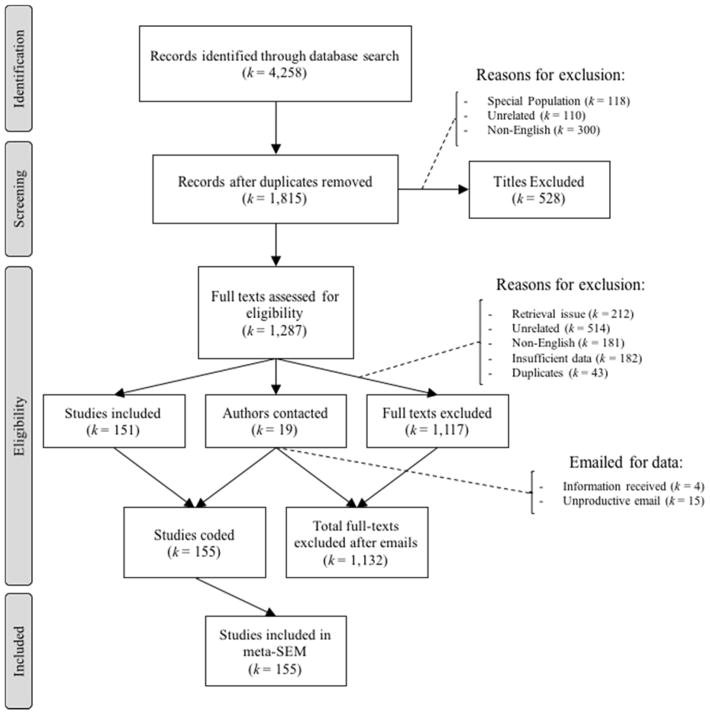
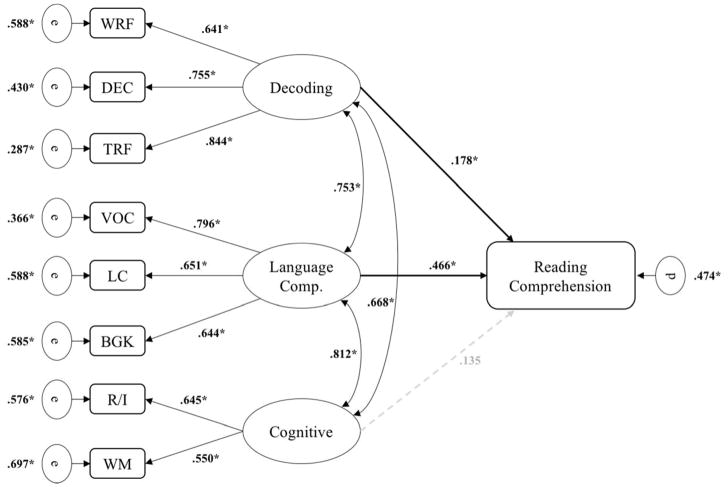
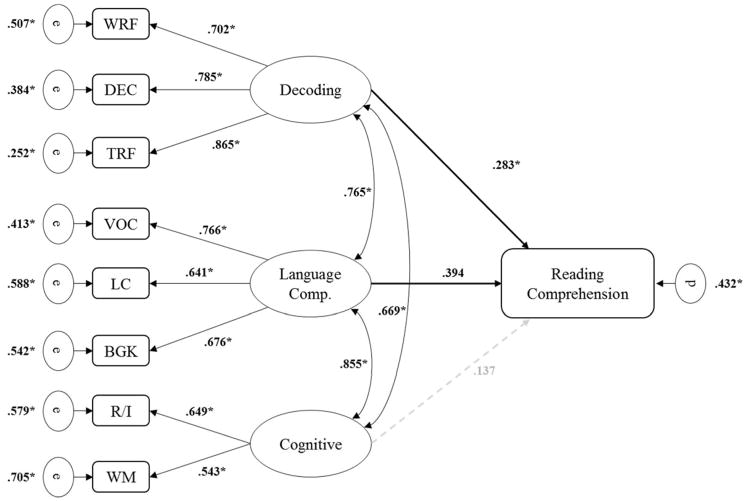
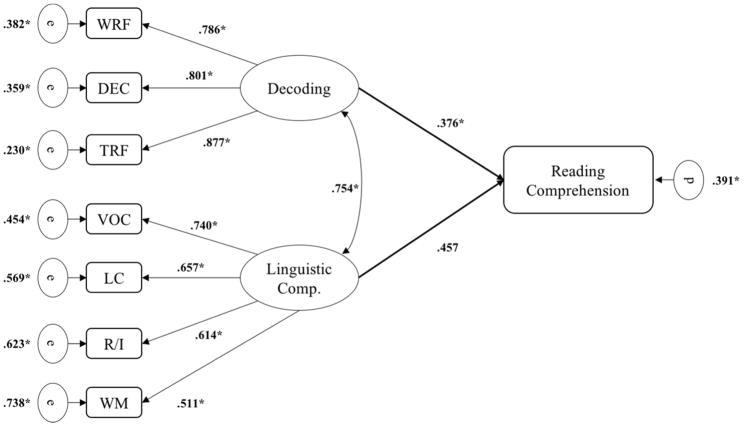
The purpose of this review was to introduce readers of Child Development to the meta-analytic structural equation modeling (MASEM) technique. Provided are a background to the MASEM approach, a discussion of its utility in the study of child development, and an application of this technique in the study of reading comprehension (RC) development. MASEM uses a two-stage approach: first, it provides a composite correlation matrix across included variables, and second, it fits hypothesized a priori models. The provided MASEM application used a large sample (N = 1,205,581) of students (ages 3.5-46.225) from 155 studies to investigate the factor structure and relations among components of RC. The practical implications of using this technique to study development are discussed.
本次综述旨在向《儿童发展》的读者介绍元分析结构方程建模(MASEM)技术。文中提供了 MASEM 方法的背景,讨论了它在儿童发展研究中的效用,并应用该技术研究阅读理解(RC)发展。MASEM 使用两阶段方法:首先,它提供了包含变量的综合相关矩阵,其次,它拟合假设的先验模型。提供的 MASEM 应用使用了来自 155 项研究的 1205581 名学生(年龄 3.5-46.225)的大样本,以调查 RC 成分的因子结构和关系。讨论了使用该技术研究发展的实际意义。