From the Division of Cardiovascular Medicine, Radcliffe Department of Medicine.
the Department of Chemistry, and.
J Biol Chem. 2018 Apr 20;293(16):6134-6146. doi: 10.1074/jbc.RA117.000487. Epub 2018 Feb 27.
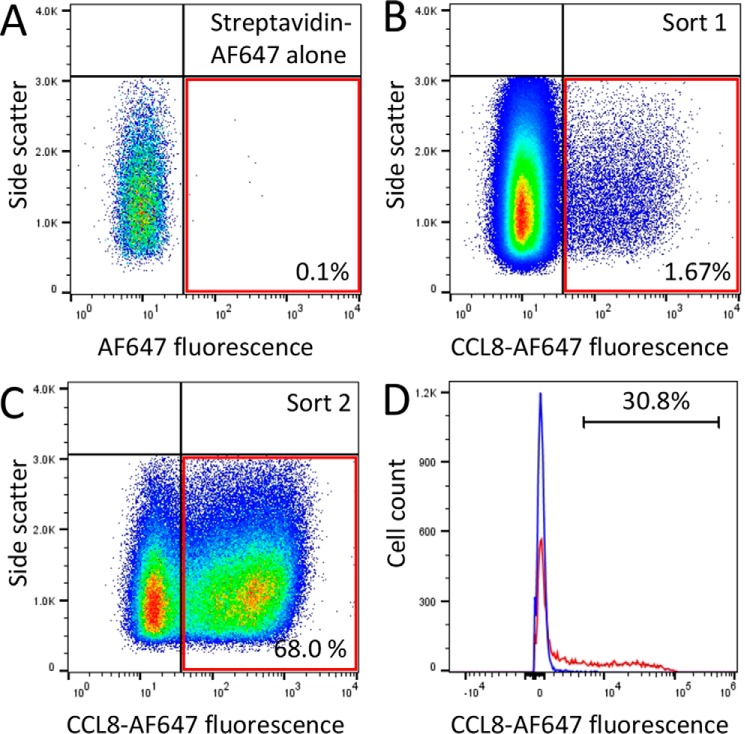
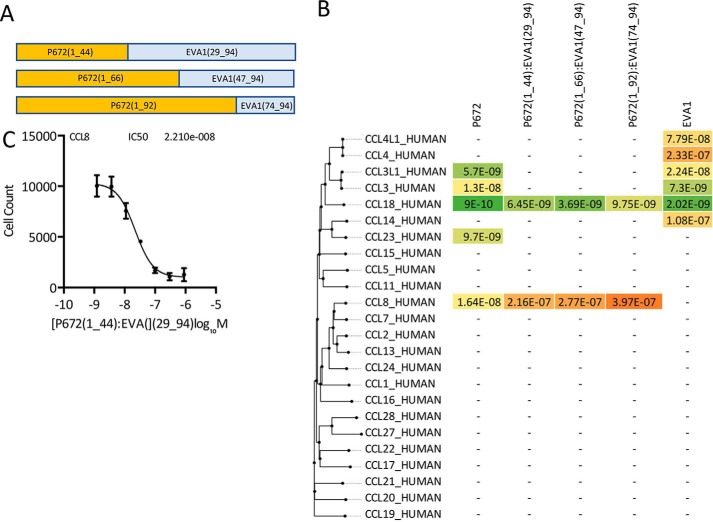
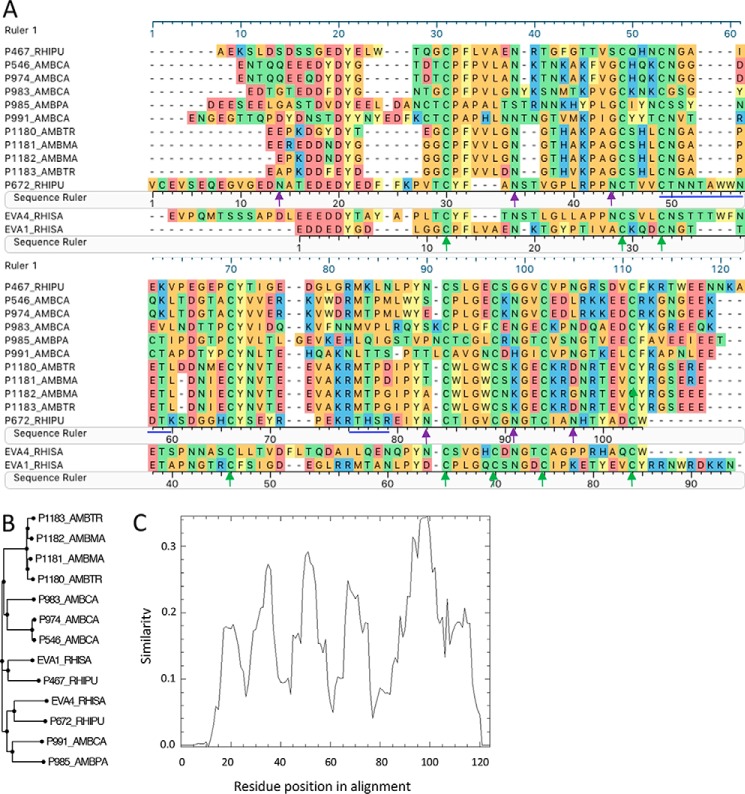
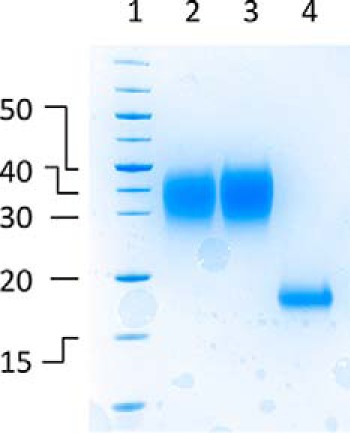
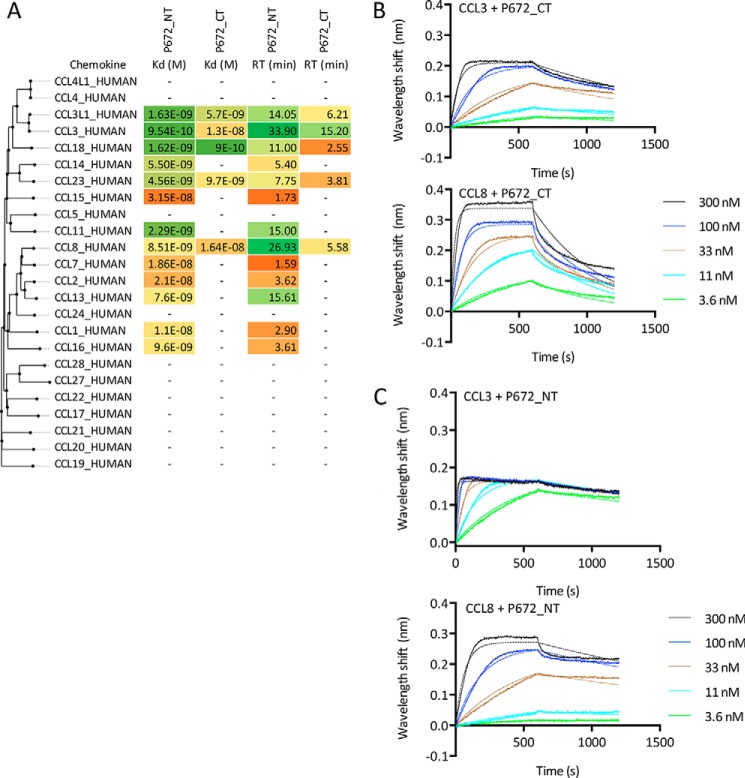
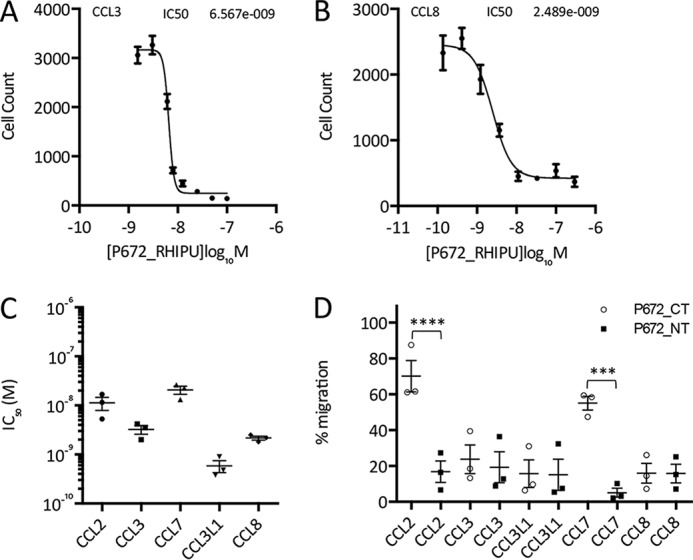
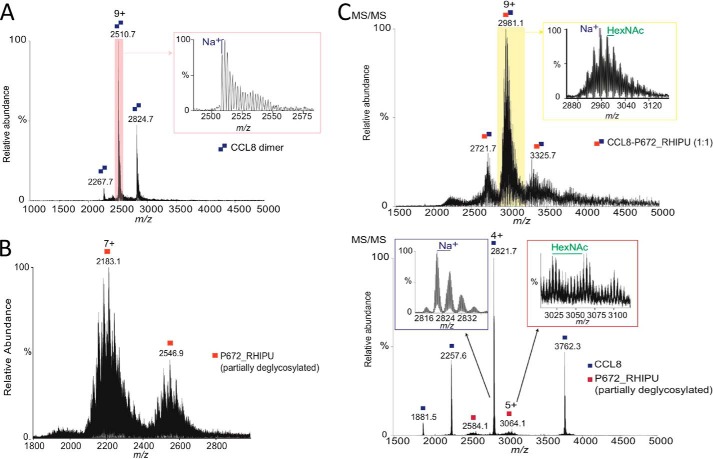
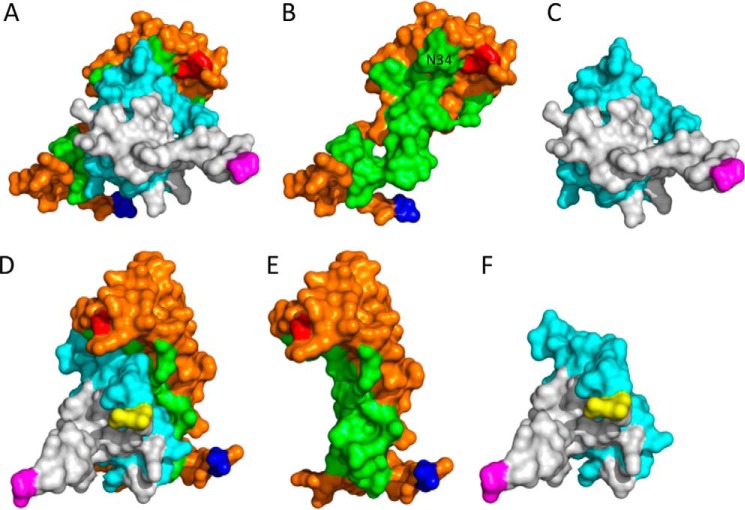
Tick chemokine-binding proteins (evasins) are an emerging class of biologicals that target multiple chemokines and show anti-inflammatory activities in preclinical disease models. Using yeast surface display, we identified a CCL8-binding evasin, P672, from the tick We found that P672 binds CCL8 and eight other CC-class chemokines with a < 10 nm and four other CC chemokines with a between 10 and 100 nm and neutralizes CCL3, CCL3L1, and CCL8 with an IC < 10 nm The CC chemokine-binding profile was distinct from that of evasin 1 (EVA1), which does not bind CCL8. We also show that P672's binding activity can be markedly modulated by the location of a StrepII-His purification tag. Combining native MS and bottom-up proteomics, we further demonstrated that P672 is glycosylated and forms a 1:1 complex with CCL8, disrupting CCL8 homodimerization. Homology modeling of P672 using the crystal structure of the EVA1 and CCL3 complex as template suggested that 44 N-terminal residues of P672 form most of the contacts with CCL8. Replacing the 29 N-terminal residues of EVA1 with the 44 N-terminal residues of P672 enabled this hybrid evasin to bind and neutralize CCL8, indicating that the CCL8-binding properties of P672 reside, in part, in its N-terminal residues. This study shows that the function of certain tick evasins can be manipulated simply by adding a tag. We conclude that homology modeling helps identify regions with transportable chemokine-binding functions within evasins, which can be used to construct hybrid evasins with altered properties.
蜱传趋化因子结合蛋白(evasins)是一类新兴的生物制剂,可靶向多种趋化因子,并在临床前疾病模型中显示抗炎活性。我们利用酵母表面展示技术,从蜱中鉴定出一种 CCL8 结合 evasin,即 P672。研究发现,P672 以 < 10nm 的亲和力与 CCL8 及其他 8 种 CC 类趋化因子结合,以 10-100nm 的亲和力与其他 4 种 CC 趋化因子结合,并以 IC < 10nm 的亲和力中和 CCL3、CCL3L1 和 CCL8。P672 的 CC 趋化因子结合谱与不结合 CCL8 的 evasin 1(EVA1)不同。我们还表明,P672 的结合活性可明显受到 StrepII-His 纯化标签位置的调节。结合天然 MS 和自上而下的蛋白质组学分析,我们进一步证明 P672 是糖基化的,与 CCL8 形成 1:1 复合物,从而破坏 CCL8 同源二聚体的形成。使用 EVA1 和 CCL3 复合物的晶体结构作为模板对 P672 进行同源建模表明,P672 的 44 个 N 端残基与 CCL8 形成大部分结合。用 P672 的 44 个 N 端残基取代 EVA1 的 29 个 N 端残基,使这种杂交 evasin 能够结合并中和 CCL8,表明 P672 的 CCL8 结合特性部分位于其 N 端残基。这项研究表明,通过简单添加标签即可操纵某些蜱传 evasins 的功能。我们得出结论,同源建模有助于识别 evasins 中具有可转移趋化因子结合功能的区域,可用于构建具有改变特性的杂交 evasins。