Department of Internal Medicine, University of Kansas Medical Center, Kansas City, KS, 66160, USA.
Department of Biochemistry and Molecular Biology, University of Kansas Medical Center, Kansas City, KS, 66160, USA.
Cell Death Dis. 2018 Feb 27;9(3):326. doi: 10.1038/s41419-018-0347-x.
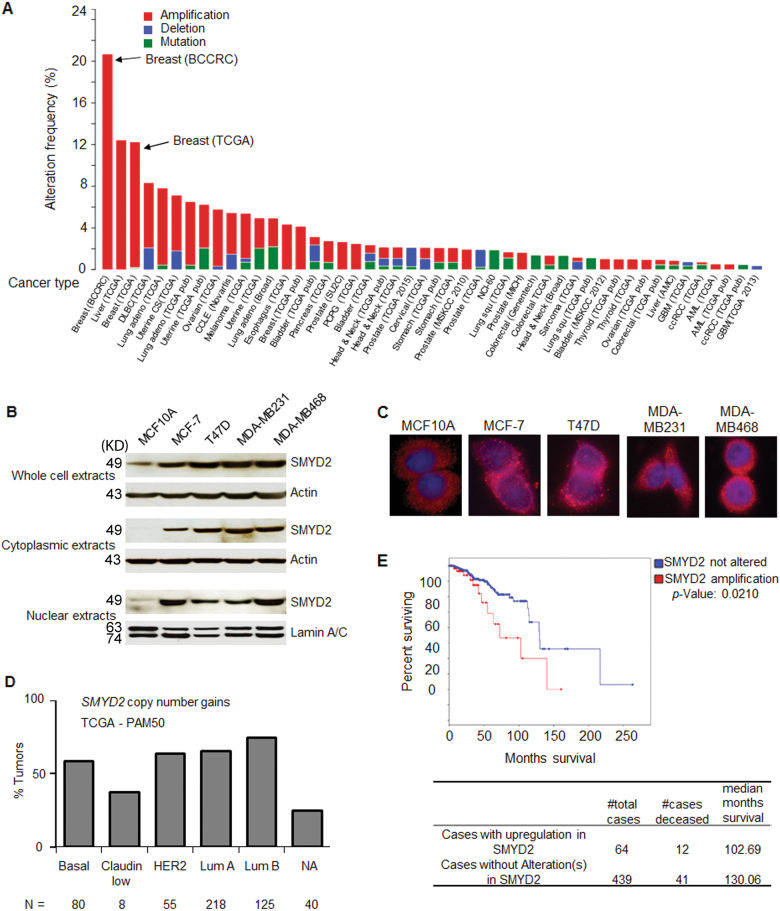
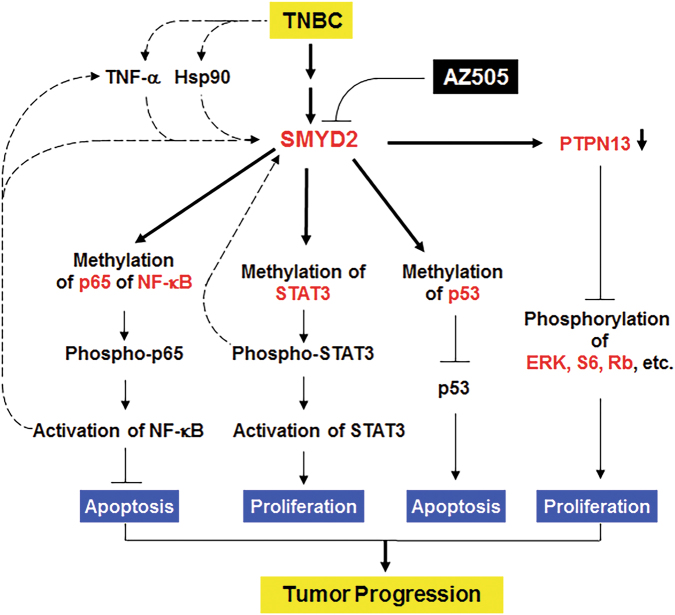
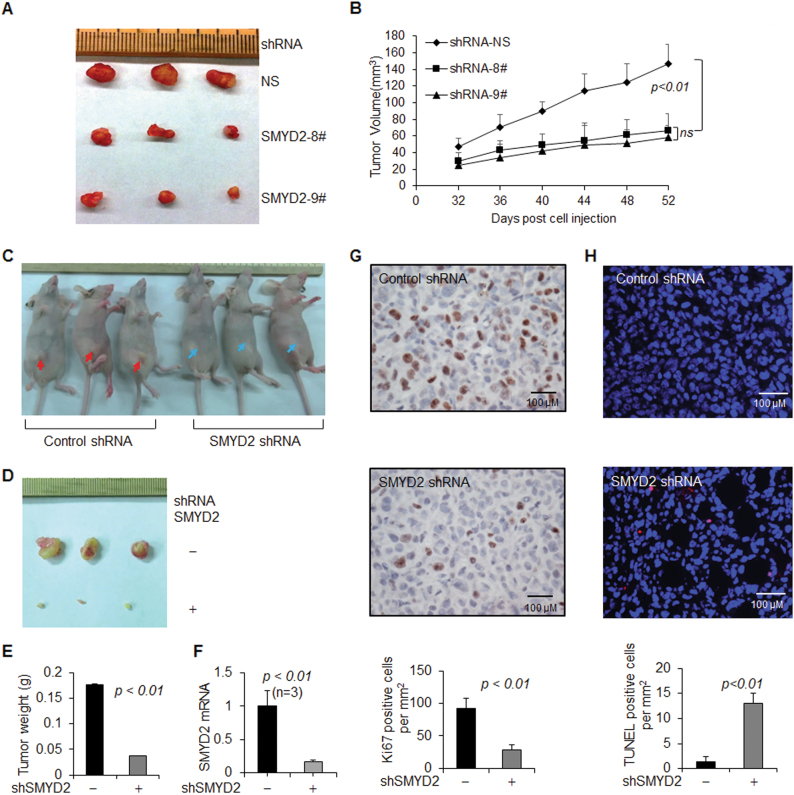
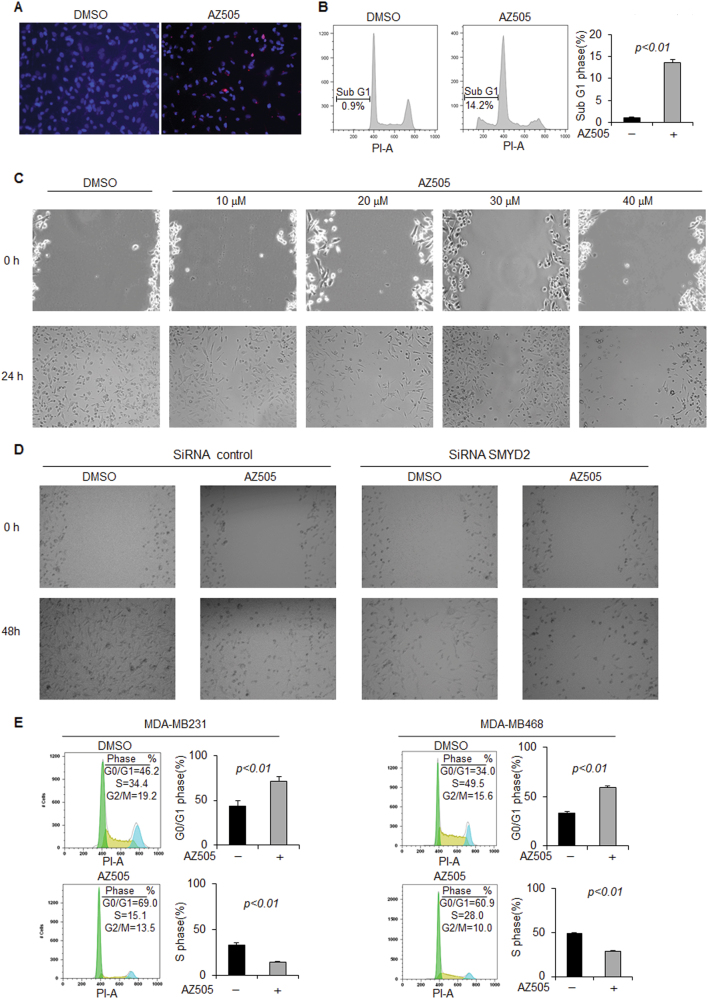
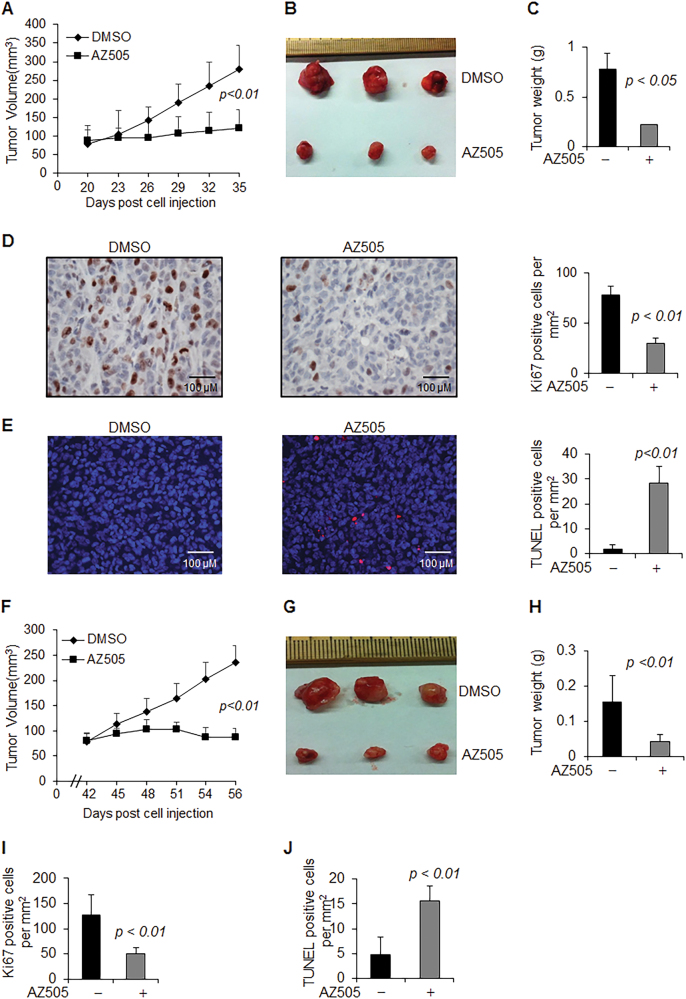
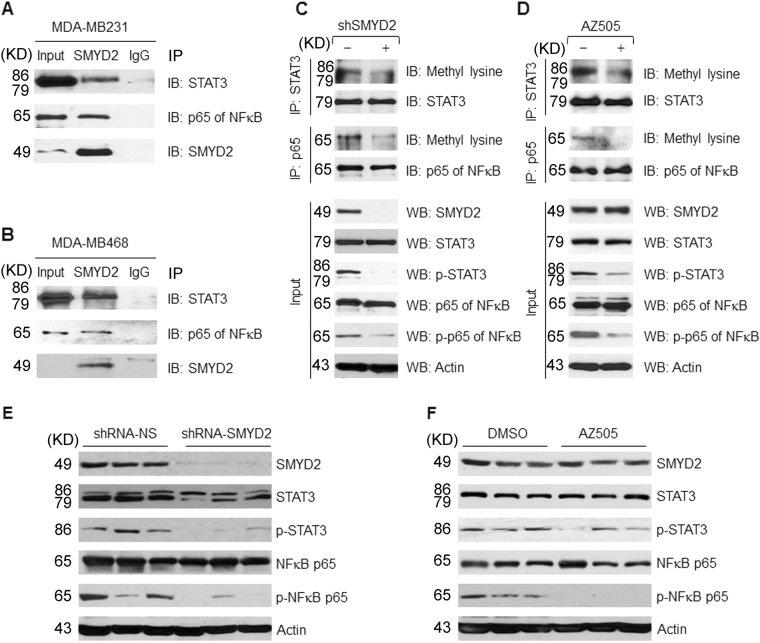
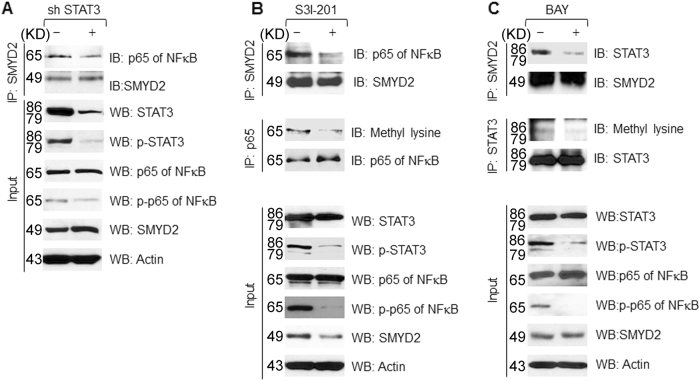
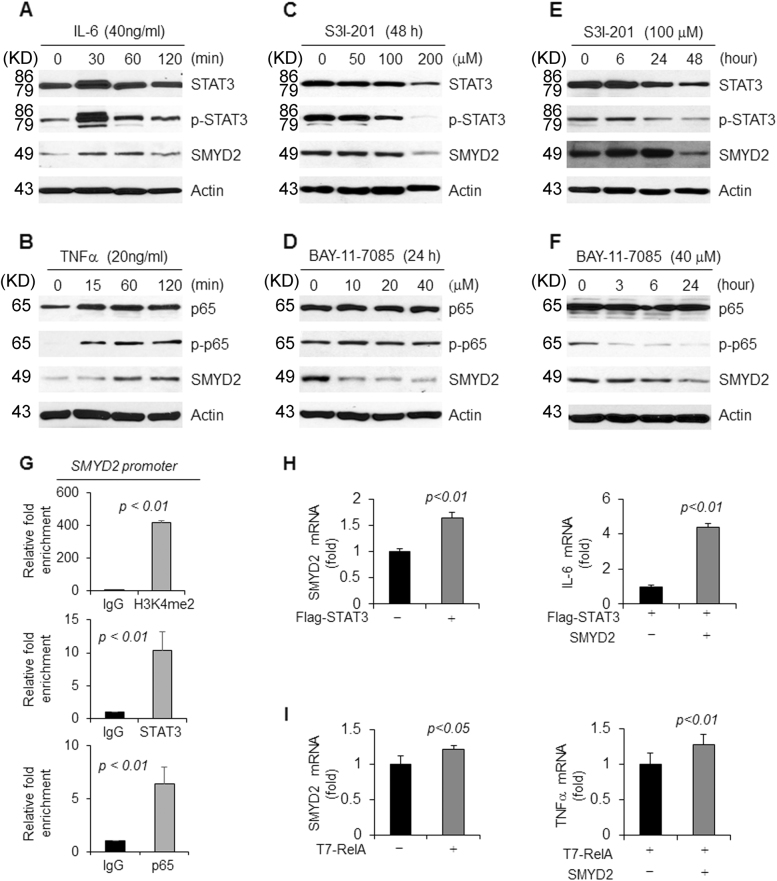
We identified SMYD2, a SMYD (SET and MYND domain) family protein with lysine methyltransferase activity, as a novel breast cancer oncogene. SMYD2 was expressed at significantly higher levels in breast cancer cell lines and in breast tumor tissues. Silencing of SMYD2 by RNAi in triple-negative breast cancer (TNBC) cell lines or inhibition of SMYD2 with its specific inhibitor, AZ505, significantly reduced tumor growth in vivo. SMYD2 executes this activity via methylation and activation of its novel non-histone substrates, including STAT3 and the p65 subunit of NF-κB, leading to increased TNBC cell proliferation and survival. There are cross-talk and synergistic effects among SMYD2, STAT3, and NF-κB in TNBC cells, in that STAT3 can contribute to the modification of NF-κB p65 subunit post-translationally by recruitment of SMYD2, whereas the p65 subunit of NF-κB can also contribute to the modification of STAT3 post-translationally by recruitment of SMYD2, leading to methylation and activation of STAT3 and p65 in these cells. The expression of SMYD2 can be upregulated by IL-6-STAT3 and TNFα-NF-κB signaling, which integrates epigenetic regulation to inflammation in TNBC development. In addition, we have identified a novel SMYD2 transcriptional target gene, PTPN13, which links SMYD2 to other known breast cancer associated signaling pathways, including ERK, mTOR, and Akt signaling via PTPN13 mediated phosphorylation.
我们鉴定出 SMYD2 是一种具有赖氨酸甲基转移酶活性的 SMYD(SET 和 MYND 结构域)家族蛋白,是一种新的乳腺癌致癌基因。SMYD2 在乳腺癌细胞系和乳腺癌组织中表达水平显著升高。在三阴性乳腺癌(TNBC)细胞系中,通过 RNAi 沉默 SMYD2 或使用其特异性抑制剂 AZ505 抑制 SMYD2,可显著减少体内肿瘤生长。SMYD2 通过其新型非组蛋白底物 STAT3 和 NF-κB 的 p65 亚基的甲基化和激活来执行此活性,导致 TNBC 细胞增殖和存活增加。在 TNBC 细胞中,SMYD2、STAT3 和 NF-κB 之间存在交叉对话和协同作用,即 STAT3 可以通过募集 SMYD2 促进 NF-κB p65 亚基的翻译后修饰,而 NF-κB 的 p65 亚基也可以通过募集 SMYD2 促进 STAT3 的翻译后修饰,导致这些细胞中 STAT3 和 p65 的甲基化和激活。SMYD2 的表达可以被 IL-6-STAT3 和 TNFα-NF-κB 信号上调,该信号整合了表观遗传调控与 TNBC 发展中的炎症。此外,我们还鉴定出一种新的 SMYD2 转录靶基因 PTPN13,它通过 PTPN13 介导的磷酸化将 SMYD2 与其他已知的与乳腺癌相关的信号通路(包括 ERK、mTOR 和 Akt 信号通路)联系起来。