Hajjou Saida, Khataby Khadija, Amghar Souad, El Fahime Mustapha, El Harrak Mehdi, Fakiri Malika, Loutfi Chafiqa
Laboratory of Agro-Food and Health/Genetics & Biotechnologies Team, Faculty of Sciences and Technology, University Hassan I, Settat, Morocco.
Society Biopharma, Km 2, Route de Casa, B.P. 4569, Rabat, Morocco.
Iran J Microbiol. 2017 Dec;9(6):372-380.
Sheeppox virus causes systemic disease in sheep that is often associated with high morbidity and mortality. Protection against sheep pox is mainly based on medical prophylaxis, vaccination being the only way. In Morocco, and up to now, there is no available information about local challenge strain to use for controlling the efficiency of vaccines produced against sheep pox. Hence, the objective of the present study was to evaluate and compare the pathogenicity of seven Sheeppox virus (SPVs) isolates from 1993-1995 in Morocco.
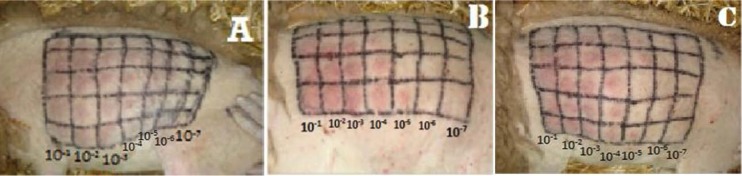
These seven SPV isolates have undergone various tests to evaluate their pathogenicity: Passages and titration on cell culture, Experimental inoculation on sheep, Virus-neutralization, titration and viral re-isolation by real-time PCR assay.
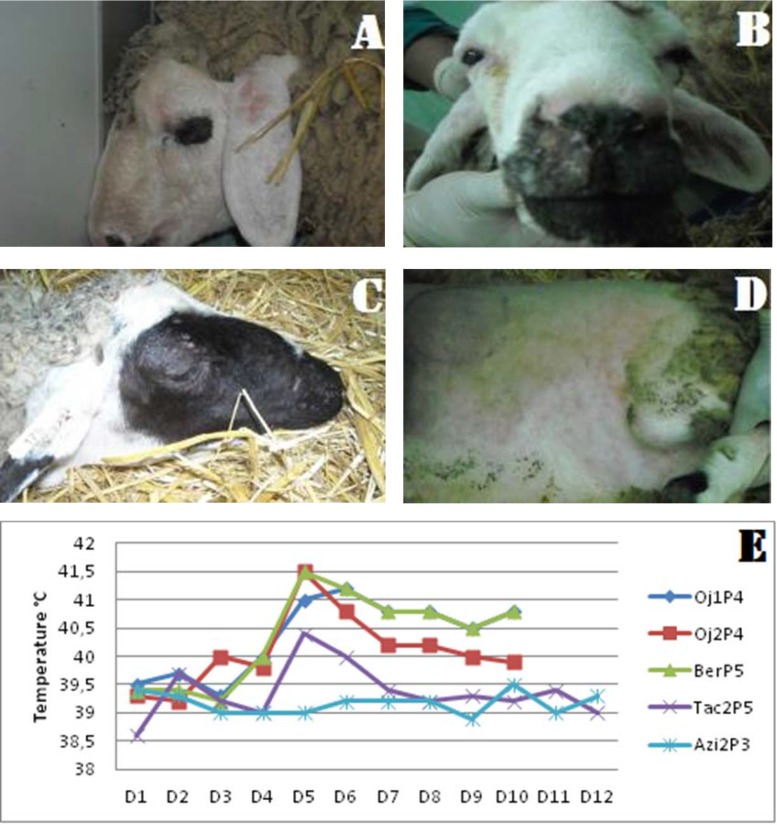
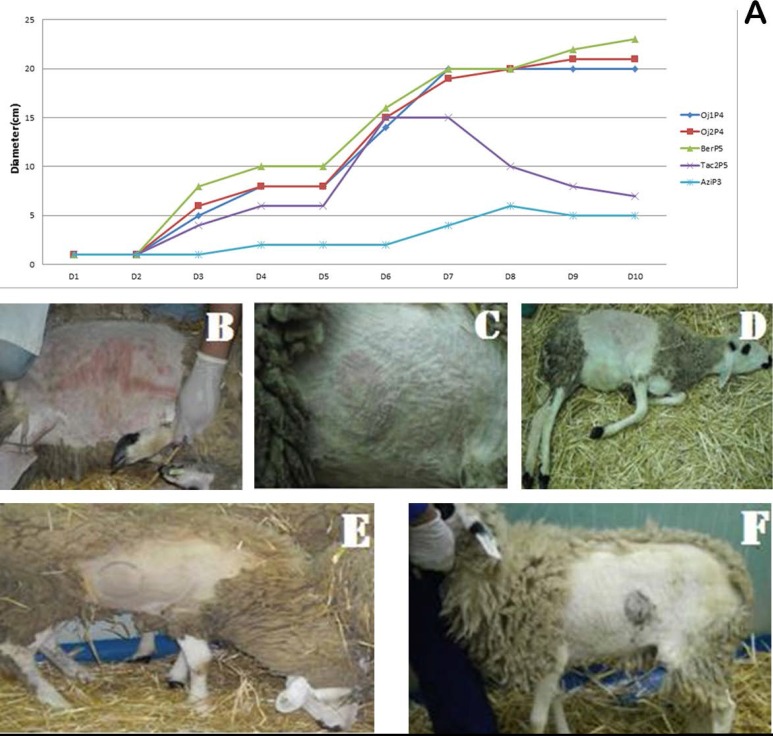
All infected lambs showed severe clinical signs, while most of them have been reproduced on 5 dpi and persisted until 21 dpi. The lambs infected by Oj1P4, Oj2P4 and BerP5 appeared lethargic, reluctant to move compared to those infected by other isolates. The results also revealed that all isolates were able to induce serological response. Virus isolation from infected organs and blood and amplification of the viral DNA by real-time PCR proved the presence of the virus in tissues and blood of infected lambs. These Moroccan SPVs demonstrated that the three isolates Oj1P4, Oj2P4 and BerP5 have a high pathogenicity; especially the BerP5 isolate which has an important infectious titer.
These results demonstrate that the Berkane isolate is the most pathogenic of the tested isolates and it can be an excellent challenge strain for the control of the efficiency of vaccines against sheep pox produced in Morocco.
绵羊痘病毒可引发绵羊全身性疾病,常伴有高发病率和死亡率。预防绵羊痘主要依靠医学预防措施,接种疫苗是唯一途径。在摩洛哥,截至目前,尚无关于用于评估抗绵羊痘疫苗效力的本地攻击毒株的可用信息。因此,本研究的目的是评估和比较1993年至1995年期间从摩洛哥分离出的7株绵羊痘病毒(SPV)的致病性。
对这7株SPV分离株进行了多种测试以评估其致病性:在细胞培养上进行传代和滴定、在绵羊上进行实验接种、病毒中和试验、通过实时PCR测定进行滴定和病毒再分离。
所有感染羔羊均表现出严重临床症状,大多数症状在感染后第5天出现并持续至第21天。与感染其他分离株的羔羊相比,感染Oj1P4、Oj2P4和BerP5的羔羊显得无精打采、不愿走动。结果还显示,所有分离株均能诱导血清学反应。从感染器官和血液中分离病毒并通过实时PCR扩增病毒DNA,证明感染羔羊的组织和血液中存在病毒。这些摩洛哥SPV表明,Oj1P4、Oj2P4和BerP5这三株分离株具有高致病性;尤其是BerP5分离株,其具有较高的感染滴度。
这些结果表明,贝卡内分离株是所测试分离株中致病性最强的,它可以成为评估摩洛哥生产的抗绵羊痘疫苗效力的优良攻击毒株。