Ali Mohamad Moustafa, Akhade Vijay Suresh, Kosalai Subazini Thankaswamy, Subhash Santhilal, Statello Luisa, Meryet-Figuiere Matthieu, Abrahamsson Jonas, Mondal Tanmoy, Kanduri Chandrasekhar
Department of Medical Biochemistry and Cell Biology, Institute of Biomedicine, Sahlgrenska Academy, University of Gothenburg, Gothenburg, 40530, Sweden.
Department of Pediatrics, Institution for Clinical Sciences, Sahlgrenska Academy, University of Gothenburg, Gothenburg, 40530, Sweden.
Nat Commun. 2018 Feb 28;9(1):883. doi: 10.1038/s41467-018-03265-1.
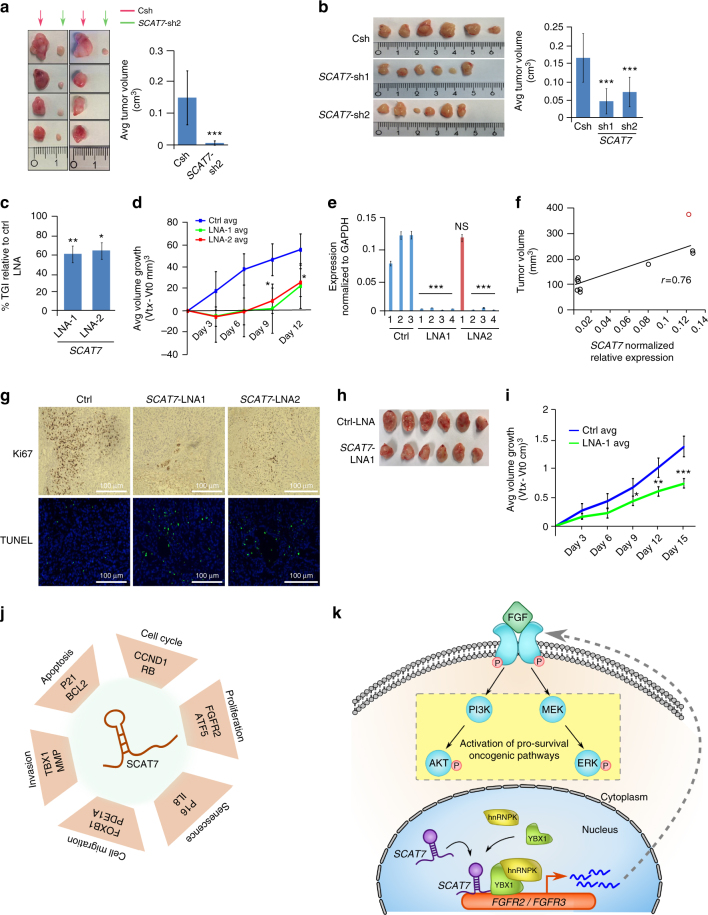
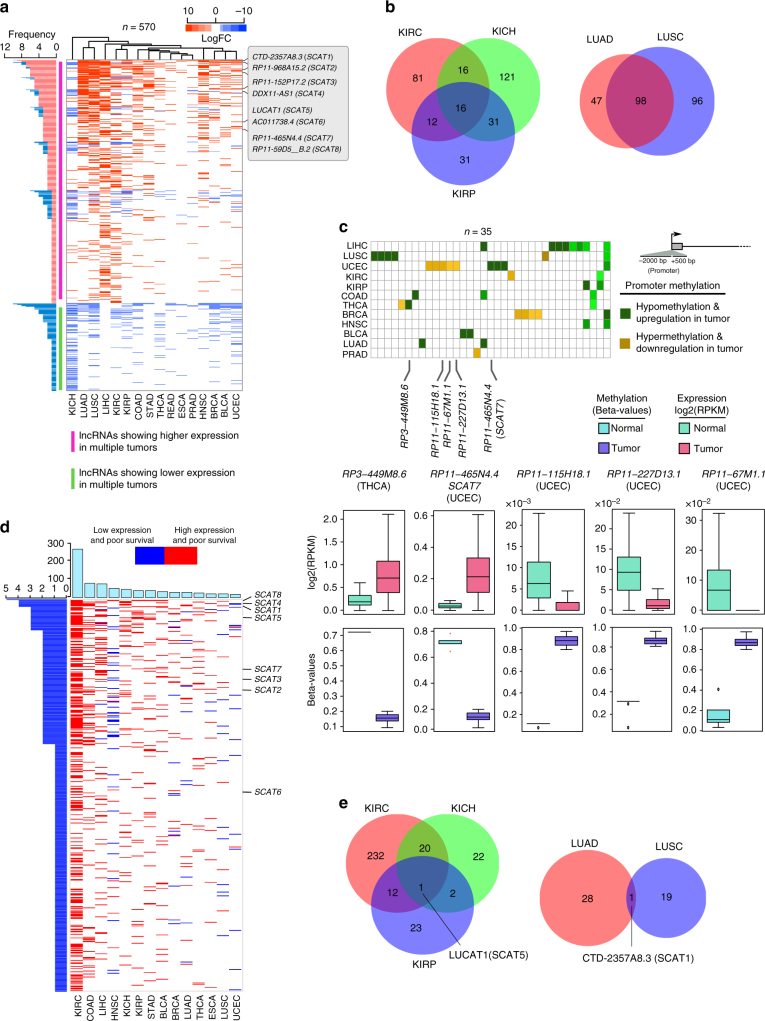
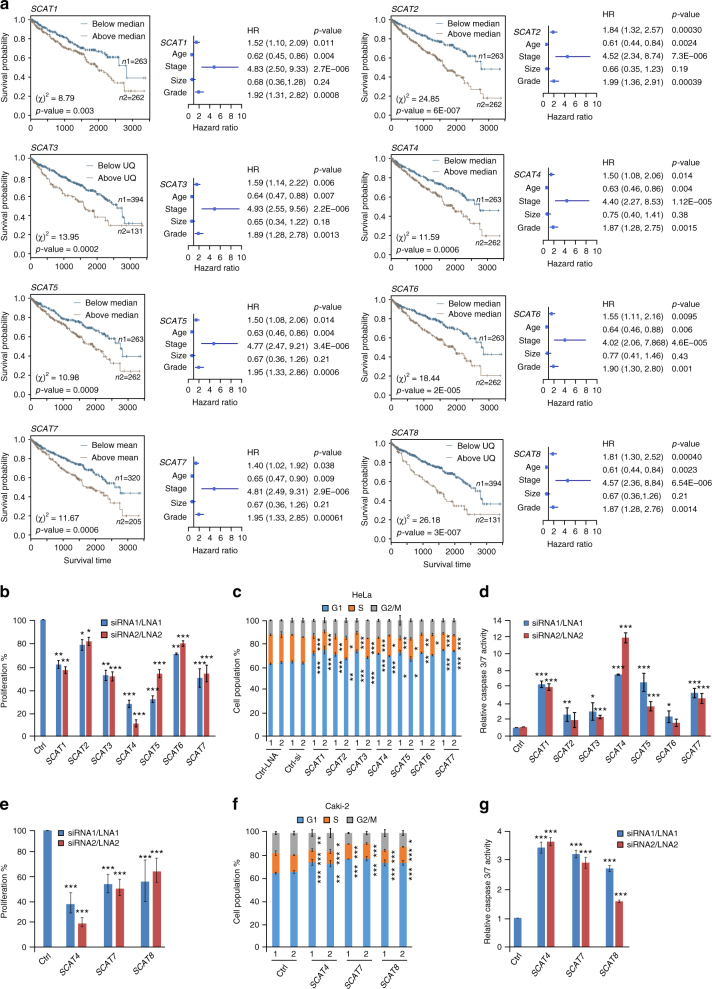
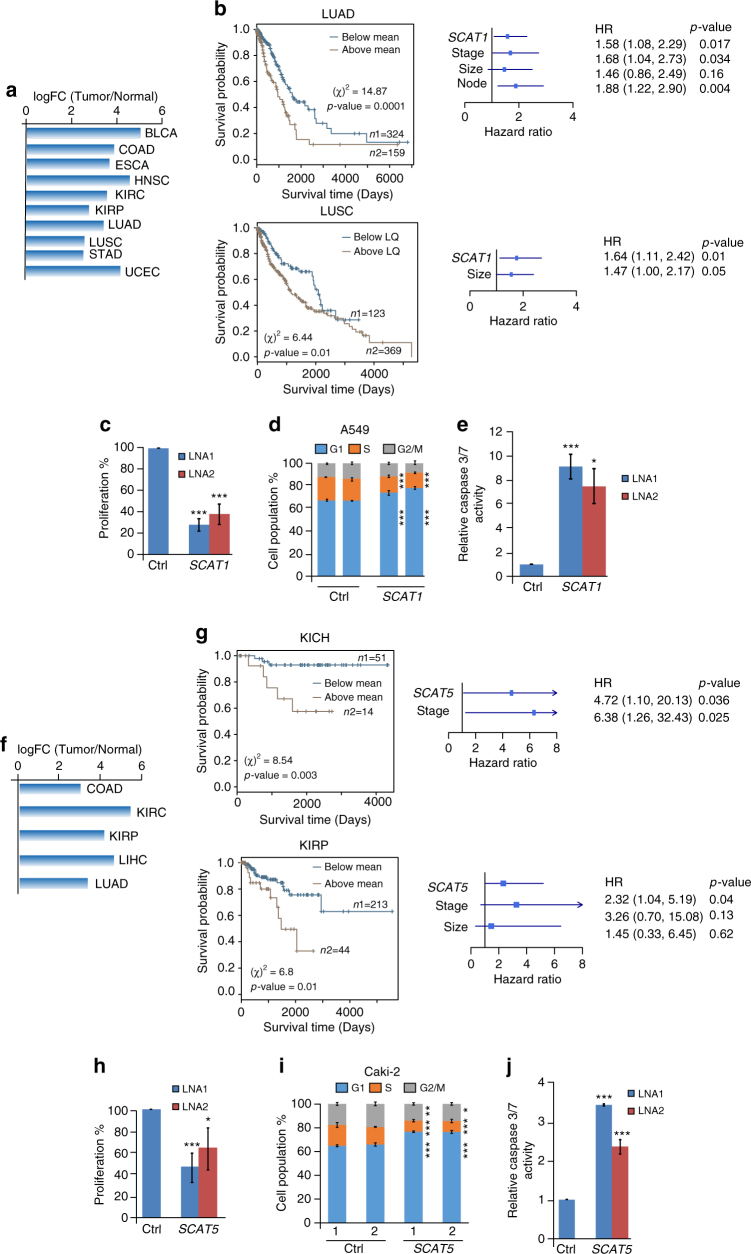
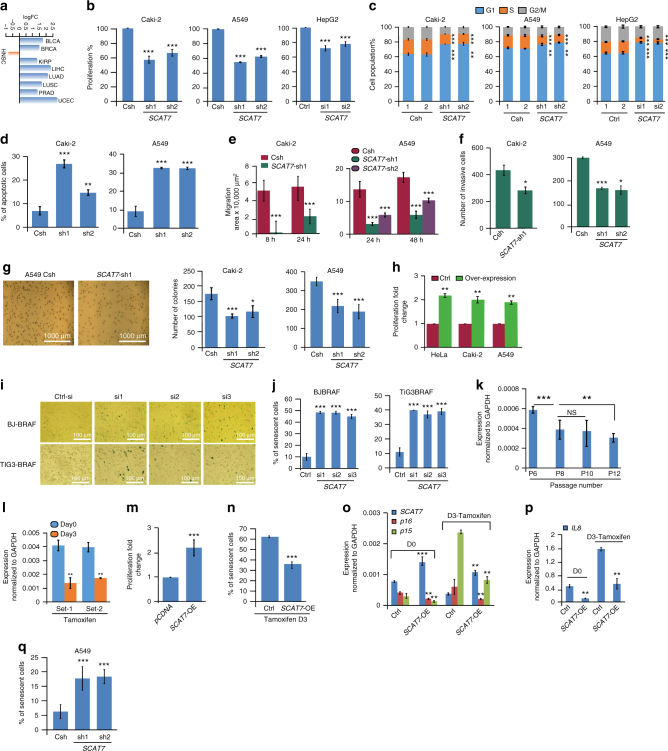
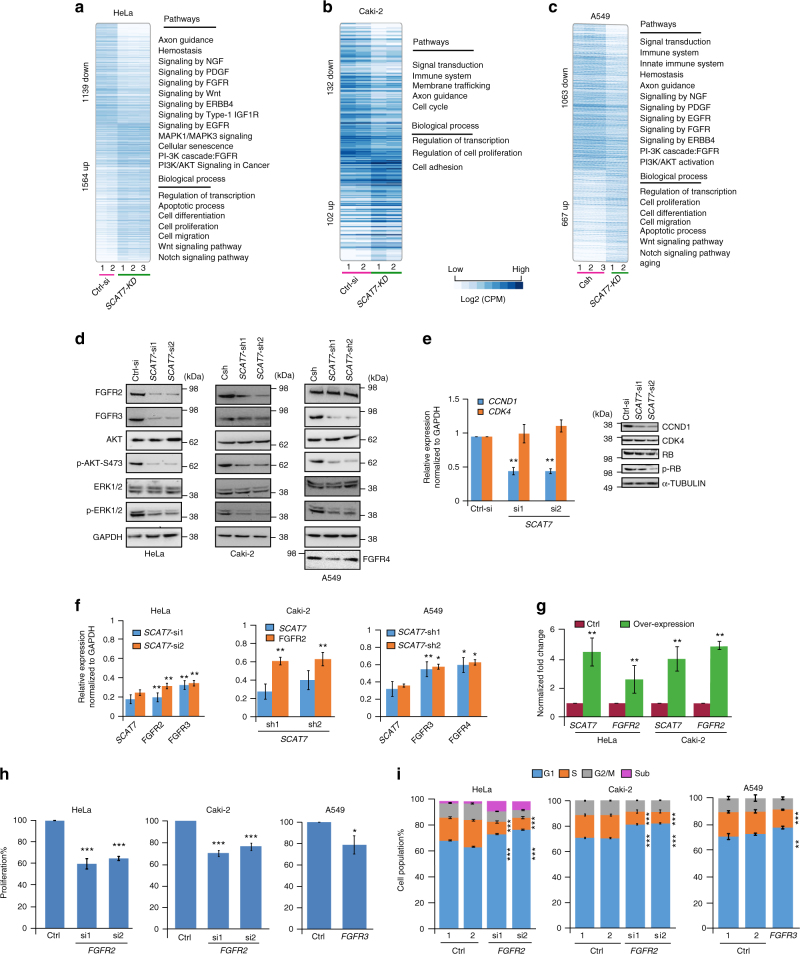
Despite improvement in our understanding of long noncoding RNAs (lncRNAs) role in cancer, efforts to find clinically relevant cancer-associated lncRNAs are still lacking. Here, using nascent RNA capture sequencing, we identify 1145 temporally expressed S-phase-enriched lncRNAs. Among these, 570 lncRNAs show significant differential expression in at least one tumor type across TCGA data sets. Systematic clinical investigation of 14 Pan-Cancer data sets identified 633 independent prognostic markers. Silencing of the top differentially expressed and clinically relevant S-phase-enriched lncRNAs in several cancer models affects crucial cancer cell hallmarks. Mechanistic investigations on SCAT7 in multiple cancer types reveal that it interacts with hnRNPK/YBX1 complex and affects cancer cell hallmarks through the regulation of FGF/FGFR and its downstream PI3K/AKT and MAPK pathways. We also implement a LNA-antisense oligo-based strategy to treat cancer cell line and patient-derived tumor (PDX) xenografts. Thus, this study provides a comprehensive list of lncRNA-based oncogenic drivers with potential prognostic value.
尽管我们对长链非编码RNA(lncRNAs)在癌症中的作用的理解有所进步,但寻找临床上相关的癌症相关lncRNAs的工作仍很缺乏。在此,我们利用新生RNA捕获测序技术,鉴定出1145个在S期富集且随时间表达的lncRNAs。其中,570个lncRNAs在TCGA数据集中的至少一种肿瘤类型中显示出显著差异表达。对14个泛癌数据集的系统临床研究确定了633个独立的预后标志物。在几种癌症模型中,对差异表达最显著且与临床相关的S期富集lncRNAs进行沉默,会影响关键的癌细胞特征。对多种癌症类型中的SCAT7进行机制研究发现,它与hnRNPK/YBX1复合物相互作用,并通过调节FGF/FGFR及其下游的PI3K/AKT和MAPK途径来影响癌细胞特征。我们还实施了一种基于锁核酸反义寡核苷酸的策略来治疗癌细胞系和患者来源的肿瘤(PDX)异种移植瘤。因此,本研究提供了一份具有潜在预后价值的基于lncRNA的致癌驱动因子的综合清单。