Thurley Kay, Ayaz Aslı
Department Biologie II, Ludwig-Maximilians-Universität München, Großhaderner Straße 2, D-82152 Planegg-Martinsried, GermanyBernstein Center for Computational Neuroscience Munich, Germany,Brain Research Institute, University of Zurich, Winterthurerstrasse 190, CH-8057, Zurich, Switzerland.
Curr Zool. 2017 Feb;63(1):109-119. doi: 10.1093/cz/zow070. Epub 2016 Jun 30.
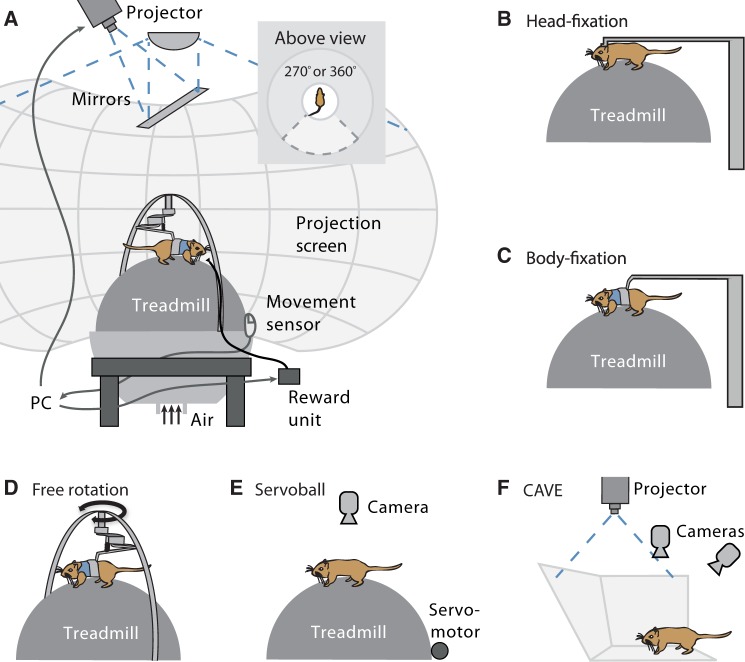
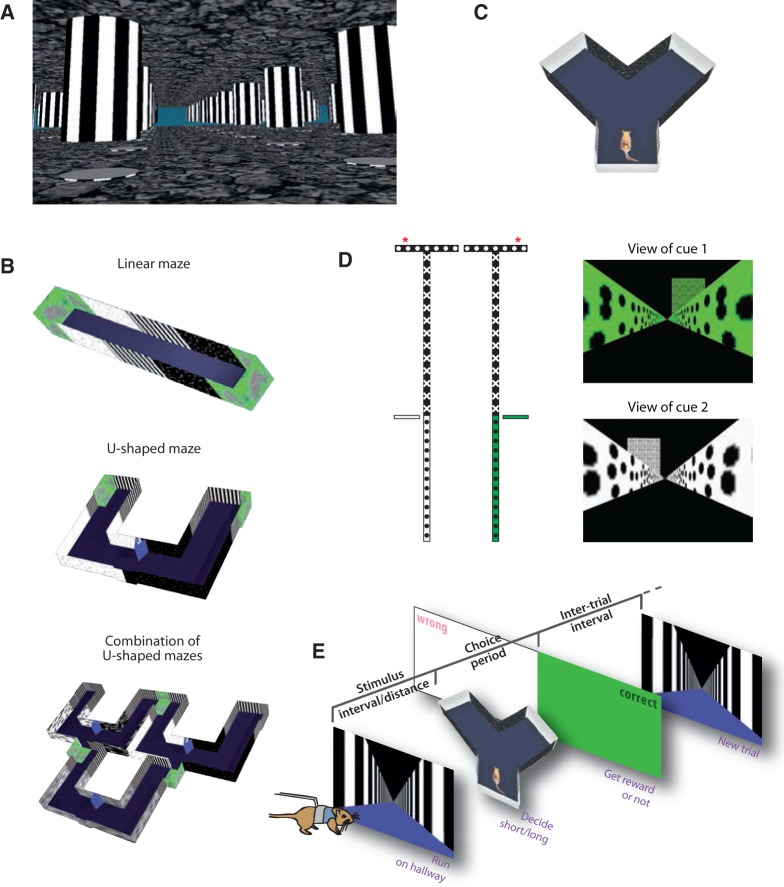
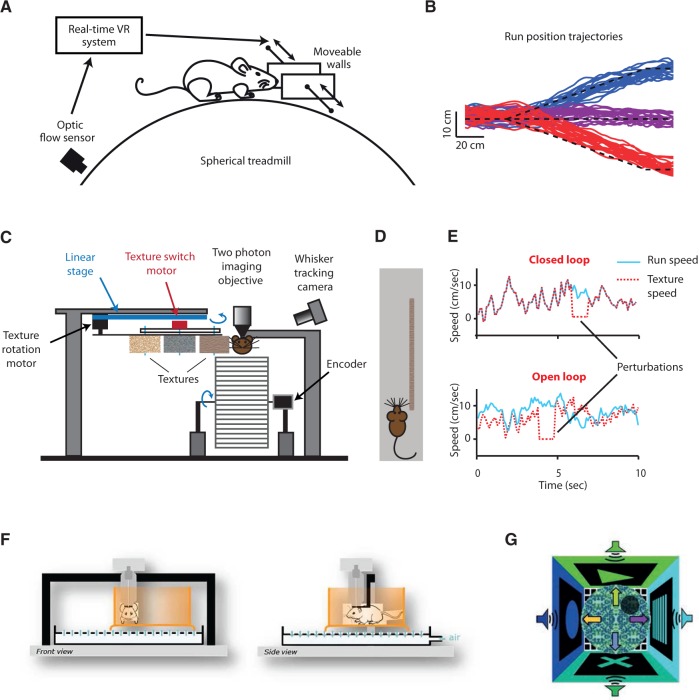
Over the last decade virtual reality (VR) setups for rodents have been developed and utilized to investigate the neural foundations of behavior. Such VR systems became very popular since they allow the use of state-of-the-art techniques to measure neural activity in behaving rodents that cannot be easily used with classical behavior setups. Here, we provide an overview of rodent VR technologies and review recent results from related research. We discuss commonalities and differences as well as merits and issues of different approaches. A special focus is given to experimental (behavioral) paradigms in use. Finally we comment on possible use cases that may further exploit the potential of VR in rodent research and hence inspire future studies.
在过去十年中,用于啮齿动物的虚拟现实(VR)装置已被开发并用于研究行为的神经基础。这种VR系统变得非常流行,因为它们允许使用最先进的技术来测量行为中的啮齿动物的神经活动,而这些技术在传统行为设置中不易使用。在这里,我们概述了啮齿动物VR技术,并回顾了相关研究的最新成果。我们讨论了不同方法的共性与差异以及优缺点。特别关注正在使用的实验(行为)范式。最后,我们评论了可能进一步利用VR在啮齿动物研究中的潜力的用例,从而激发未来的研究。