Sharma Abhay
CSIR-Institute of Genomics and Integrative Biology, Council of Scientific and Industrial Research, New Delhi 110025, India.
Environ Epigenet. 2016 Jul 20;2(2):dvw009. doi: 10.1093/eep/dvw009. eCollection 2016 Apr.
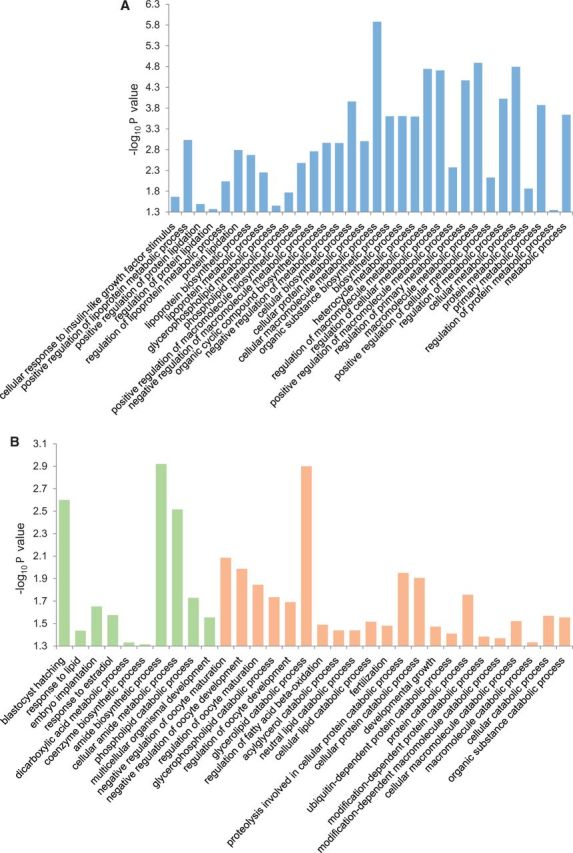
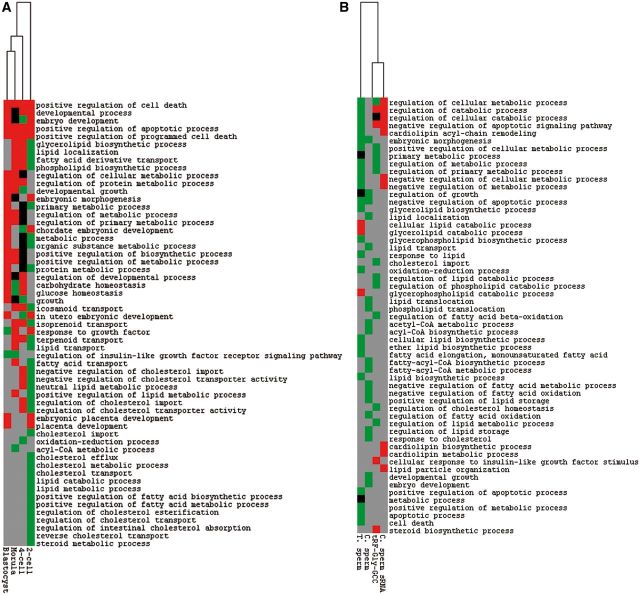
A recent study investigated sperm-mediated inheritance of diet induced metabolic phenotypes, reported underlying regulation of the target genes of the endogenous retroelement MERVL and the ribosomal protein genes in embryos, and suggested that the altered regulation observed may cause placentation defects which can secondarily result in abnormal metabolism. A reanalysis of available transcriptomic data however shows that MERVL targets and the developmentally altered genes are themselves enriched for metabolic pathways, thus connecting embryonic gene expression with offspring phenotypes, and providing an alternative interpretation of the reported findings. This is consistent with a similar study suggesting a contribution of embryonic transcriptional change-induced gene expression reprogramming in altered offspring metabolism.
最近的一项研究调查了精子介导的饮食诱导代谢表型的遗传,报道了内源性逆转录元件MERVL的靶基因和胚胎中核糖体蛋白基因的潜在调控,并表明观察到的调控改变可能导致胎盘形成缺陷,进而导致代谢异常。然而,对现有转录组数据的重新分析表明,MERVL靶标和发育过程中改变的基因本身就富集于代谢途径,从而将胚胎基因表达与后代表型联系起来,并对报道的研究结果提供了另一种解释。这与一项类似的研究一致,该研究表明胚胎转录变化诱导的基因表达重编程在后代代谢改变中起作用。