Institute for Genetics and Cologne Excellence Cluster on Cellular Stress Responses in Aging-Associated Diseases (CECAD), University of Cologne, Cologne, Germany.
Biology Center, Czech Academy of Sciences, Institute of Entomology, Ceske Budejovice, Czech Republic.
PLoS Genet. 2018 Mar 1;14(3):e1007241. doi: 10.1371/journal.pgen.1007241. eCollection 2018 Mar.
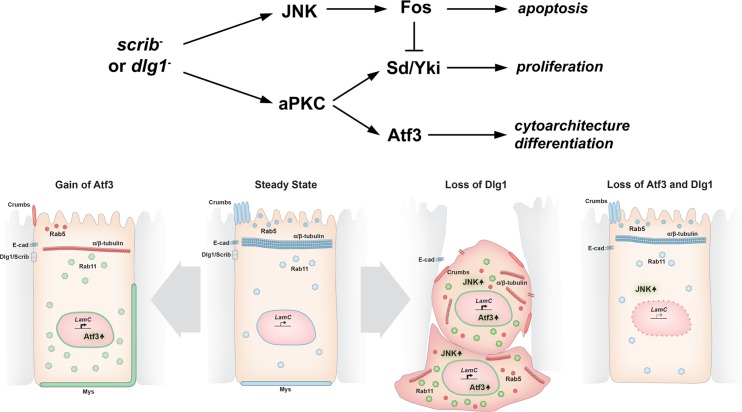
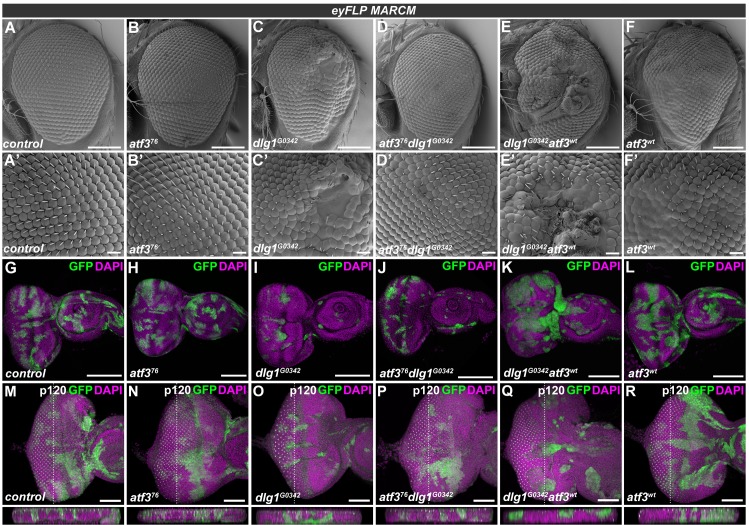
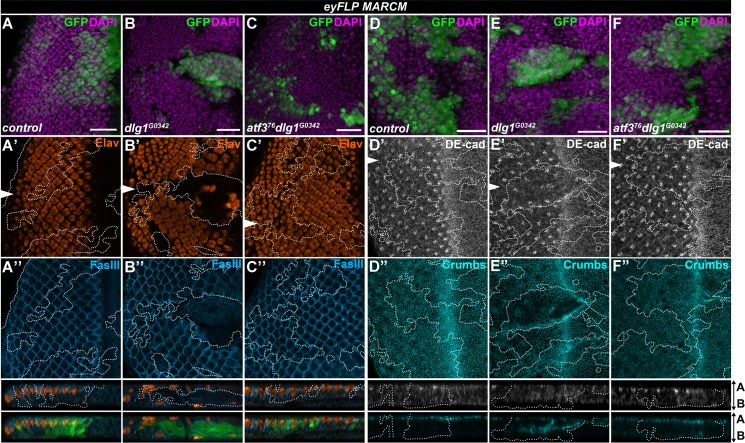
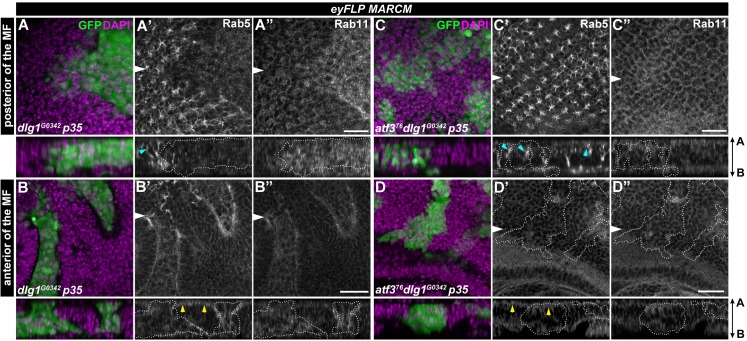
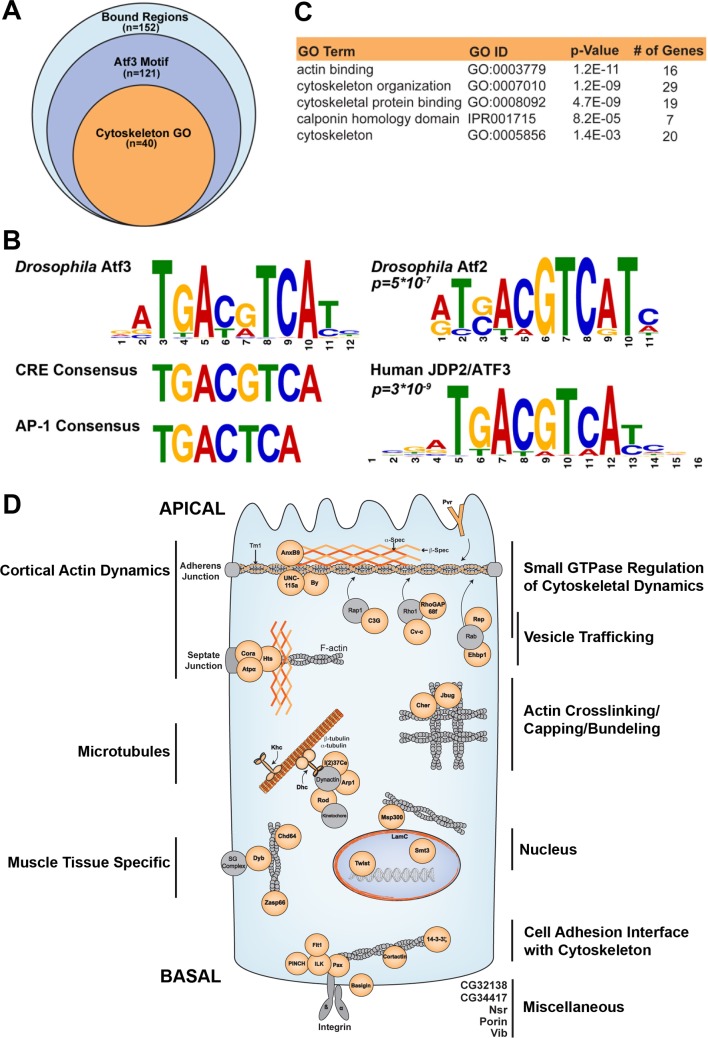
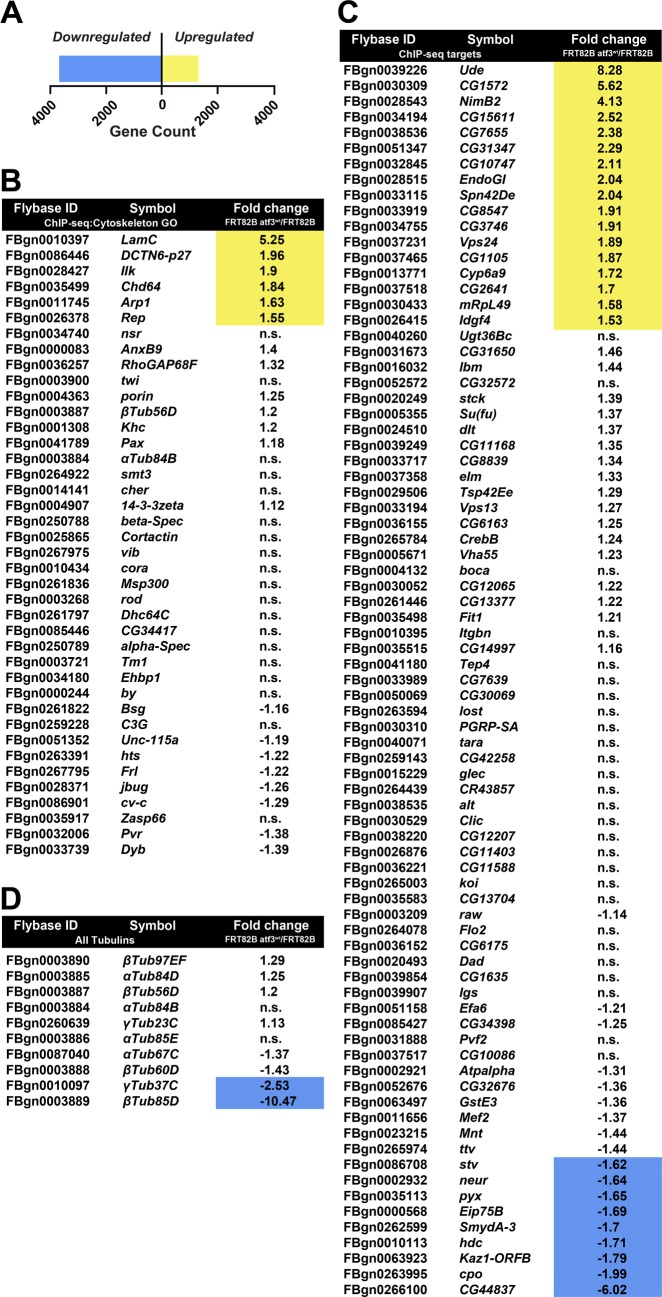
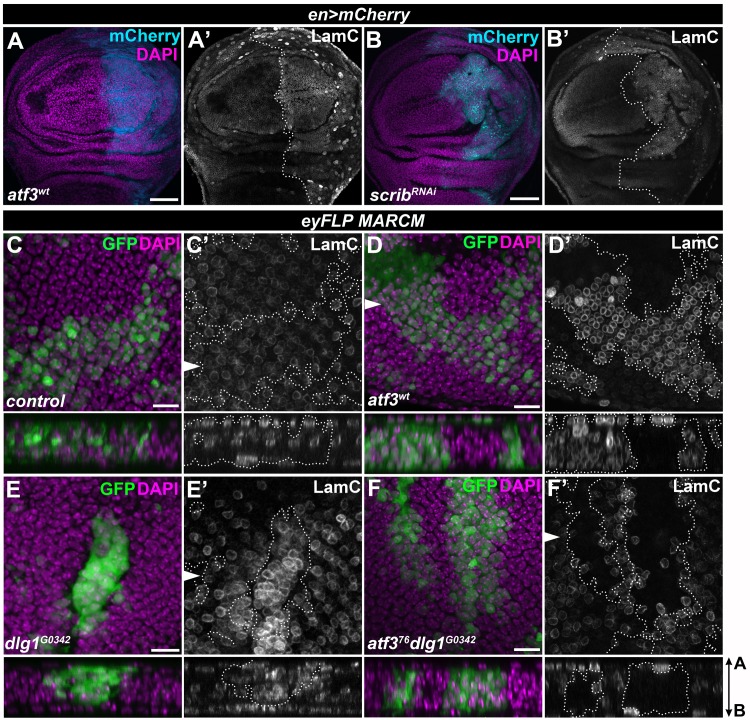
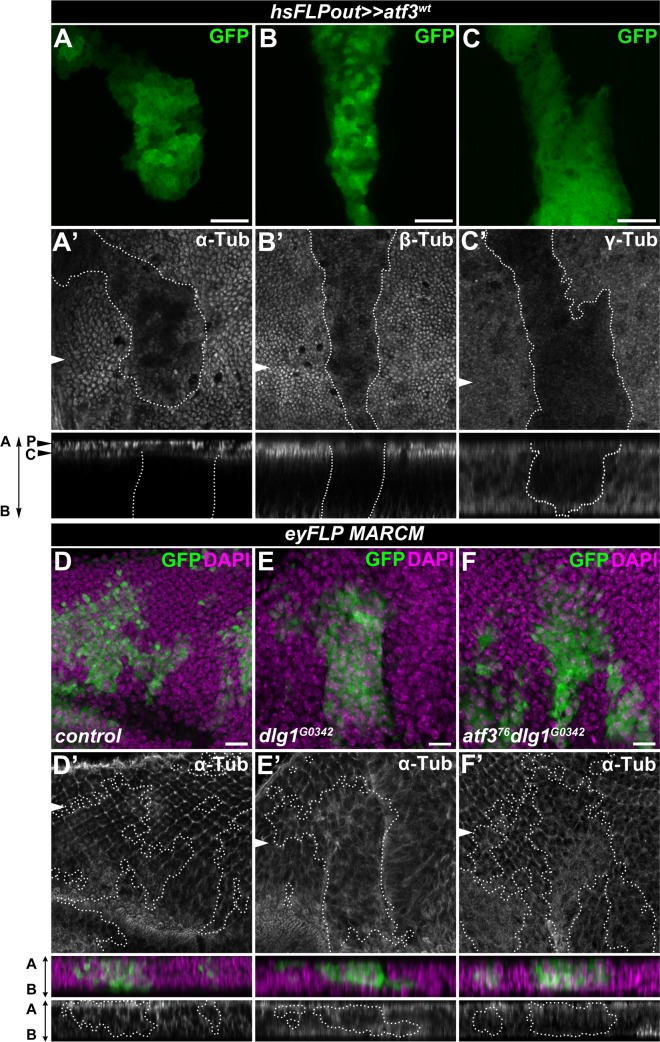
Interplay between apicobasal cell polarity modules and the cytoskeleton is critical for differentiation and integrity of epithelia. However, this coordination is poorly understood at the level of gene regulation by transcription factors. Here, we establish the Drosophila activating transcription factor 3 (atf3) as a cell polarity response gene acting downstream of the membrane-associated Scribble polarity complex. Loss of the tumor suppressors Scribble or Dlg1 induces atf3 expression via aPKC but independent of Jun-N-terminal kinase (JNK) signaling. Strikingly, removal of Atf3 from Dlg1 deficient cells restores polarized cytoarchitecture, levels and distribution of endosomal trafficking machinery, and differentiation. Conversely, excess Atf3 alters microtubule network, vesicular trafficking and the partition of polarity proteins along the apicobasal axis. Genomic and genetic approaches implicate Atf3 as a regulator of cytoskeleton organization and function, and identify Lamin C as one of its bona fide target genes. By affecting structural features and cell morphology, Atf3 functions in a manner distinct from other transcription factors operating downstream of disrupted cell polarity.
细胞顶底极性模块与细胞骨架之间的相互作用对于上皮细胞的分化和完整性至关重要。然而,在转录因子对基因调控的层面上,这种协调作用还了解甚少。在这里,我们将果蝇激活转录因子 3(atf3)确立为一种细胞极性反应基因,作用于膜相关的 Scribble 极性复合物的下游。肿瘤抑制因子 Scribble 或Dlg1 的缺失通过 aPKC 诱导 atf3 的表达,但不依赖于 Jun-N 末端激酶(JNK)信号。引人注目的是,从 Dlg1 缺陷细胞中去除 Atf3 可恢复极化的细胞形态结构、内体运输机制的水平和分布,以及分化。相反,过量的 Atf3 改变微管网络、囊泡运输以及极性蛋白在顶底轴上的分区。基因组和遗传方法表明 Atf3 是细胞骨架组织和功能的调节剂,并鉴定出核纤层蛋白 C 是其真正的靶基因之一。通过影响结构特征和细胞形态,Atf3 的作用方式与其他作用于破坏的细胞极性的下游的转录因子不同。