Department of Biology, University of Texas at San Antonio, San Antonio, Texas, United States of America.
San Antonio Cellular Therapeutics Institute, University of Texas at San Antonio, San Antonio, Texas, United States of America.
PLoS One. 2018 Mar 1;13(3):e0193195. doi: 10.1371/journal.pone.0193195. eCollection 2018.
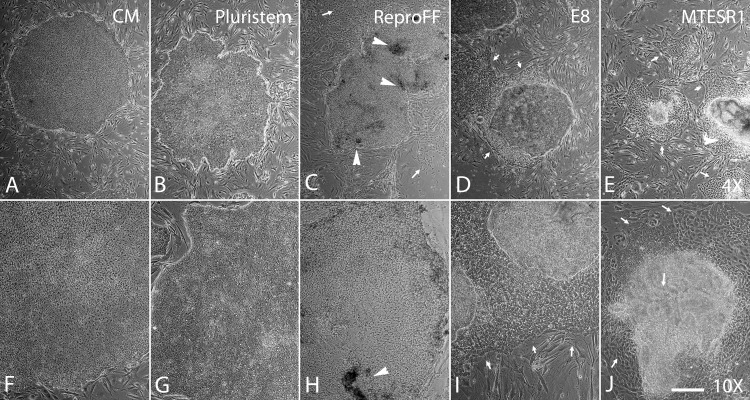
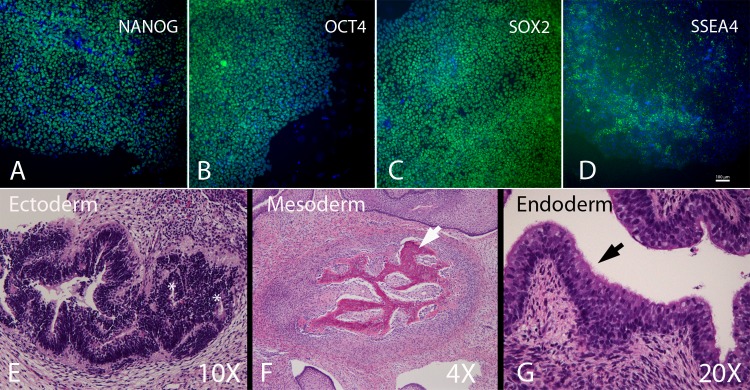
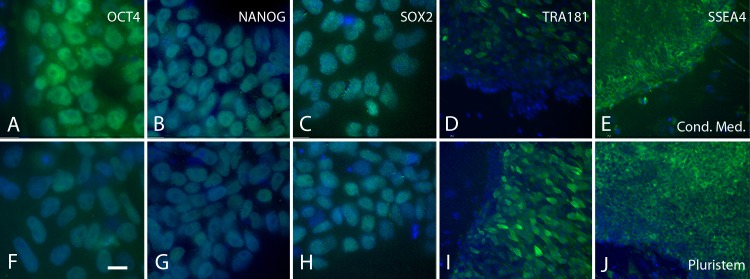
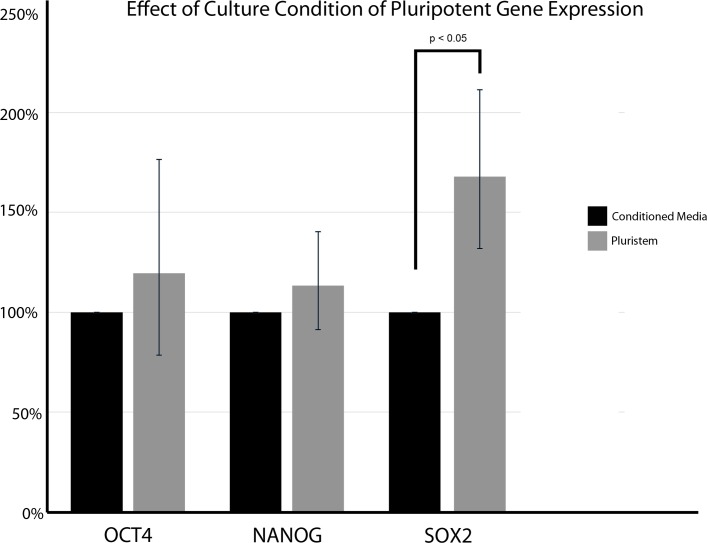
Induced pluripotent stem cells (iPSCs) offer the possibility of cell replacement therapies using patient-matched cells to treat otherwise intractable diseases and debilitations. To successfully realize this potential, several factors must be optimized including i) selection of the appropriate cell type and numbers to transplant, ii) determination of the means of transplantation and the location into which the transplanted cells should be delivered, and iii) demonstration of the safety and efficacy of the cell replacement protocol to mitigate each targeted disease state. A majority of diseases or debilitations likely to be targeted by cell-based therapeutic approaches represent complex conditions or physiologies manifest predominantly in primates including humans. Nonhuman primates afford the most clinically relevant model system for biomedical studies and testing of cell-based therapies. Baboons have 92% genomic similarity with humans overall and especially significant similarities in their immunogenetic system, rendering this species a particularly valuable model for testing procedures involving cell transplants into living individuals. To maximize the utility of the baboon model, standardized protocols must be developed for the derivation of induced pluripotent stem cells from living adults and the long-term maintenance of these cells in culture. Here we tested four commercially available culture systems (ReproFF, mTeSR1, E8 and Pluristem) for competence to maintain baboon iPSCs in a pluripotent state over multiple passages, and to support the derivation of new lines of baboon iPSCs. Of these four media only Pluristem was able to maintain baboon pluripotency as assessed by morphological characteristics, immunocytochemistry and RT-qPCR. Pluristem also facilitated the derivation of new lines of iPSCs from adult baboon somatic cells, which had previously not been accomplished. We derived multiple iPS cell lines from adult baboon peripheral blood mononuclear cells cultured in Pluristem. These were validated by expression of the pluripotency markers OCT4, NANOG, SOX2, SSEA4 and TRA181, as well as the ability to differentiate into tissues from all three germ layers when injected into immunocompromised mice. These findings further advance the utility of the baboon as an ideal preclinical model system for optimizing iPS cell-based, patient-specific replacement therapies in humans.
诱导多能干细胞(iPSCs)为使用与患者匹配的细胞进行细胞替代疗法治疗其他难以治疗的疾病和衰弱提供了可能性。为了成功实现这一潜力,必须优化几个因素,包括:i)选择要移植的适当细胞类型和数量;ii)确定移植的方法和移植细胞应输送到的位置;iii)证明细胞替代方案的安全性和有效性,以减轻每个靶向疾病状态。大多数可能成为细胞治疗方法靶向的疾病或衰弱代表以灵长类动物(包括人类)为主的复杂病症或生理状况。非人类灵长类动物为生物医学研究和细胞治疗测试提供了最具临床相关性的模型系统。狒狒与人类的基因组总体相似度为 92%,特别是在免疫遗传学系统方面具有非常显著的相似性,使该物种成为测试将细胞移植到活体个体中程序的特别有价值的模型。为了最大限度地利用狒狒模型,必须制定从活体成年个体中获得诱导多能干细胞并长期维持这些细胞在培养中的标准化方案。在这里,我们测试了四种市售的培养系统(ReproFF、mTeSR1、E8 和 Pluristem)在多个传代过程中维持狒狒 iPSCs 多能状态的能力,以及支持新的狒狒 iPSCs 系的衍生。在这四种培养基中,只有 Pluristem 能够通过形态特征、免疫细胞化学和 RT-qPCR 来维持狒狒的多能性。Pluristem 还促进了新的狒狒 iPS 细胞系从成年狒狒体细胞的衍生,这在以前是不可能的。我们从培养在 Pluristem 中的成年狒狒外周血单核细胞中衍生出多个 iPS 细胞系。这些细胞系通过表达多能性标记物 OCT4、NANOG、SOX2、SSEA4 和 TRA181 以及在免疫缺陷小鼠中注射时分化为所有三个胚层的组织来验证。这些发现进一步推进了狒狒作为优化基于 iPS 细胞的、患者特异性替代疗法的理想临床前模型系统的应用。