Drake Circus, School of Nursing and Midwifery, University of Plymouth, Plymouth, Devon, PL4 8AA, England.
Faculty of Social Sciences, University of Stirling, Stirling, FK9 4LA, Scotland.
BMC Geriatr. 2018 Mar 2;18(1):62. doi: 10.1186/s12877-018-0746-y.
Older people in care may be lonely with insufficient contact if families are unable to visit. Face-to-face contact through video-calls may help reduce loneliness, but little is known about the processes of engaging people in care environments in using video-calls. We aimed to identify the barriers to and facilitators of implementing video-calls for older people in care environments.
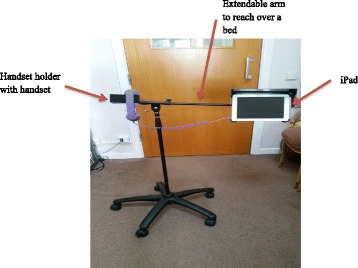
A collaborative action research (CAR) approach was taken to implement a video-call intervention in care environments. We undertook five steps of recruitment, planning, implementation, reflection and re-evaluation, in seven care homes and one hospital in the UK. The video-call intervention 'Skype on Wheels' (SoW) comprised a wheeled device that could hold an iPad and handset, and used Skype to provide a free video-call service. Care staff were collaborators who implemented the intervention within the care-setting by agreeing the intervention, recruiting older people and their family, and setting up video-calls. Field notes and reflective diaries on observations and conversations with staff, older people and family were maintained over 15 months, and analysed using thematic analysis.
Four care homes implemented the intervention. Eight older people with their respective social contacts made use of video-calls. Older people were able to use SoW with assistance from staff, and enjoyed the use of video-calls to stay better connected with family. However five barriers towards implementation included staff turnover, risk averseness, the SoW design, lack of family commitment and staff attitudes regarding technology.
The SoW intervention, or something similar, could aid older people to stay better connected with their families in care environments, but if implemented as part of a rigorous evaluation, then co-production of the intervention at each recruitment site may be needed to overcome barriers and maximise engagement.
如果家庭成员无法探视,护理中的老年人可能会感到孤独,与他人的接触也会不足。通过视频通话进行面对面的交流可能有助于减少孤独感,但人们对在护理环境中让人们参与视频通话的过程知之甚少。我们旨在确定在护理环境中为老年人实施视频通话的障碍和促进因素。
采用合作行动研究 (CAR) 方法在护理环境中实施视频通话干预。我们在英国的七家养老院和一家医院进行了五个步骤的招募、计划、实施、反思和重新评估。视频通话干预“Skype on Wheels”(SoW)由一个可容纳 iPad 和手机的轮椅组成,使用 Skype 提供免费视频通话服务。护理人员是合作者,他们通过同意干预、招募老年人及其家属以及设置视频通话,在护理环境中实施干预。在 15 个月的时间里,我们对与工作人员、老年人和家属的观察和对话进行了实地记录和反思性日记,并使用主题分析进行了分析。
四家养老院实施了干预措施。八位老年人及其各自的社交联系人使用了视频通话。在工作人员的帮助下,老年人能够使用 SoW,并且喜欢使用视频通话与家人保持更好的联系。但是,实施该干预措施存在五个障碍,包括员工流动、回避风险、SoW 设计、缺乏家庭承诺以及员工对技术的态度。
SoW 干预措施或类似的措施可以帮助老年人在护理环境中与家人保持更好的联系,但如果作为严格评估的一部分实施,那么可能需要在每个招募地点共同制定干预措施,以克服障碍并最大限度地提高参与度。