Matheson Heath E, Familiar Ariana M, Thompson-Schill Sharon L
Department of Psychology, University of Northern British Columbia, 3333 University Way, Prince George, BC, Canada.
Department of Psychology, University of Pennsylvania, Philadelphia, PA, USA.
Psychol Res. 2019 Mar;83(2):216-226. doi: 10.1007/s00426-018-0997-4. Epub 2018 Mar 2.
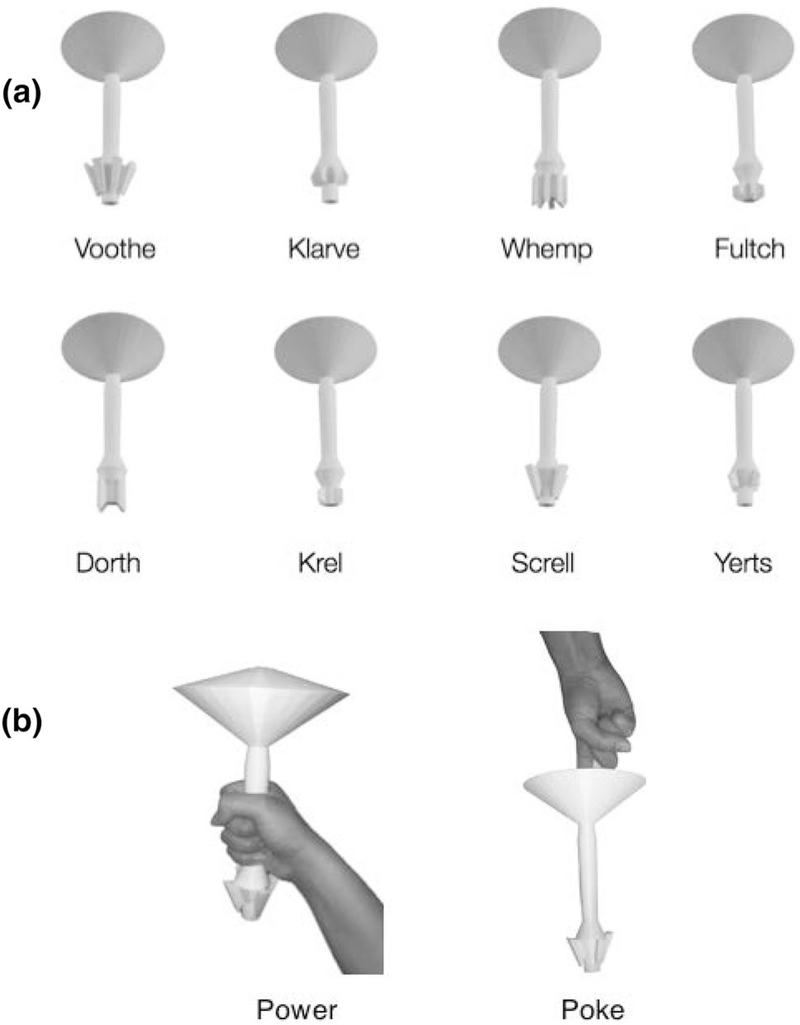
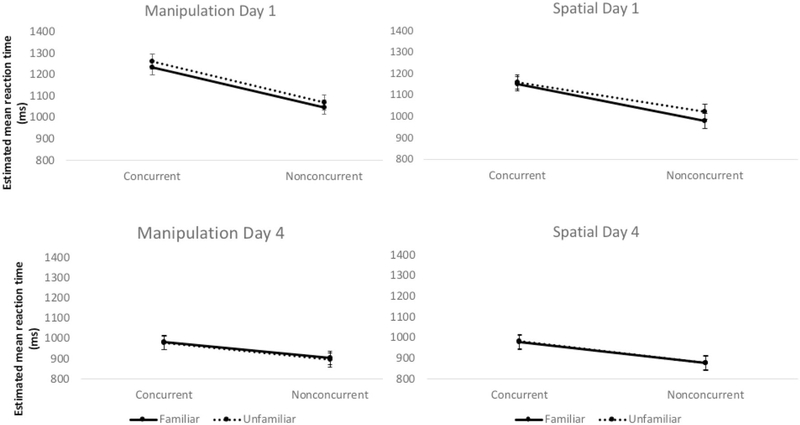
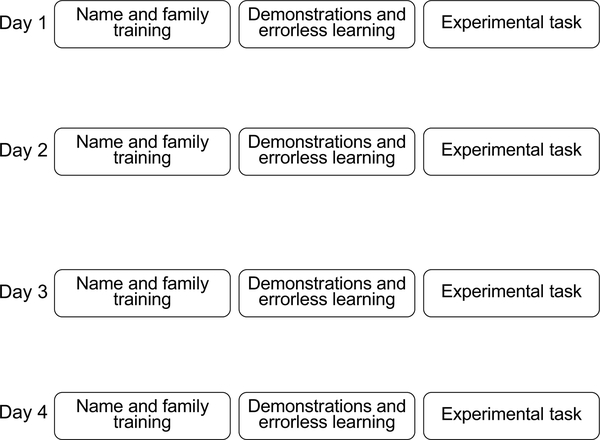
Theories of embodied cognition propose that we recognize tools in part by reactivating sensorimotor representations of tool use in a process of simulation. If motor simulations play a causal role in tool recognition then performing a concurrent motor task should differentially modulate recognition of experienced vs. non-experienced tools. We sought to test the hypothesis that an incompatible concurrent motor task modulates conceptual processing of learned vs. non-learned objects by directly manipulating the embodied experience of participants. We trained one group to use a set of novel, 3-D printed tools under the pretense that they were preparing for an archeological expedition to Mars (manipulation group); we trained a second group to report declarative information about how the tools are stored (storage group). With this design, familiarity and visual attention to different object parts was similar for both groups, though their qualitative interactions differed. After learning, participants made familiarity judgments of auditorily presented tool names while performing a concurrent motor task or simply sitting at rest. We showed that familiarity judgments were facilitated by motor state-dependence; specifically, in the manipulation group, familiarity was facilitated by a concurrent motor task, whereas in the spatial group familiarity was facilitated while sitting at rest. These results are the first to directly show that manipulation experience differentially modulates conceptual processing of familiar vs. unfamiliar objects, suggesting that embodied representations contribute to recognizing tools.
具身认知理论提出,我们在一定程度上通过在模拟过程中重新激活工具使用的感觉运动表征来识别工具。如果运动模拟在工具识别中起因果作用,那么执行一项同时进行的运动任务应该会对熟悉工具与不熟悉工具的识别产生不同的调节作用。我们试图通过直接操纵参与者的具身体验来检验这一假设,即一项不相容的同时进行的运动任务会调节对已学习对象与未学习对象的概念加工。我们训练一组参与者在假装为火星考古探险做准备的情况下使用一组新型的3D打印工具(操作组);我们训练另一组参与者报告关于工具如何存储的陈述性信息(存储组)。通过这种设计,两组对不同物体部分的熟悉程度和视觉注意力相似,尽管他们的质性互动有所不同。学习后,参与者在执行一项同时进行的运动任务或只是静坐在那里时,对听觉呈现的工具名称进行熟悉度判断。我们发现,熟悉度判断受到运动状态依赖性的促进;具体而言,在操作组中,一项同时进行的运动任务促进了熟悉度,而在存储组中,静坐在那里时熟悉度得到了促进。这些结果首次直接表明,操作体验对熟悉物体与不熟悉物体的概念加工有不同的调节作用,这表明具身表征有助于工具识别。