University of Prince Edward Island, Atlantic Veterinary College, Department of Health Management, Charlottetown, C1A 4P3, Canada.
Interdisciplinary Center for Aquaculture Research (INCAR), University of Concepción, Concepción, 4030000, Chile.
Sci Rep. 2018 Mar 5;8(1):4023. doi: 10.1038/s41598-018-22458-8.
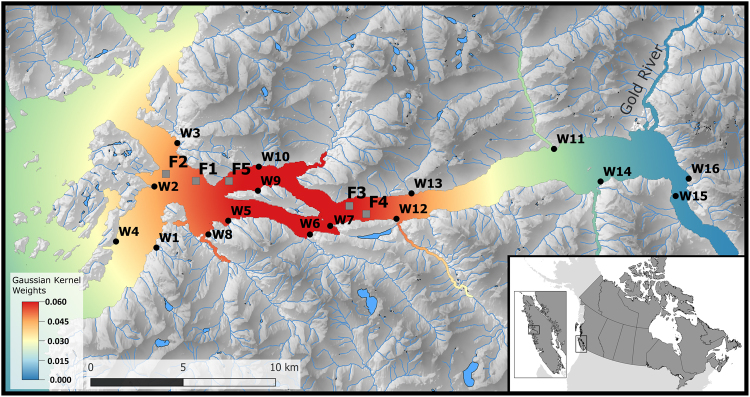
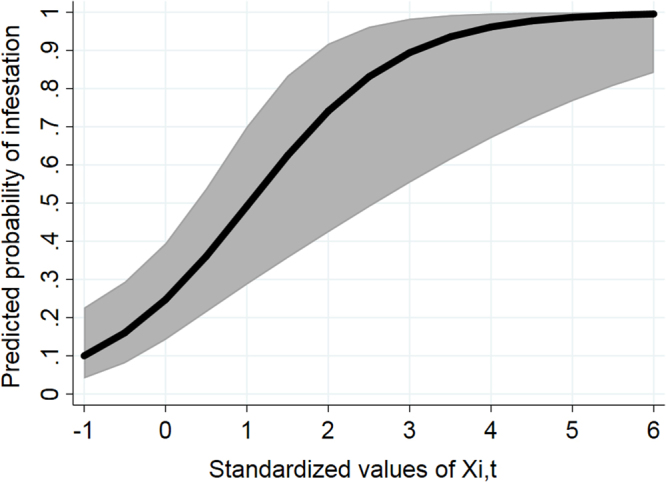
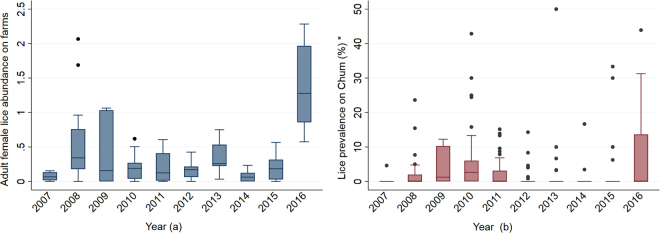
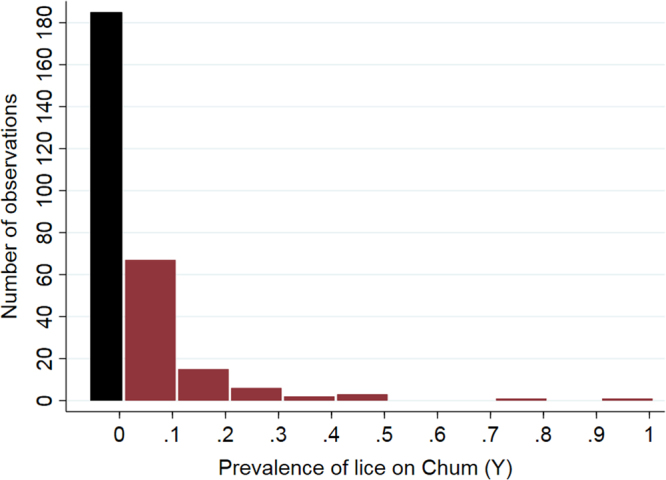
Growth in salmon aquaculture over the past two decades has raised concerns regarding the potential impacts of the industry on neighboring ecosystems and wild fish productivity. Despite limited evidence, sea lice have been identified as a major cause for the decline in some wild Pacific salmon populations on the west coast of Canada. We used sea lice count and management data from farmed and wild salmon, collected over 10 years (2007-2016) in the Muchalat Inlet region of Canada, to evaluate the association between sea lice recorded on salmon farms with the infestation levels on wild out-migrating Chum salmon. Our analyses indicated a significant positive association between the sea lice abundance on farms and the likelihood that wild fish would be infested. However, increased abundance of lice on farms was not significantly associated with the levels of infestation observed on the wild salmon. Our results suggest that Atlantic salmon farms may be an important source for the introduction of sea lice to wild Pacific salmon populations, but that the absence of a dose response relationship indicates that any estimate of farm impact requires more careful evaluation of causal inference than is typically seen in the extant scientific literature.
在过去的二十年中,鲑鱼养殖业的增长引起了人们对该行业对邻近生态系统和野生鱼类生产力的潜在影响的关注。尽管证据有限,但海虱已被确定为加拿大西海岸一些野生太平洋鲑鱼种群减少的主要原因。我们使用了在加拿大 Muchalat 湾地区收集的养殖和野生鲑鱼的海虱计数和管理数据,这些数据是在过去 10 年(2007-2016 年)收集的,以评估在鲑鱼养殖场记录的海虱与野生洄游 Chum 鲑鱼的感染水平之间的关联。我们的分析表明,养殖场中海虱的丰度与野生鱼类感染的可能性之间存在显著的正相关。然而,养殖场中海虱数量的增加与在野生鲑鱼上观察到的感染水平没有显著关联。我们的结果表明,大西洋鲑鱼养殖场可能是将海虱引入野生太平洋鲑鱼种群的重要来源,但剂量反应关系的缺失表明,任何对养殖场影响的估计都需要比现有科学文献中更仔细地评估因果关系。