Department of Biochemistry and Molecular Biology, Yonsei University College of Medicine, 50 Yonsei-ro, Seodaemun-gu, Seoul, 03722, Republic of Korea.
Brain Korea 21 PLUS Project for Medical Science, Yonsei University College of Medicine, 50 Yonsei-ro, Seodaemun-gu, Seoul, 03722, Republic of Korea.
Cell Death Differ. 2018 Nov;25(10):1781-1795. doi: 10.1038/s41418-018-0079-6. Epub 2018 Mar 6.
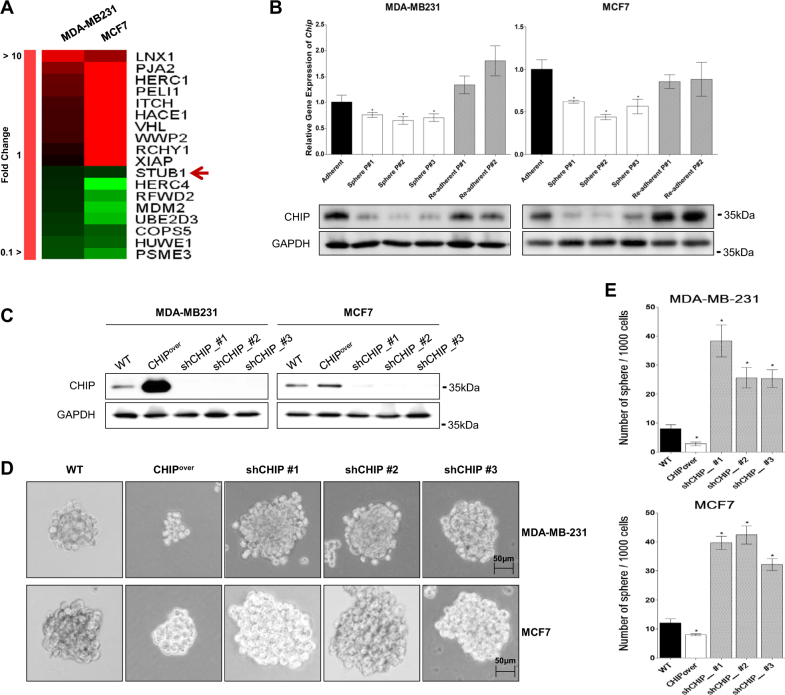
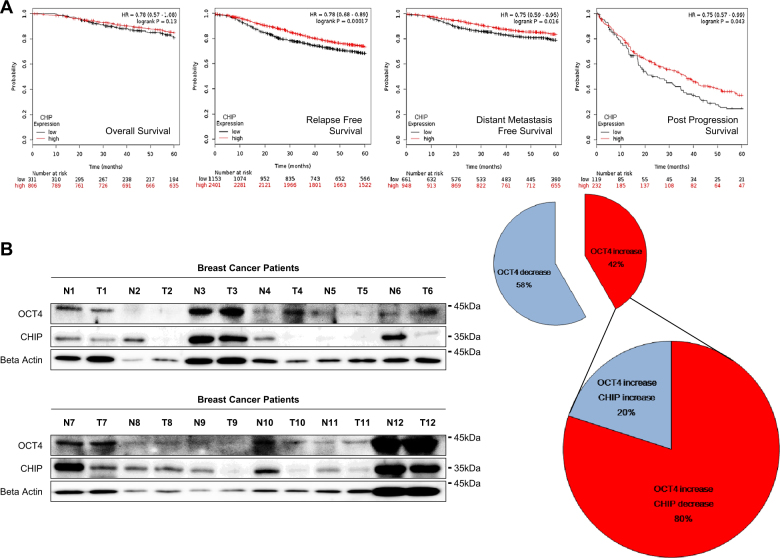
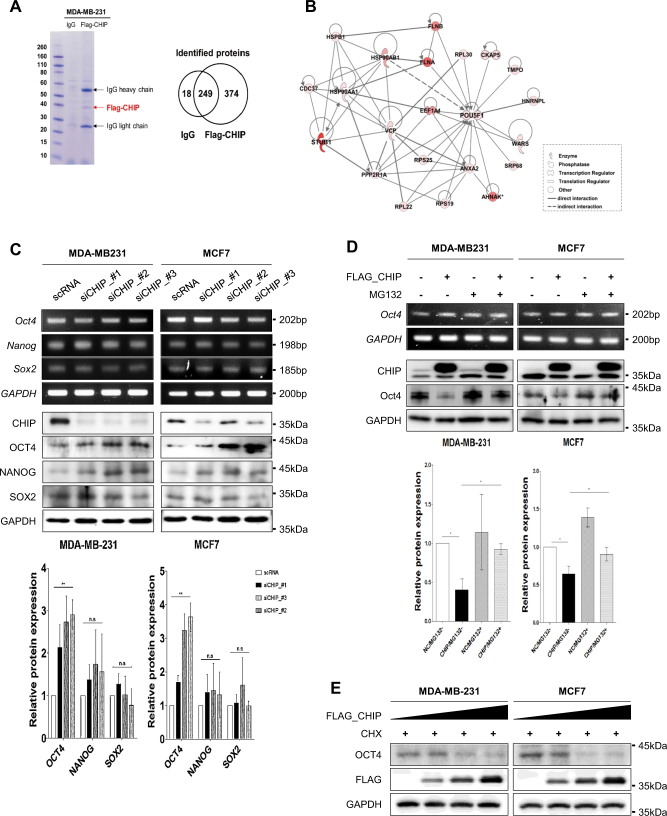
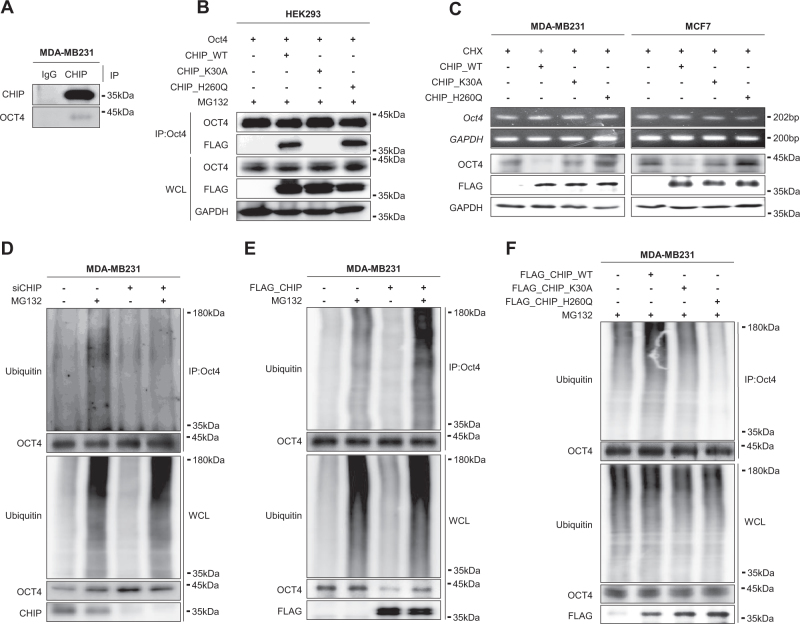
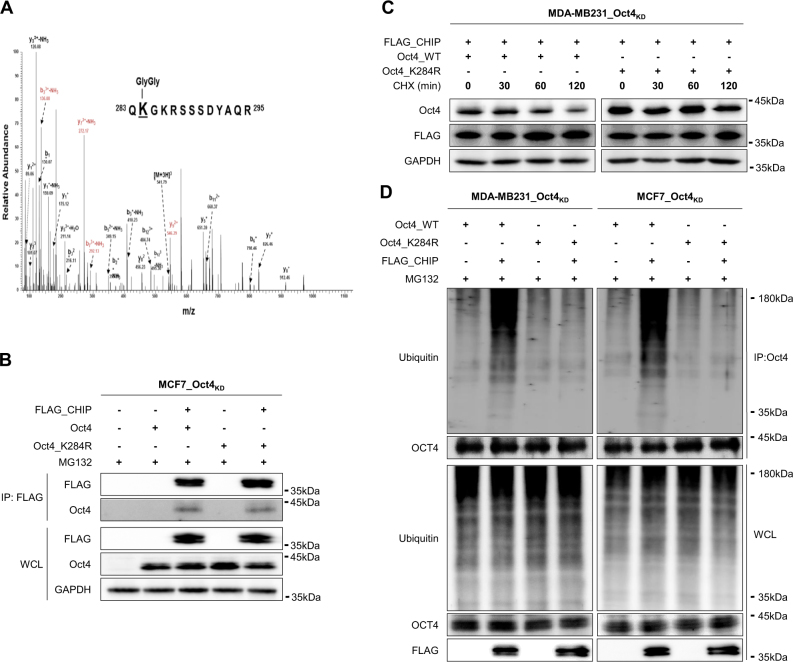
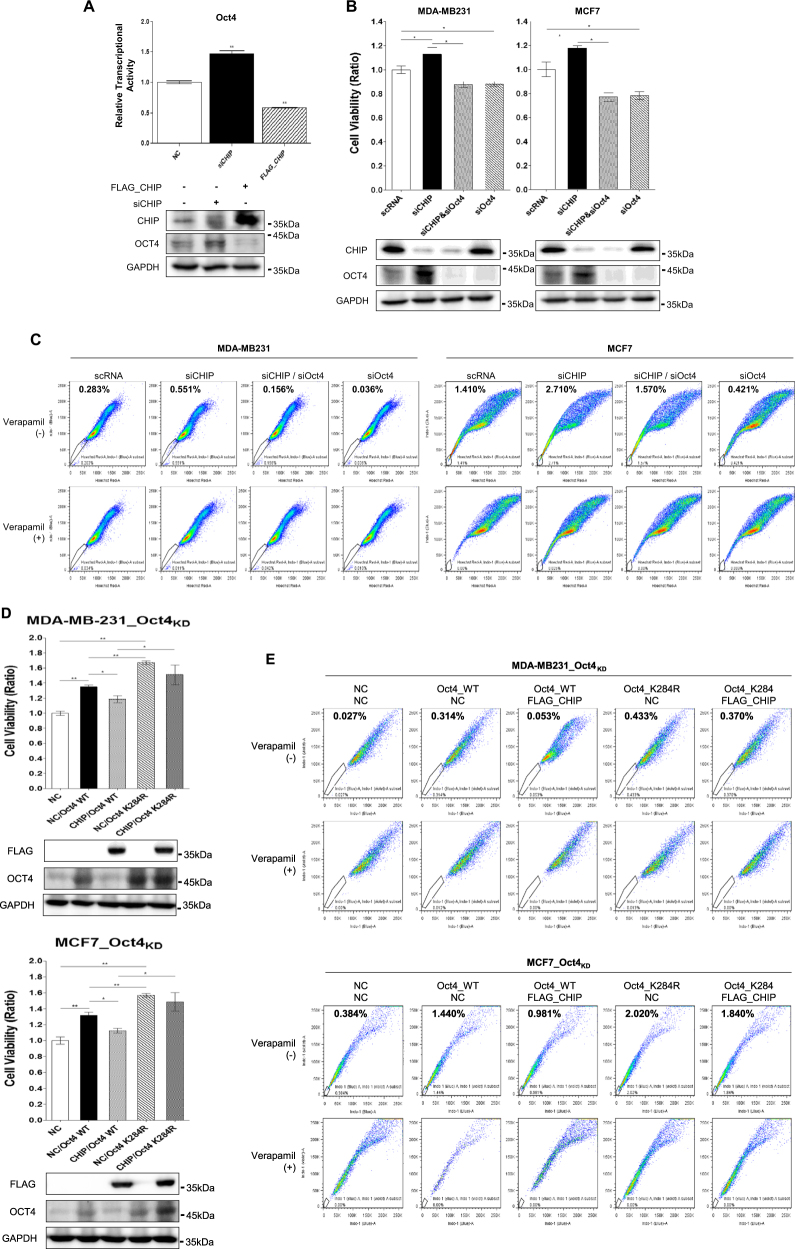
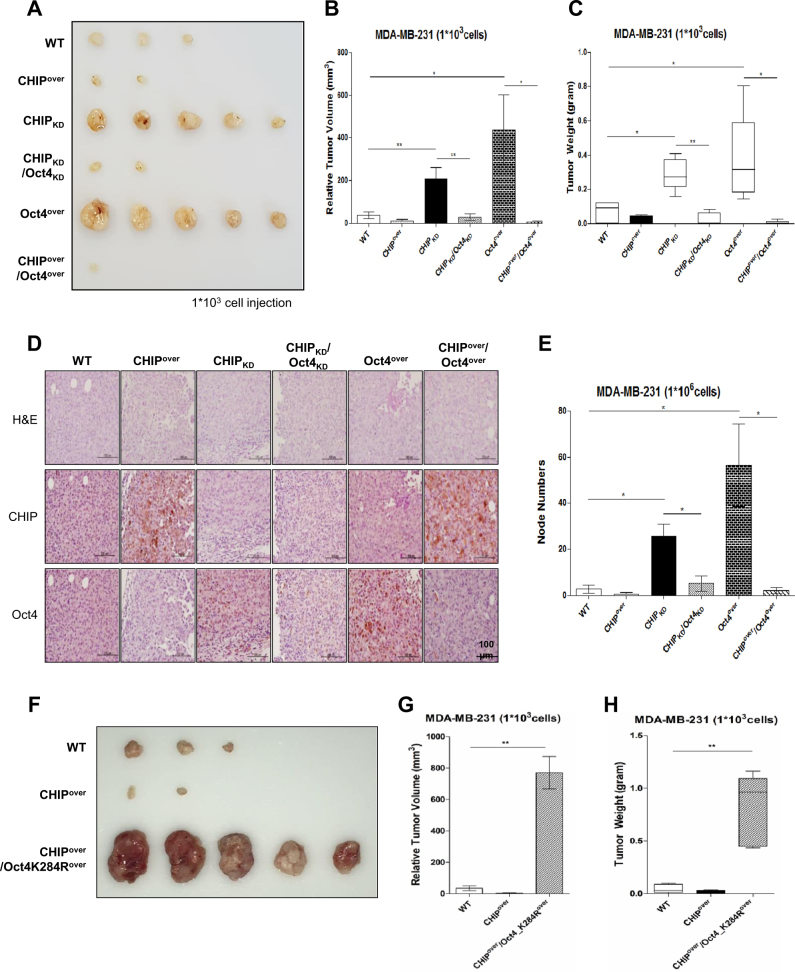
Recurrence and drug resistance of breast cancer are still the main reasons for breast cancer-associated deaths. Cancer stem cell (CSC) model has been proposed as a hypothesis for the lethality of breast cancer. Molecular mechanisms underlying CSC maintenance are still unclear. In this study, we generated mammospheres derived from breast cancer MDA-MB231 cells and MCF7 cells to enrich CSCs and performed DNA microarray analysis. We found that the expression of carboxy terminus of HSP70-interacting protein (CHIP) E3 ubiquitin ligase was significantly downregulated in breast CSCs. CHIP depletion increased mammosphere formation, whereas CHIP overexpression reversed this effect. We identified interactomes by mass spectrometry and detected CHIP directly interacted with OCT4, a stemness factor. CHIP overexpression decreased OCT4 stability through proteasomal degradation. CHIP induced OCT4 ubiquitination, whereas H260Q, a catalytic CHIP mutant, did not. Interestingly, we determined that OCT4 was ubiquitinated at lysine 284, and CHIP overexpression did not degrade K284R mutant OCT4. CHIP overexpression decreased the proliferation and side population of breast cancer cells, but these were not occurred in K284R mutant OCT4 overexpressed cells. Only 1000 cells showing CHIP depletion or OCT4 overexpression sufficiently generated breast tumors and lung metastases in xenografted mice. Ubiquitination-defective mutant of OCT4(K284R) overexpressed cells drastically generated tumor burdens in mice. Patients with breast cancer who showed low CHIP expression had poor survival probability. Taken together, we suggest that CHIP-induced OCT4 ubiquitination is important in breast CSCs. Regulation of CHIP expression and OCT4 protein stability is a considerable approach for breast cancer therapy.
乳腺癌的复发和耐药仍然是乳腺癌相关死亡的主要原因。癌症干细胞 (CSC) 模型被提出作为乳腺癌致命性的假设。维持 CSC 的分子机制尚不清楚。在这项研究中,我们从乳腺癌 MDA-MB231 细胞和 MCF7 细胞中生成了类乳腺球体,以富集 CSC,并进行了 DNA 微阵列分析。我们发现羧基末端热休克蛋白 70 相互作用蛋白 (CHIP) E3 泛素连接酶的表达在乳腺 CSC 中显著下调。CHIP 耗竭增加了类乳腺球体的形成,而 CHIP 过表达则逆转了这种效应。我们通过质谱法鉴定了相互作用组,并检测到 CHIP 与 OCT4(一种干性因子)直接相互作用。CHIP 过表达通过蛋白酶体降解降低 OCT4 的稳定性。CHIP 诱导 OCT4 泛素化,而催化 CHIP 突变体 H260Q 则不能。有趣的是,我们确定 OCT4 在赖氨酸 284 处被泛素化,而 CHIP 过表达不会降解 K284R 突变 OCT4。CHIP 过表达降低了乳腺癌细胞的增殖和侧群,但在 K284R 突变 OCT4 过表达细胞中没有发生。只有 1000 个显示 CHIP 耗竭或 OCT4 过表达的细胞足以在异种移植小鼠中产生乳腺肿瘤和肺转移。OCT4 的泛素化缺陷突变体 (K284R) 过表达细胞在小鼠中产生了大量的肿瘤负担。表现出低 CHIP 表达的乳腺癌患者的生存概率较差。总之,我们认为 CHIP 诱导的 OCT4 泛素化在乳腺 CSC 中很重要。调节 CHIP 表达和 OCT4 蛋白稳定性是乳腺癌治疗的一种重要方法。