Merhar Stephanie L, McAllister Jennifer M, Wedig-Stevie Kathryn E, Klein Amy C, Meinzen-Derr Jareen, Poindexter Brenda B
Perinatal Institute, Division of Neonatology, Cincinnati Children's Hospital Medical Center, Cincinnati, OH, USA.
Division of Occupational and Physical Therapy, Cincinnati Children's Hospital Medical Center, Cincinnati, OH, USA.
J Perinatol. 2018 May;38(5):587-592. doi: 10.1038/s41372-018-0088-9. Epub 2018 Mar 7.
Little is known about developmental outcomes in neonatal abstinence syndrome (NAS). We hypothesized that children treated for NAS would score lower than the normative sample on the Bayley Scales of Infant Development, 3rd edition.
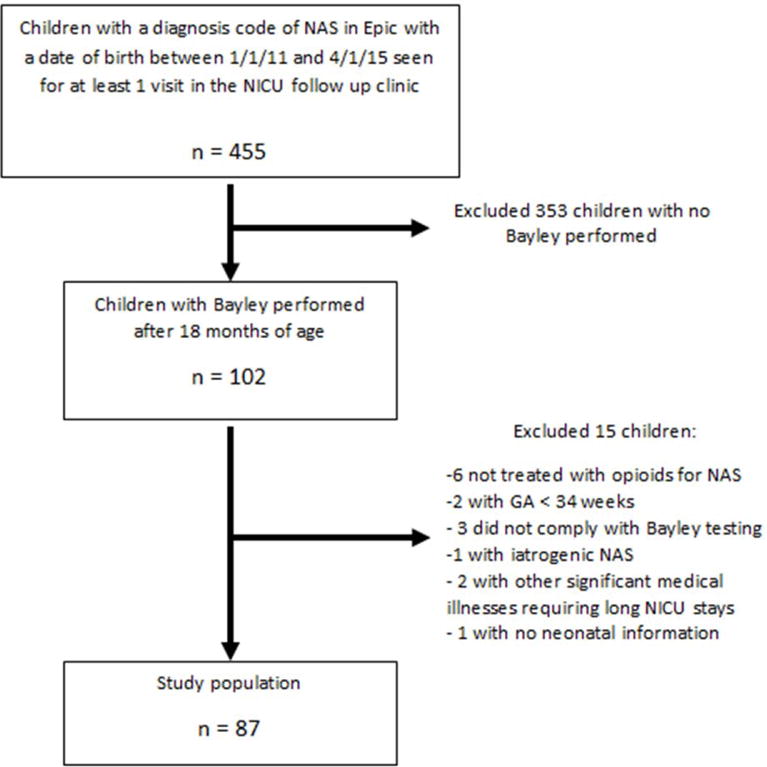
We performed a retrospective cohort study of 87 infants treated for NAS and evaluated at 2 years of age.
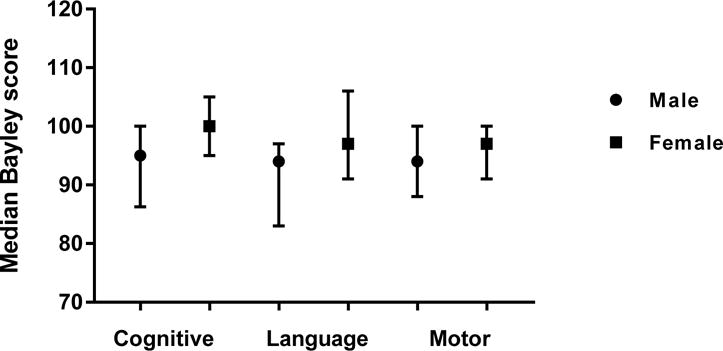
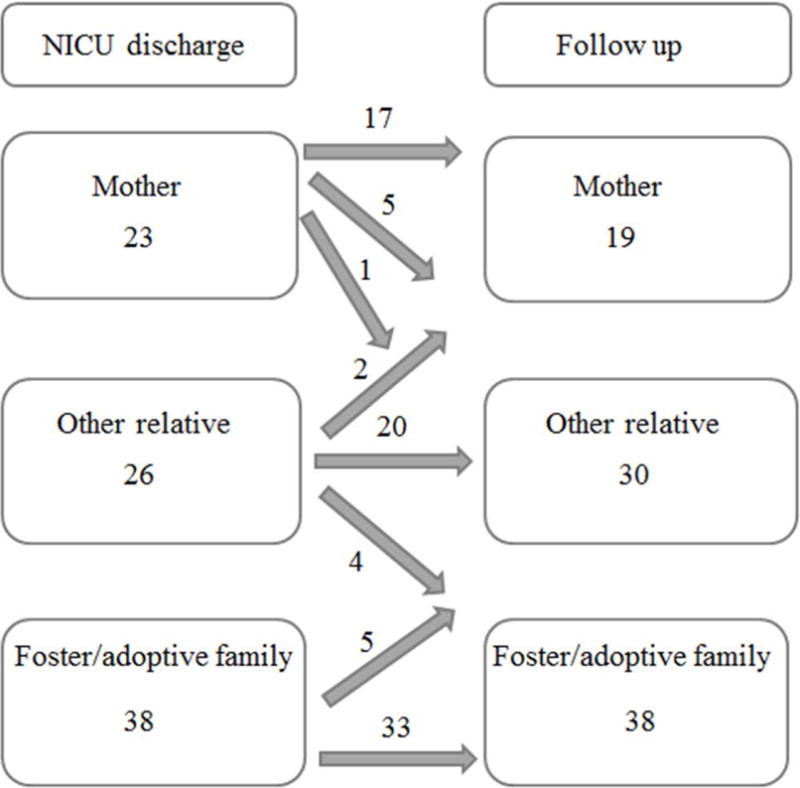
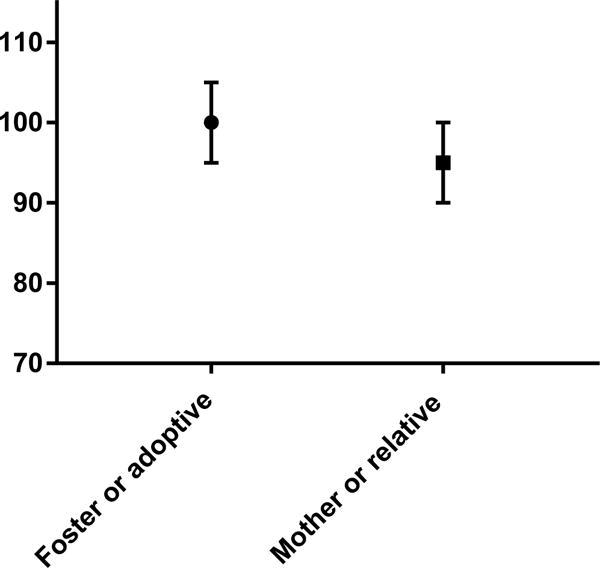
Children treated for NAS scored significantly lower than the norm (mean 100) on all 3 subscales (cognitive mean 96.5, language mean 93.8, motor mean 94.0, all p < 0.03). Children who lived with foster/adoptive families at follow up had higher cognitive scores (median 100 vs. 95, p = 0.03) than those who lived with biological relatives, and were less likely to have motor scores <85 (p = 0.02). Eight percent of children required treatment for strabismus.
Children treated for NAS are at risk for lower developmental scores and higher rates of strabismus at age 2 than the general population.
关于新生儿戒断综合征(NAS)的发育结局,人们了解甚少。我们推测,接受NAS治疗的儿童在贝利婴儿发展量表第三版上的得分会低于常模样本。
我们对87例接受NAS治疗并在2岁时接受评估的婴儿进行了一项回顾性队列研究。
接受NAS治疗的儿童在所有3个分量表上的得分均显著低于常模(平均分为100)(认知分量表平均分为96.5,语言分量表平均分为93.8,运动分量表平均分为94.0,所有p<0.03)。随访时与寄养/收养家庭生活在一起的儿童比与亲生亲属生活在一起的儿童具有更高的认知得分(中位数分别为100和95,p = 0.03),且运动得分<85的可能性更小(p = 0.02)。8%的儿童需要接受斜视治疗。
与一般人群相比,接受NAS治疗的儿童在2岁时存在发育得分较低和斜视发生率较高的风险。