Allik Jüri, Hřebíčková Martina, Realo Anu
Department of Psychology, University of Tartu, Tartu, Estonia.
Estonian Academy of Sciences, Tallinn, Estonia.
Front Psychol. 2018 Feb 20;9:187. doi: 10.3389/fpsyg.2018.00187. eCollection 2018.
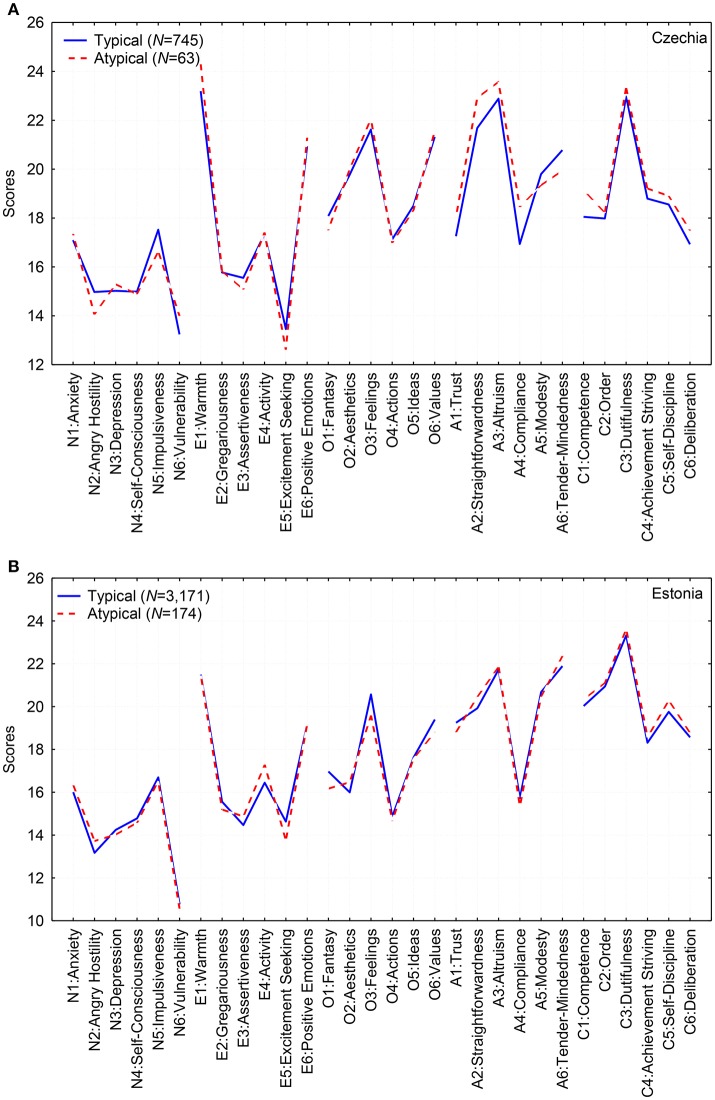
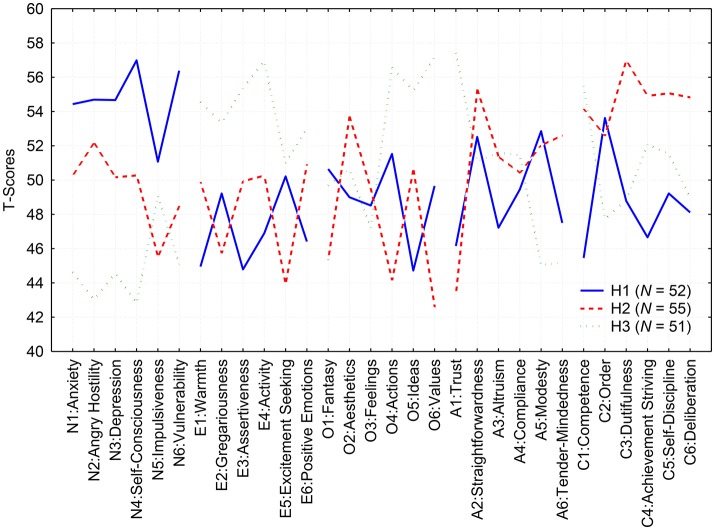
It is widely accepted that the Five Factor Model (FFM) is a satisfactory description of the pattern of covariations among personality traits, which supposedly fits, more or less adequately, every individual. As an amendment to the FFM, we propose that the customary five-factor structure is only a near-universal, because it does not fit all individuals but only a large majority of them. Evidences reveal a small minority of participants who have an unusual configuration of personality traits, which is clearly recognizable, both in self- and observer-ratings. We identified three types of atypical configurations of personality traits, characterized mainly by a scatter of subscale scores within each of the FFM factors. How different configurations of personality traits are formed, persist, and function needs further investigation.
人们普遍认为,五因素模型(FFM)是对人格特质间协变模式的一种令人满意的描述,据说它或多或少能充分适用于每一个个体。作为对FFM的修正,我们提出,惯常的五因素结构只是近乎普遍适用,因为它并非适用于所有个体,而只是适用于绝大多数个体。有证据显示,少数参与者具有不寻常的人格特质配置,这在自我评定和他人评定中都清晰可辨。我们识别出了三种人格特质的非典型配置类型,其主要特征是在FFM的每个因素中,分量表得分呈分散状。人格特质的不同配置是如何形成、持续存在以及发挥作用的,这需要进一步研究。