Natural History Museum of Denmark, University of Copenhagen, Øster Voldgade 5-7, 1350, Copenhagen, Denmark.
The National Museum of Denmark, Frederiksholms Kanal 12, 1220, Copenhagen, Denmark.
Ambio. 2018 Apr;47(Suppl 2):193-212. doi: 10.1007/s13280-018-1027-x.
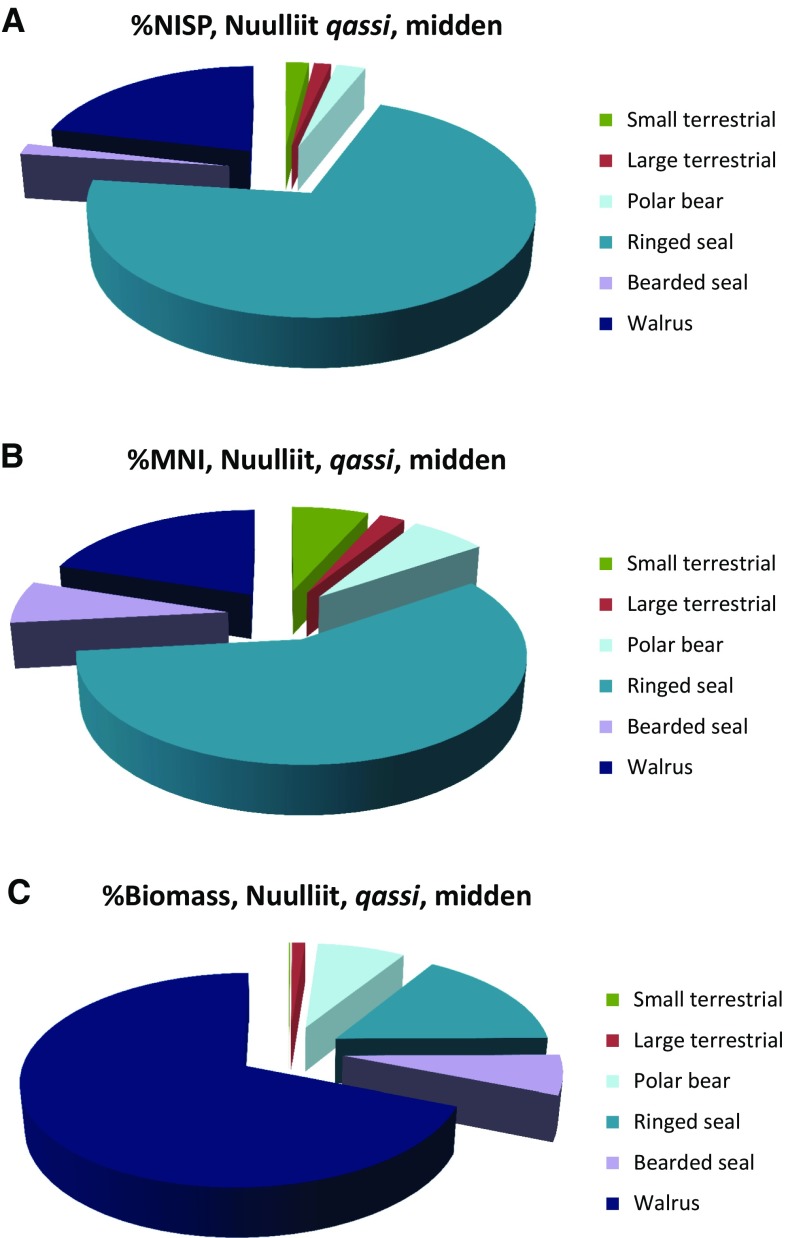
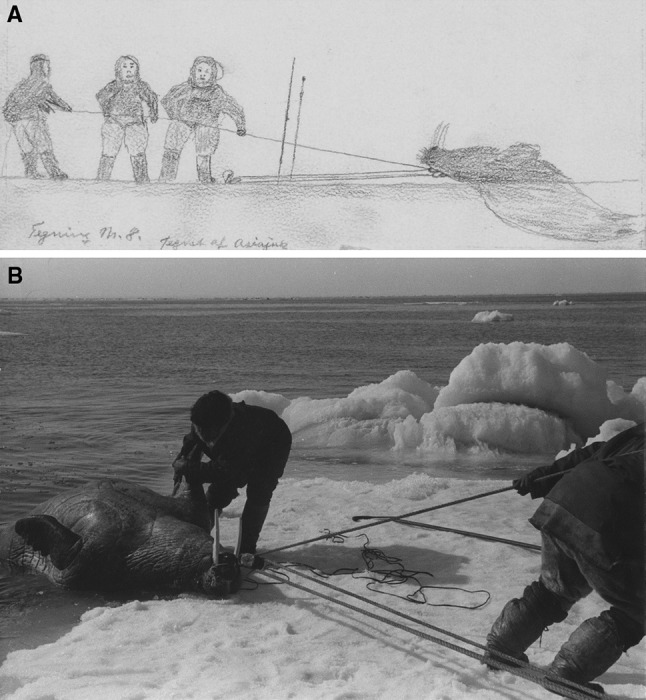
This article highlights the relationship between walruses and humans in and around the North Water polynya in a long-term perspective. The present study draws on a combination of biological, archaeological, archaeo-zoological, historical, and ethnographic sources covering the period from the 8th century AD to the late 20th century. The study demonstrates that the walrus was an important resource of meat, blubber, and other products throughout all the studied periods, if always supplemented by other kinds of game. It is suggested that walrus distribution and behaviour, as well as hunting strategies and technologies historically constituted a powerful component not only in forming human action and social life in the region but also in serving as an imaginative resource. It is further argued that the walrus and the walrus hunt still play a significant role in the present community living on the edge of the North Water, even if the hunt is increasingly circumscribed due to changing ice conditions.
本文从长期角度重点探讨了北水冰间湖地区及其周边的海象与人类之间的关系。本研究综合了生物、考古、动物考古学、历史和民族志等多方面的资料,时间跨度从公元 8 世纪到 20 世纪后期。研究表明,在所有研究时段内,海象一直是肉、鲸脂和其他产品的重要资源,如果有其他种类的猎物作为补充,其作用就更为重要。本研究提出,海象的分布和行为、捕猎策略和技术,不仅是该地区人类活动和社会生活形成的重要因素,而且也是人类进行想象的资源。此外,本文还认为,即使由于冰况的变化,捕猎活动受到越来越多的限制,海象及其捕猎活动在北水边缘地区的现代社区生活中仍然发挥着重要作用。