Lee Young Shin, Heo Woong, Nam Jiho, Jeung Young Hwa, Bae Jaeho
Department of Biochemistry, Pusan National University School of Medicine, Busandaehakro-49, Mulgeum-eup Yangsan-si Gyeongsangnam-do, 50612, South Korea.
PNU BK21 Plus Biomedical Science Education Center, Pusan National University School of Medicine, Busandaehakro-49, Mulgeum-eup Yangsan-si Gyeongsangnam-do 50612, South Korea.
J Radiat Res. 2018 May 1;59(3):245-252. doi: 10.1093/jrr/rry005.
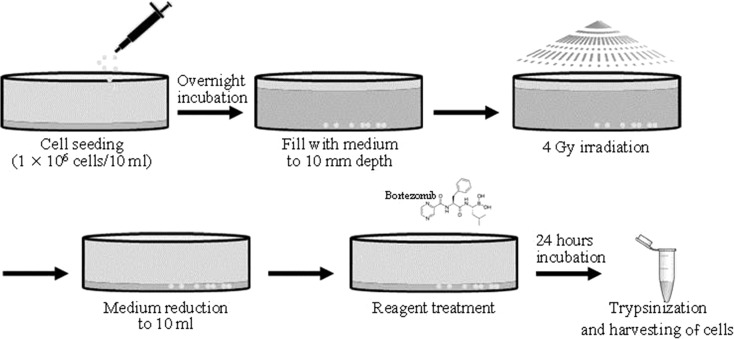
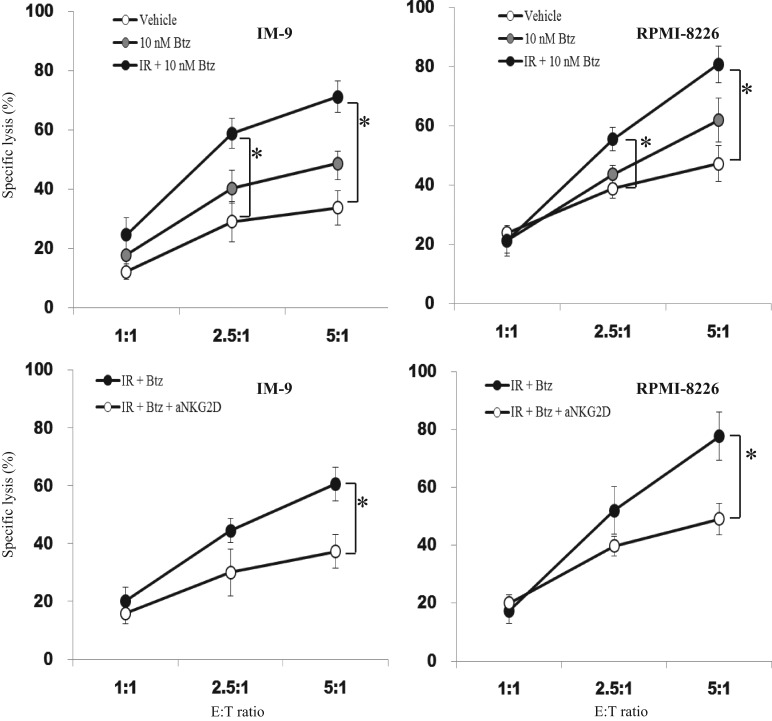
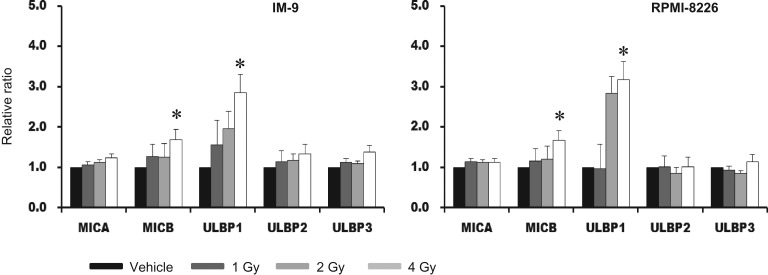
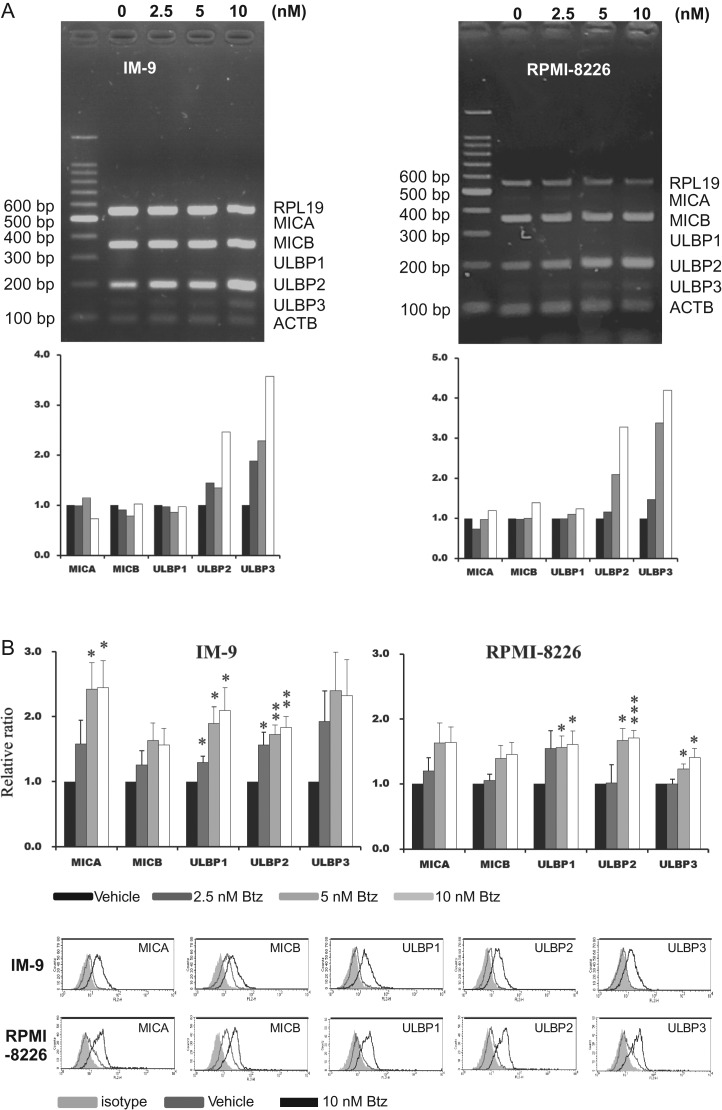
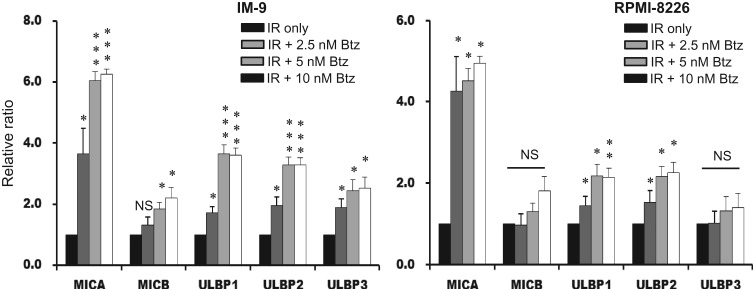
Bortezomib, which is a potent proteasome inhibitor, has been used as a first-line drugs to treat multiple myeloma for a few decades, and radiotherapy has frequently been applied to manage acute bone lesions in the patients. Therefore, it was necessary to investigate what the benefits might be if the two therapies were applied simultaneously in the treatment of multiple myeloma. Since it was known that radiotherapy and proteasome inhibitors could increase the expression of NKG2D ligands through induction of protein synthesis and suppression of protein degradation of NKG2D ligands, respectively, we supposed that the combined treatment might further enhance the expression of NKG2D ligands. In this study, we analyzed the expression level of NKG2D ligands using multiplex PCR and flow cytometry after treatment of IM-9 and RPMI-8226 myeloma cells with bortezomib and ionizing radiation; we then assayed the susceptibility to NK-92 cells. Although the expression of only some kinds of NKG2D ligands were increased by treatment with bortezomib alone, five kinds of NKG2D ligands that we assayed were further induced at the surface protein level after combined treatment with ionizing radiation and bortezomib. Furthermore, combined treatment made myeloma cells more susceptible to NK-92 cells, compared with treatment with bortezomib alone. In conclusion, the combination therapy of ionizing radiation plus the proteasome inhibitor bortezomib is a promising therapeutical strategy for enhancing NK cell-mediated anticancer immune responses.
硼替佐米是一种有效的蛋白酶体抑制剂,几十年来一直被用作治疗多发性骨髓瘤的一线药物,放射疗法也经常用于治疗患者的急性骨病变。因此,有必要研究这两种疗法同时应用于多发性骨髓瘤治疗可能会带来哪些益处。由于已知放射疗法和蛋白酶体抑制剂可分别通过诱导NKG2D配体的蛋白质合成和抑制其蛋白质降解来增加NKG2D配体的表达,我们推测联合治疗可能会进一步增强NKG2D配体的表达。在本研究中,我们在用硼替佐米和电离辐射处理IM-9和RPMI-8226骨髓瘤细胞后,使用多重PCR和流式细胞术分析了NKG2D配体的表达水平;然后我们检测了细胞对NK-92细胞的敏感性。虽然单独使用硼替佐米治疗仅增加了某些种类NKG2D配体的表达,但在与电离辐射和硼替佐米联合治疗后,我们检测的五种NKG2D配体在表面蛋白水平上进一步被诱导。此外,与单独使用硼替佐米治疗相比,联合治疗使骨髓瘤细胞对NK-92细胞更敏感。总之,电离辐射加蛋白酶体抑制剂硼替佐米的联合治疗是增强NK细胞介导的抗癌免疫反应的一种有前景的治疗策略。