Pan Changqie, Liu Yuqing, Zhou Minyu, Wang Wensheng, Shi Min, Xing Malcolm, Liao Wangjun
Department of Oncology, Nanfang Hospital, Southern Medical University, Guangzhou, China.
Department of Mechanical Engineering.
Int J Nanomedicine. 2018 Feb 27;13:1119-1137. doi: 10.2147/IJN.S147464. eCollection 2018.
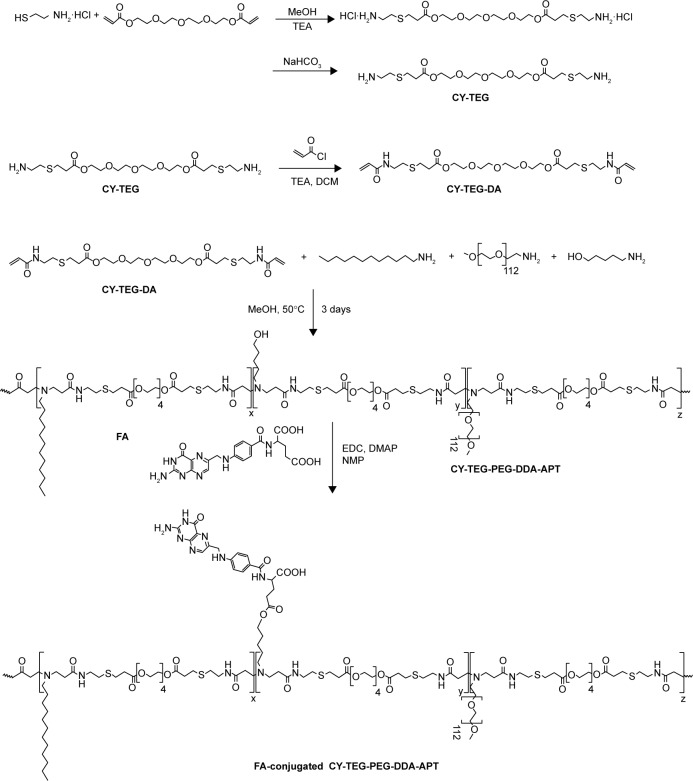
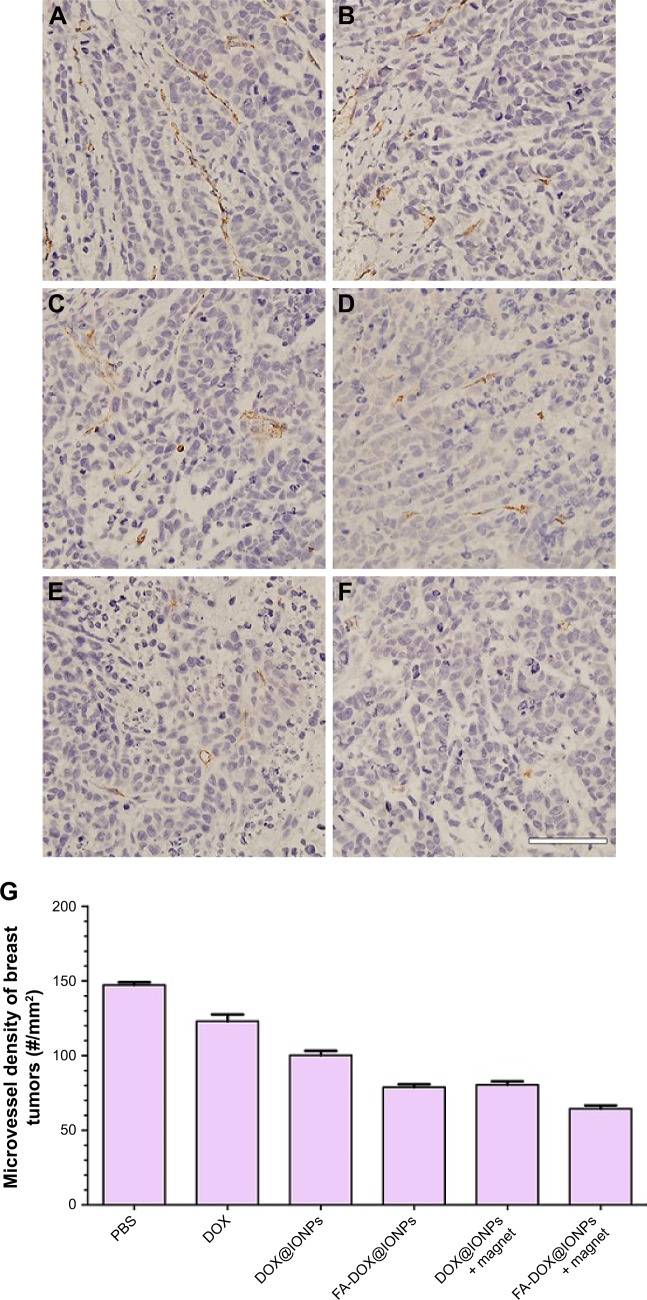
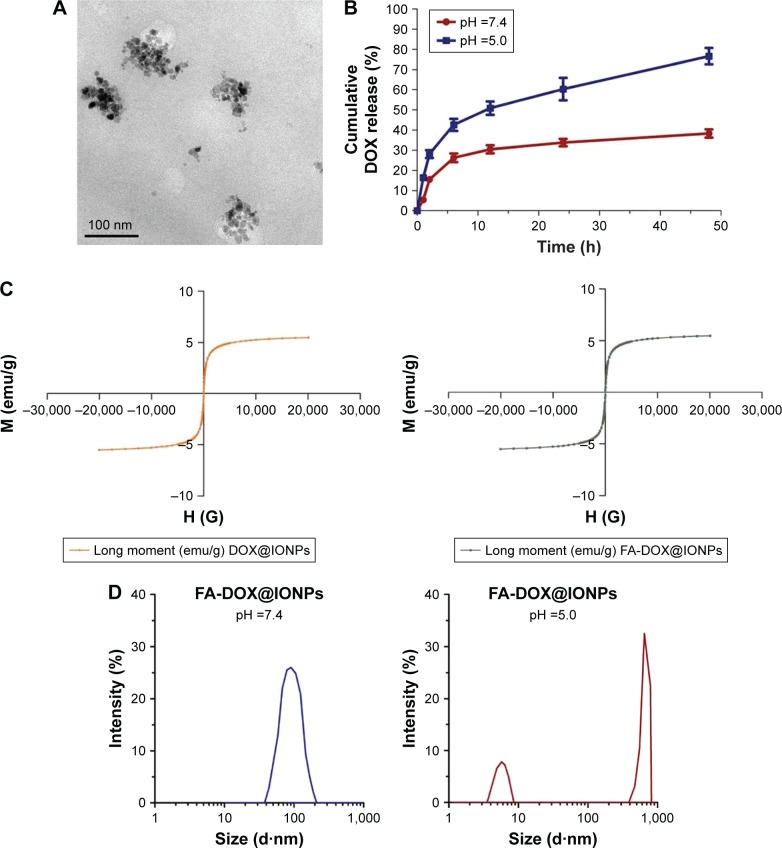
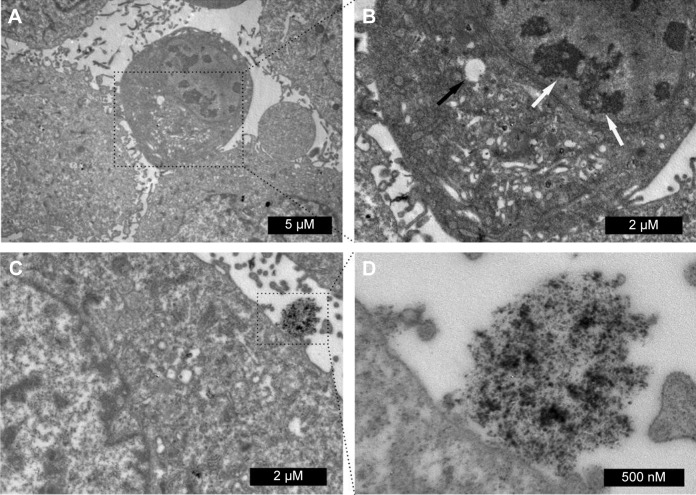
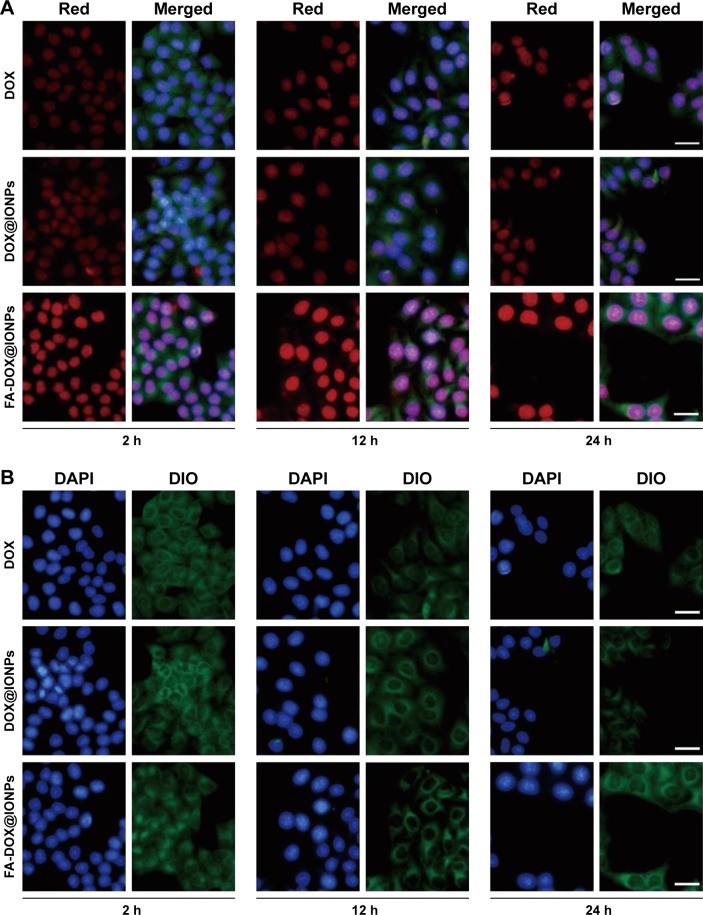
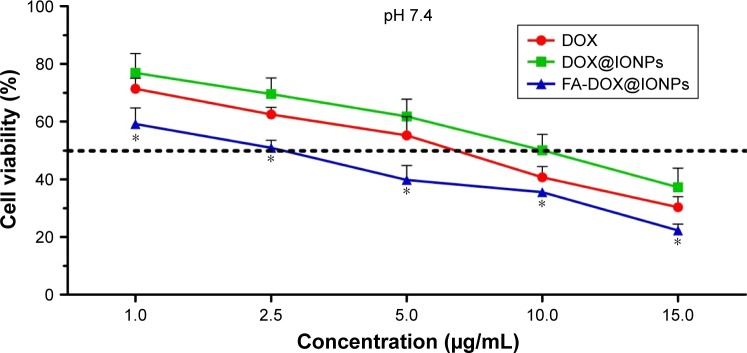
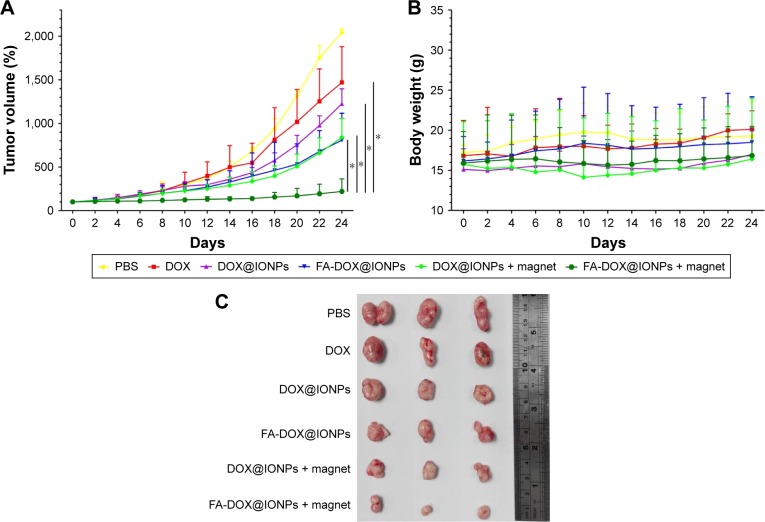
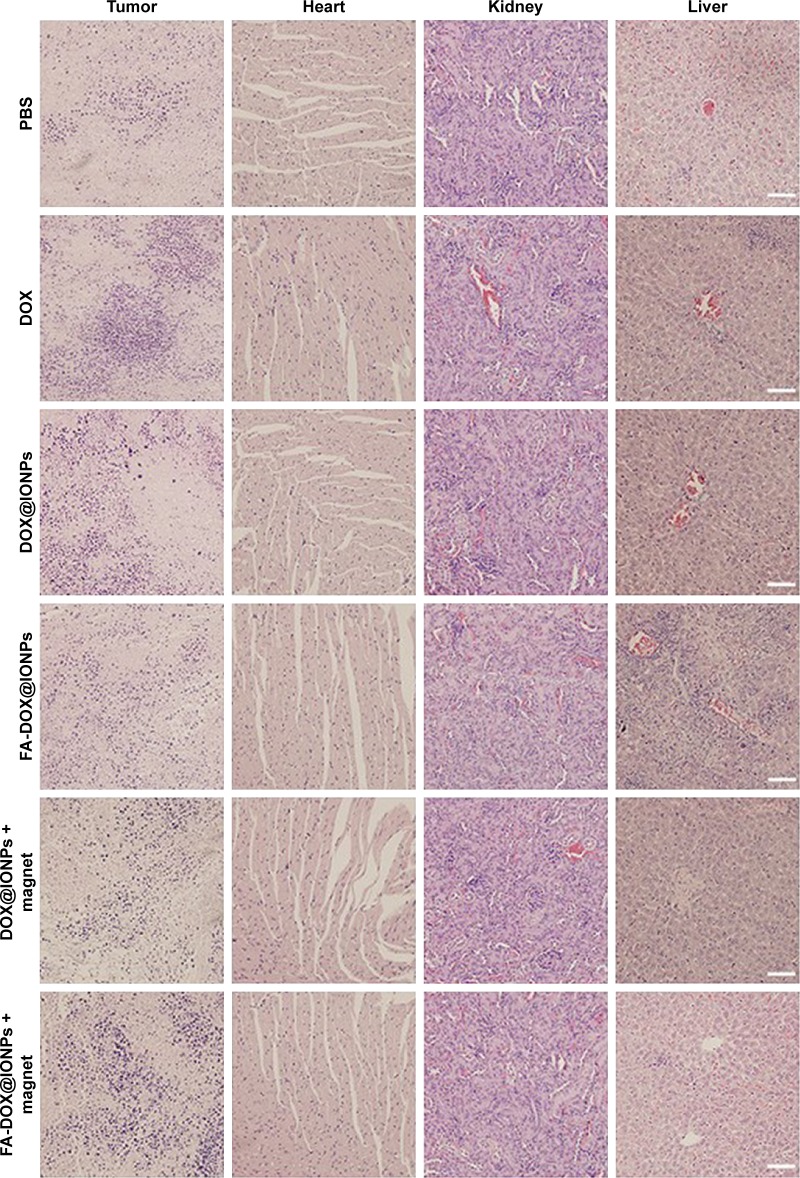
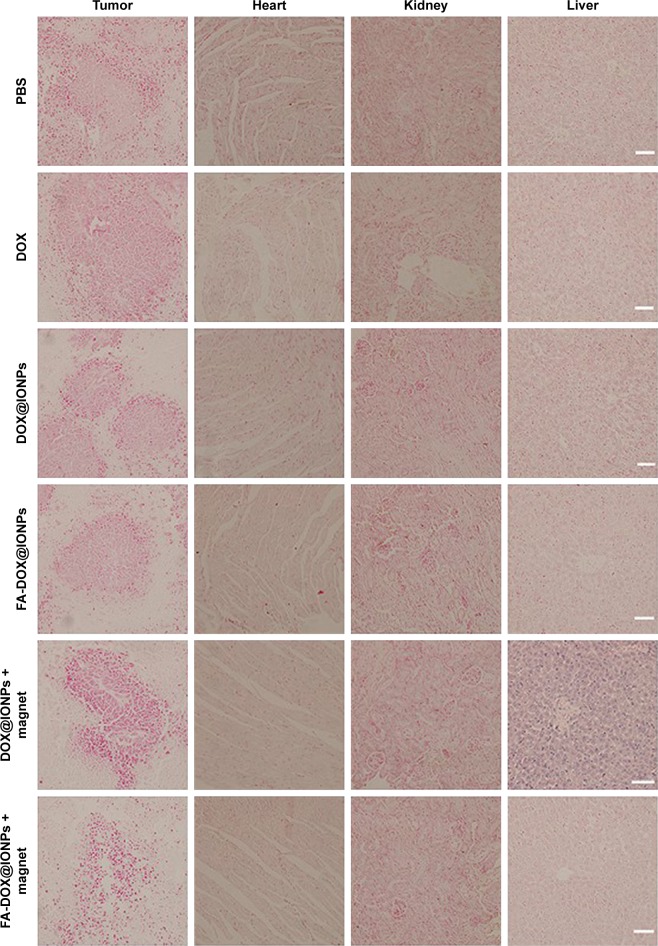
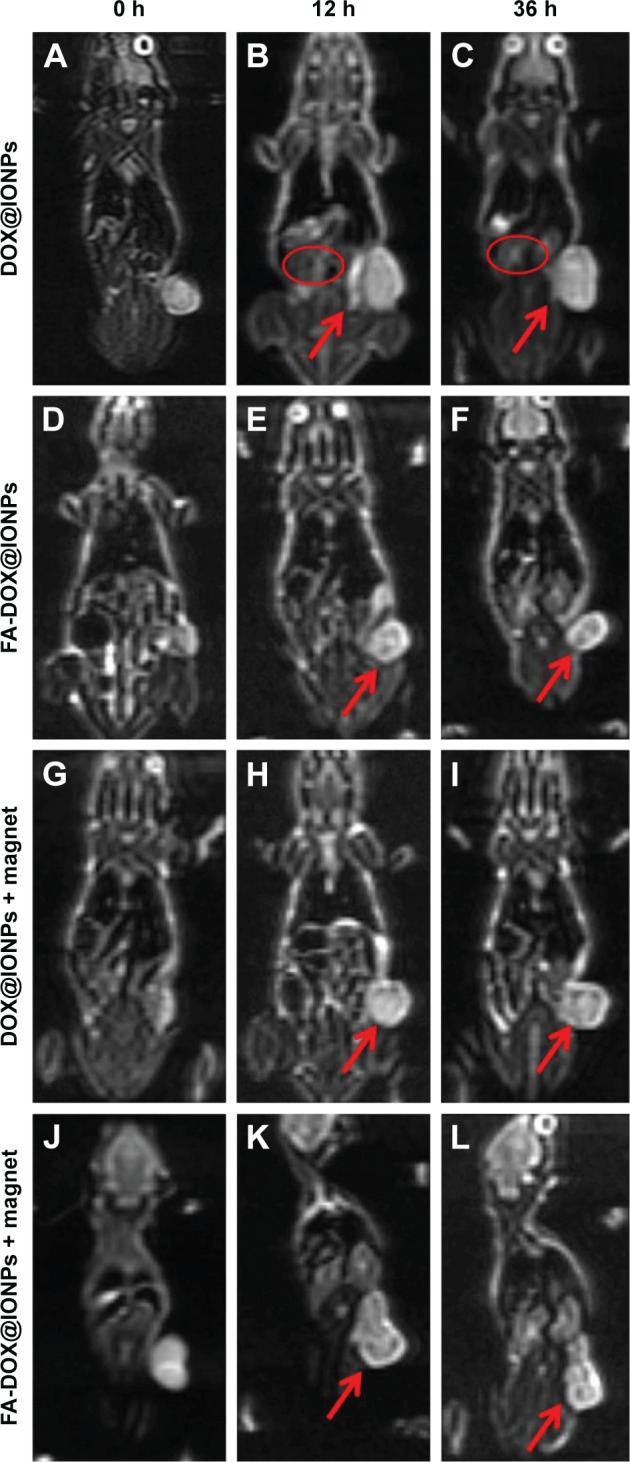
A multifunctional theranostic nanoplatform integrated with environmental responses has been developed rapidly over the past few years as a novel treatment strategy for several solid tumors. We synthesized pH-sensitive poly(β-thiopropionate) nanoparticles with a supermagnetic core and folic acid (FA) conjugation (FA-doxorubicin-iron oxide nanoparticles [FA-DOX@ IONPs]) to deliver an antineoplastic drug, DOX, for the treatment of folate receptor (FR)-overexpressed breast cancer. In addition to an imaging function, the nanoparticles can release their payloads in response to an environment of pH 5, such as the acidic environment found in tumors. After chemical (H nuclear magnetic resonance) and physical (morphology and super-magnetic) characterization, FA-DOX@IONPs were shown to demonstrate pH-dependent drug release profiles. Western blotting analysis revealed the expression of FRs in three breast cancer cell lines, MCF-7, BT549, and MD-MBA-231. The cell counting kit-8 assay and transmission electron microscopy showed that FA-DOX@IONPs had the strongest cytotoxicity against breast cancer cells, compared with free DOX and non-FR targeted nanoparticles (DOX@IONPs), and caused cellular apoptosis. The FA-DOX@IONP-mediated cellular uptake and intracellular internalization were clarified by fluorescence microscopy. FA-DOX@IONPs plus magnetic field treatment suppressed in vivo tumor growth in mice to a greater extent than either treatment alone; furthermore, the nanoparticles exerted no toxicity against healthy organs. Magnetic resonance imaging was successfully applied to monitor the nanoparticle accumulation. Our results suggest that theranostic pH-sensitive nanoparticles with dual targeting could enhance the available therapies for cancer.
在过去几年中,一种集成了环境响应功能的多功能诊疗纳米平台作为针对多种实体瘤的新型治疗策略得到了迅速发展。我们合成了具有超顺磁核心并偶联叶酸(FA)的pH敏感型聚(β-硫代丙酸酯)纳米颗粒(FA-阿霉素-氧化铁纳米颗粒[FA-DOX@IONPs]),用于递送抗肿瘤药物阿霉素(DOX),以治疗叶酸受体(FR)过表达的乳腺癌。除成像功能外,这些纳米颗粒能够在pH 5的环境(如肿瘤中的酸性环境)中释放其负载物。经过化学(氢核磁共振)和物理(形态和超顺磁性)表征,FA-DOX@IONPs显示出pH依赖性药物释放曲线。蛋白质免疫印迹分析揭示了FRs在三种乳腺癌细胞系MCF-7、BT549和MD-MBA-231中的表达。细胞计数试剂盒-8检测和透射电子显微镜显示,与游离DOX和非FR靶向纳米颗粒(DOX@IONPs)相比,FA-DOX@IONPs对乳腺癌细胞具有最强的细胞毒性,并导致细胞凋亡。荧光显微镜明确了FA-DOX@IONP介导的细胞摄取和细胞内内化。FA-DOX@IONPs加磁场治疗比单独任何一种治疗在更大程度上抑制了小鼠体内肿瘤生长;此外,这些纳米颗粒对健康器官没有毒性。磁共振成像成功应用于监测纳米颗粒的蓄积。我们的结果表明,具有双重靶向功能的诊疗pH敏感型纳米颗粒可以增强癌症的现有治疗方法。