
沉默MR-1可通过FAK-Akt-mTOR-NF-κB信号通路减轻血管紧张素II诱导的ApoE小鼠动脉粥样硬化。
Silencing MR-1 attenuates atherosclerosis in ApoE mice induced by angiotensin II through FAK-Akt-mTOR-NF-kappaB signaling pathway.
作者信息
Chen Yixi, Cao Jianping, Zhao Qihui, Luo Haiyong, Wang Yiguang, Dai Wenjian
机构信息
Hunan Environment-Biological Polytechnic College, Hengyang Hunan 421005, China.
Key Lab of Antibiotic Biotechnology, Institute of Medicinal Biotechnology, Chinese Academy of Medical Sciences, Beijing 100050, China.
出版信息
Korean J Physiol Pharmacol. 2018 Mar;22(2):127-134. doi: 10.4196/kjpp.2018.22.2.127. Epub 2018 Feb 23.
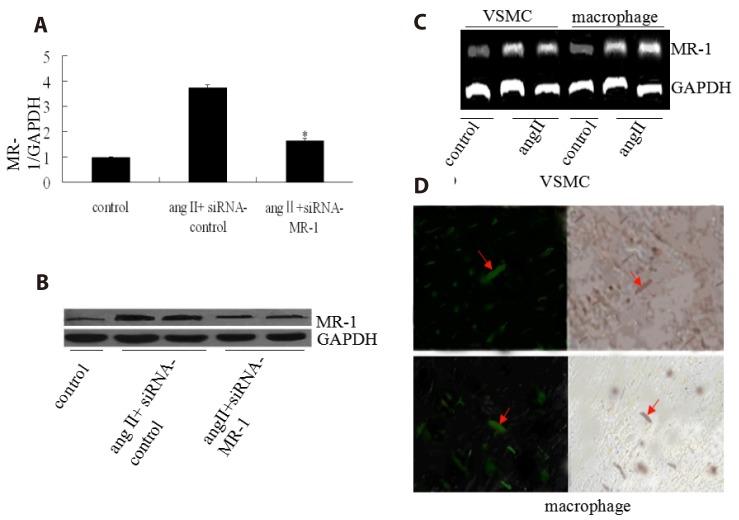
Myofibrillogenesis regulator-1 (MR-1) is a novel protein involved in cellular proliferation, migration, inflammatory reaction and signal transduction. However, little information is available on the relationship between MR-1 expression and the progression of atherosclerosis. Here we report atheroprotective effects of silencing MR-1 in a model of Ang II-accelerated atherosclerosis, characterized by suppression focal adhesion kinase (FAK) and nuclear factor kappaB (NF-κB) signaling pathway, and atherosclerotic lesion macrophage content. In this model, administration of the siRNA-MR-1 substantially attenuated Ang II-accelerated atherosclerosis with stabilization of atherosclerotic plaques and inhibited FAK, Akt, mammalian target of rapamycin (mTOR) and NF-kB activation, which was associated with suppression of inflammatory factor and atherogenic gene expression in the artery. studies demonstrated similar changes in Ang II-treated vascular smooth muscle cells (VSMCs) and macrophages: siRNA-MR-1 inhibited the expression levels of proinflammatory factor. These studies uncover crucial proinflammatory mechanisms of Ang II and highlight actions of silencing MR-1 to inhibit Ang II signaling, which is atheroprotective.
肌原纤维生成调节因子-1(MR-1)是一种参与细胞增殖、迁移、炎症反应和信号转导的新型蛋白质。然而,关于MR-1表达与动脉粥样硬化进展之间的关系,目前所知甚少。在此,我们报道了在血管紧张素II加速动脉粥样硬化模型中沉默MR-1的抗动脉粥样硬化作用,其特征为抑制粘着斑激酶(FAK)和核因子κB(NF-κB)信号通路以及动脉粥样硬化病变中的巨噬细胞含量。在该模型中,给予siRNA-MR-1可显著减轻血管紧张素II加速的动脉粥样硬化,使动脉粥样硬化斑块稳定,并抑制FAK、Akt、雷帕霉素靶蛋白(mTOR)和NF-κB的激活,这与动脉中炎症因子和致动脉粥样硬化基因表达的抑制有关。研究表明,在血管紧张素II处理的血管平滑肌细胞(VSMC)和巨噬细胞中也有类似变化:siRNA-MR-1抑制促炎因子的表达水平。这些研究揭示了血管紧张素II关键的促炎机制,并突出了沉默MR-1抑制血管紧张素II信号传导的作用,这具有抗动脉粥样硬化保护作用。


 Zotero 插件