Fitzgibbons Timothy P, Czech Michael P
Cardiovascular Division, Department of Medicine, University of Massachusetts Medical School, 55 Lake Avenue North, Worcester, MA, 01655, USA.
Program in Molecular Medicine, University of Massachusetts Medical School, Worcester, MA, 01655, USA.
J Mol Med (Berl). 2016 Mar;94(3):267-75. doi: 10.1007/s00109-016-1385-4. Epub 2016 Feb 4.
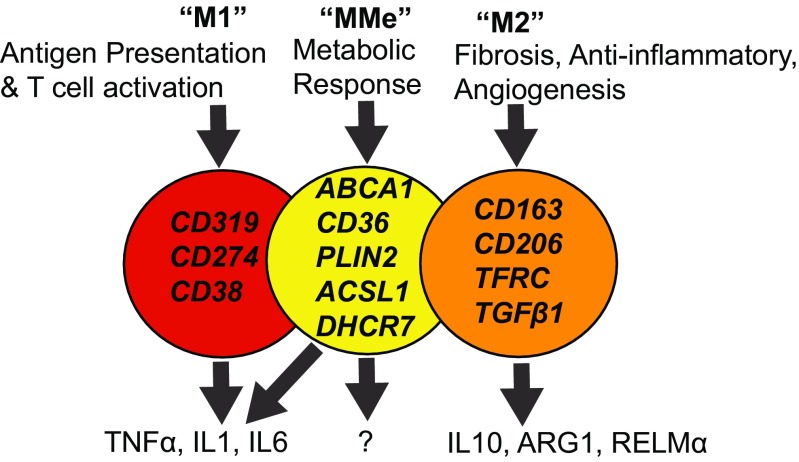
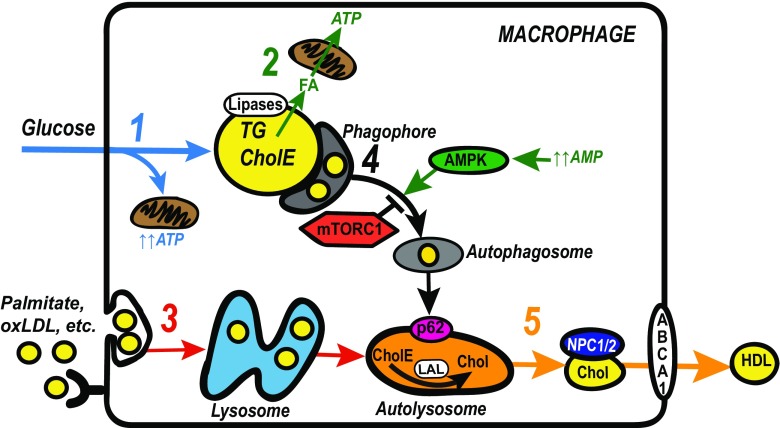
The discovery that obesity promotes macrophage accumulation in visceral fat led to the emergence of a new field of inquiry termed "immunometabolism". This broad field of study was founded on the premise that inflammation and the corresponding increase in macrophage number and activity was a pathologic feature of metabolic diseases. There is abundant data in both animal and human studies that supports this assertation. Established adverse effects of inflammation in visceral fat include decreased glucose and fatty acid uptake, inhibition of insulin signaling, and ectopic triglyceride accumulation. Likewise, in the atherosclerotic plaque, macrophage accumulation and activation results in plaque expansion and destabilization. Despite these facts, there is an accumulating body of evidence that macrophages also have beneficial functions in both atherosclerosis and visceral obesity. Potentially beneficial functions that are common to these different contexts include the regulation of efferocytosis, lipid buffering, and anti-inflammatory effects. Autophagy, the process by which cytoplasmic contents are delivered to the lysosome for degradation, is integral to many of these protective biologic functions. The macrophage utilizes autophagy as a molecular tool to maintain tissue integrity and homeostasis at baseline (e.g., bone growth) and in the face of ongoing metabolic insults (e.g., fasting, hypercholesterolemia, obesity). Herein, we highlight recent evidence demonstrating that abrogation of certain macrophage functions, in particular autophagy, exacerbates both atherosclerosis and obesity-induced insulin resistance. Insulin signaling through mammalian target of rapamycin (mTOR) is a crucial regulatory node that links nutrient availability to macrophage autophagic flux. A more precise understanding of the metabolic substrates and triggers for macrophage autophagy may allow therapeutic manipulation of this pathway. These observations underscore the complexity of the field "immunometabolism", validate its importance, and raise many fascinating and important questions for future study.
肥胖促进巨噬细胞在内脏脂肪中积累这一发现,催生了一个名为“免疫代谢”的新研究领域。这一广泛的研究领域基于这样一个前提,即炎症以及巨噬细胞数量和活性的相应增加是代谢性疾病的病理特征。动物和人体研究中有大量数据支持这一论断。内脏脂肪炎症已确定的不良影响包括葡萄糖和脂肪酸摄取减少、胰岛素信号传导受抑制以及异位甘油三酯积累。同样,在动脉粥样硬化斑块中,巨噬细胞的积累和激活会导致斑块扩大和不稳定。尽管存在这些事实,但越来越多的证据表明,巨噬细胞在动脉粥样硬化和内脏肥胖中也具有有益功能。这些不同背景下共有的潜在有益功能包括对胞葬作用的调节、脂质缓冲和抗炎作用。自噬是细胞质内容物被输送到溶酶体进行降解的过程,是许多这些保护性生物学功能所不可或缺的。巨噬细胞利用自噬作为一种分子工具,在基线状态(如骨骼生长)以及面对持续的代谢损伤(如禁食、高胆固醇血症、肥胖)时维持组织完整性和内环境稳定。在此,我们强调最近的证据表明,某些巨噬细胞功能的缺失,尤其是自噬的缺失,会加剧动脉粥样硬化和肥胖诱导的胰岛素抵抗。通过哺乳动物雷帕霉素靶蛋白(mTOR)的胰岛素信号传导是一个关键的调节节点,它将营养物质的可用性与巨噬细胞自噬通量联系起来。对巨噬细胞自噬的代谢底物和触发因素更精确的理解,可能会使该途径得到治疗性调控。这些观察结果强调了“免疫代谢”领域的复杂性,证实了其重要性,并为未来的研究提出了许多引人入胜且重要的问题。