Lim Sung Don, Yim Won Choel, Liu Degao, Hu Rongbin, Yang Xiaohan, Cushman John C
Department of Biochemistry and Molecular Biology, University of Nevada, Reno, Reno, NV, USA.
Biosciences Division, Oak Ridge National Laboratory, Oak Ridge, TN, USA.
Plant Biotechnol J. 2018 Mar 9;16(9):1595-615. doi: 10.1111/pbi.12898.
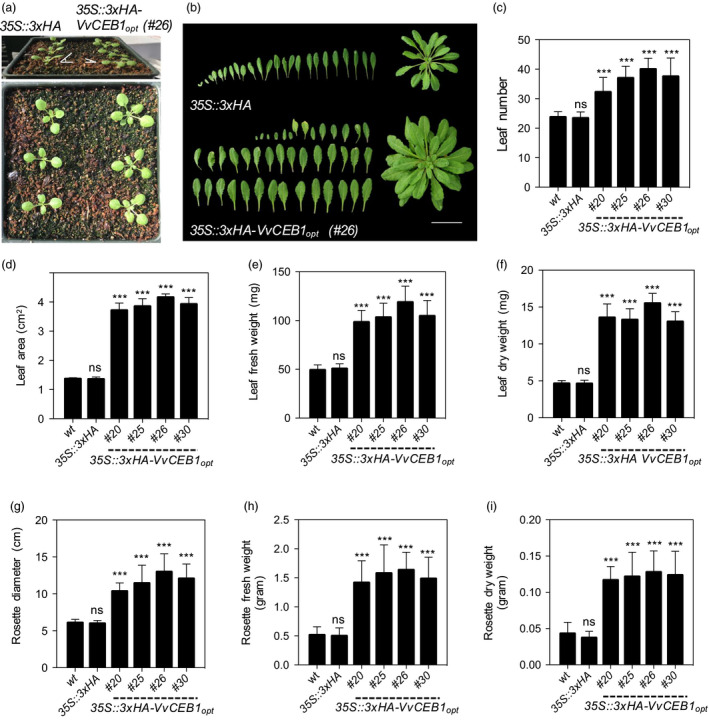
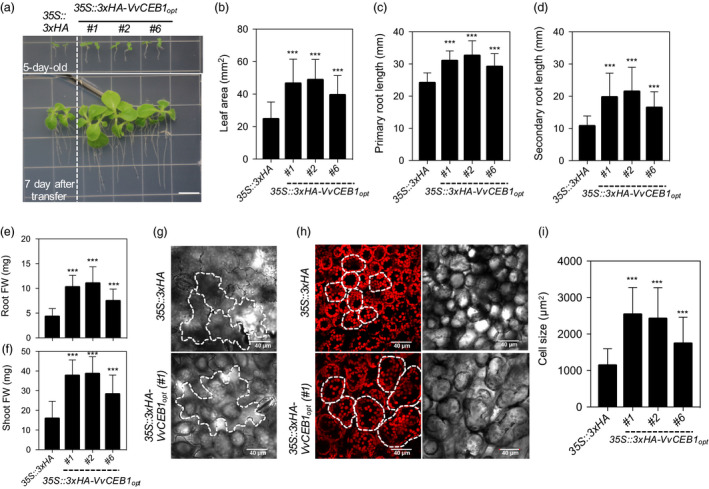
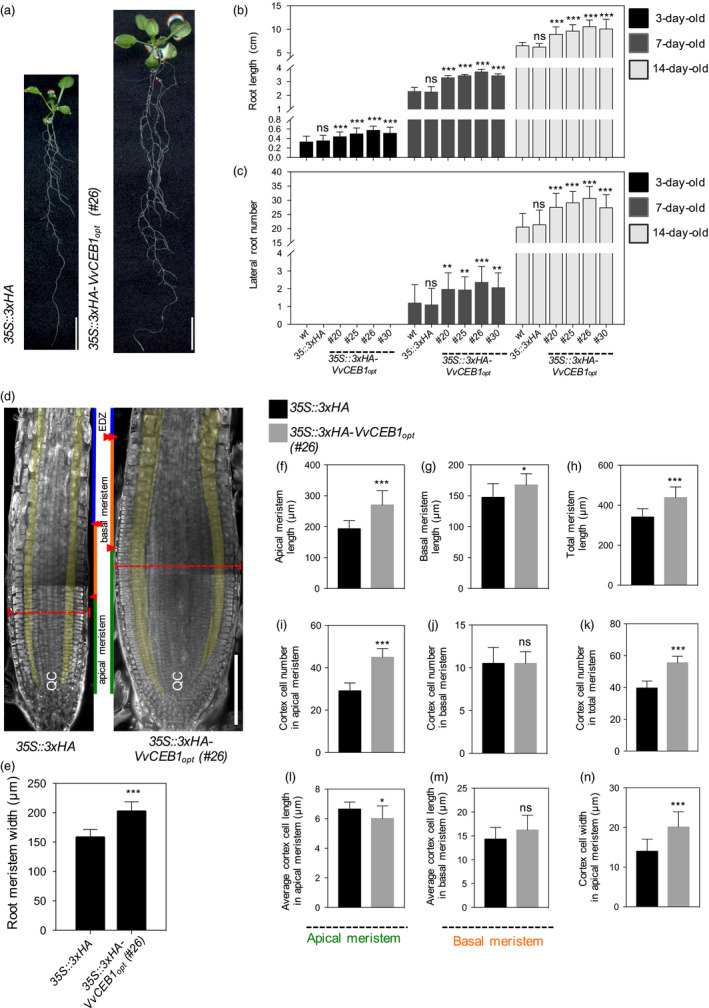
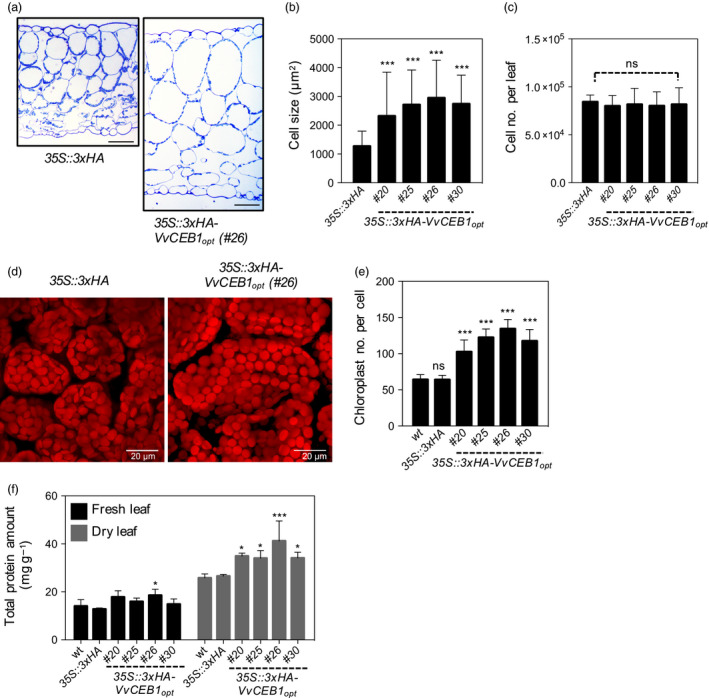
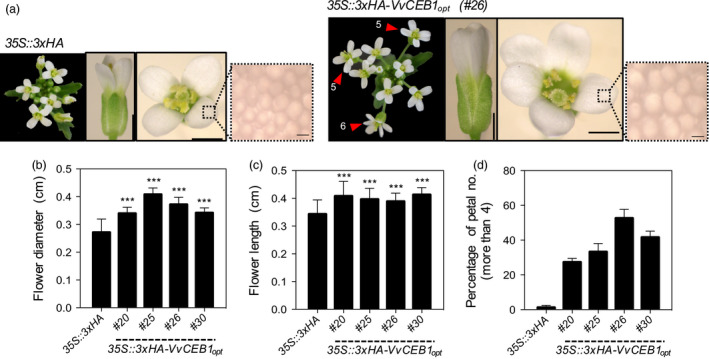
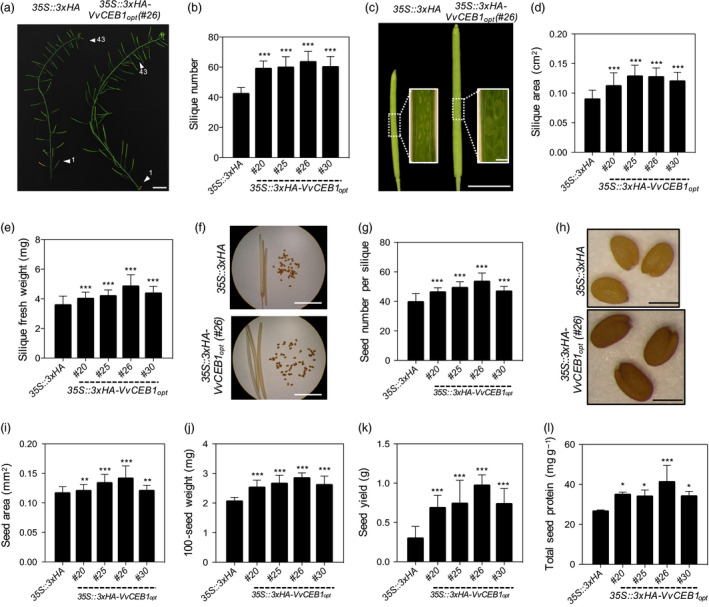
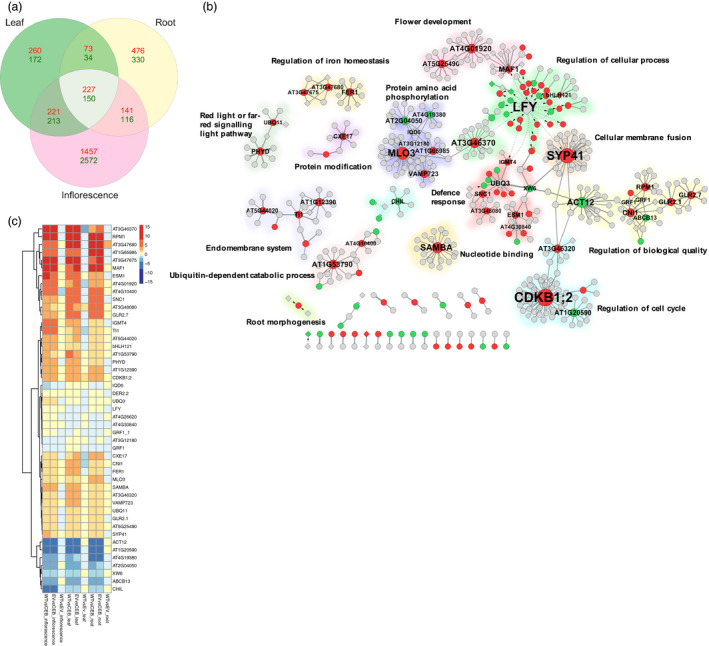
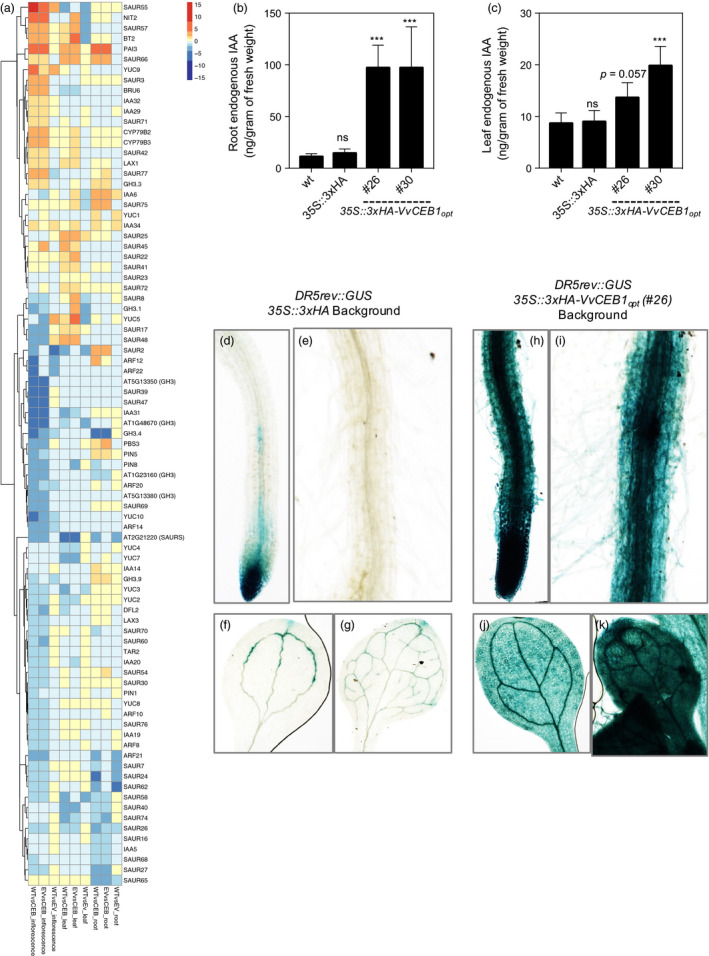
Strategies for improving plant size are critical targets for plant biotechnology to increase vegetative biomass or reproductive yield. To improve biomass production, a codon-optimized helix-loop-helix transcription factor (VvCEB1 ) from wine grape was overexpressed in Arabidopsis thaliana resulting in significantly increased leaf number, leaf and rosette area, fresh weight and dry weight. Cell size, but typically not cell number, was increased in all tissues resulting in increased vegetative biomass and reproductive organ size, number and seed yield. Ionomic analysis of leaves revealed the VvCEB1 -overexpressing plants had significantly elevated, K, S and Mo contents relative to control lines. Increased K content likely drives increased osmotic potential within cells leading to greater cellular growth and expansion. To understand the mechanistic basis of VvCEB1 action, one transgenic line was genotyped using RNA-Seq mRNA expression profiling and revealed a novel transcriptional reprogramming network with significant changes in mRNA abundance for genes with functions in delayed flowering, pathogen-defence responses, iron homeostasis, vesicle-mediated cell wall formation and auxin-mediated signalling and responses. Direct testing of VvCEB1 -overexpressing plants showed that they had significantly elevated auxin content and a significantly increased number of lateral leaf primordia within meristems relative to controls, confirming that cell expansion and organ number proliferation were likely an auxin-mediated process. VvCEB1 overexpression in Nicotiana sylvestris also showed larger cells, organ size and biomass demonstrating the potential applicability of this innovative strategy for improving plant biomass and reproductive yield in crops.
提高植株大小的策略是植物生物技术增加营养生物量或生殖产量的关键目标。为了提高生物量产量,将来自酿酒葡萄的密码子优化的螺旋-环-螺旋转录因子(VvCEB1)在拟南芥中过表达,导致叶片数量、叶片和莲座叶面积、鲜重和干重显著增加。所有组织中的细胞大小增加,但细胞数量通常不变,从而导致营养生物量增加以及生殖器官大小、数量和种子产量增加。对叶片的离子组分析表明,与对照品系相比,过表达VvCEB1的植株的钾、硫和钼含量显著升高。钾含量的增加可能会推动细胞内渗透势的增加,从而导致更大的细胞生长和扩张。为了了解VvCEB1作用的机制基础,使用RNA-Seq mRNA表达谱对一个转基因品系进行基因分型,揭示了一个新的转录重编程网络,在延迟开花、病原体防御反应、铁稳态、囊泡介导的细胞壁形成以及生长素介导的信号传导和反应中发挥作用的基因的mRNA丰度发生了显著变化。对过表达VvCEB1的植株的直接测试表明,与对照相比,它们的生长素含量显著升高,分生组织内的侧生叶原基数量显著增加,证实细胞扩张和器官数量增殖可能是一个生长素介导的过程。在野生烟草中过表达VvCEB1也显示出更大的细胞、器官大小和生物量,证明了这种创新策略在提高作物生物量和生殖产量方面的潜在适用性。